Goal setting in rehabilitation can be particularly difficult. Clients understandably want to know: “How soon can I see the benefits of a particular intervention?” The benefit can be perceived in two ways: the extent of relief provided and the duration of the relief.
As a product and service provider, it's important to us that we manage expectations. That we don't over-promise and under-deliver, and for that reason, we work with medical devices that have at least some research guidance on expected results. Even in the best cases, there will there be individual variations in how someone responds to an intervention.
Transcutaneous spinal cord stimulation (tSCS) represents a promising noninvasive neuromodulation technique for rehabilitation in spinal cord injury (SCI) and other neurological conditions such as multiple sclerosis (MS). This article examines three distinct therapeutic applications—spasticity, pain, and functional recovery—each with different treatment requirements and expected outcomes. In basic terms, we review how long treatment should last before beneficial effects emerge and, once they do, how long they will last.

The Stim2go is licensed for spasticity and pain management using its tSCS templates
As we work with the Stim2Go product from Pajunk and SensorStim Technologies in the UK, we are gaining experience in Stim2Go’s licensed tSCS applications of pain and spasticity reduction. However, in the early days of working with any product, our own experience can be misleading, so we must rely on the existing research. The evidence base varies substantially depending on what you're trying to achieve.
Fundamentally, tSCS is an established tool for managing spasticity, with promising but more limited evidence for pain, and still-evolving evidence for functional improvements that require far longer treatment protocols. Many of our clients are interested in whether they may personally experience some functional recovery. As we will discuss, the functional recovery applications discussed in research literature typically require intensive, clinic-based protocols beyond what home-use devices are designed to deliver.
Understanding the Three Treatment Indications
Before examining the evidence for treatment duration and carryover effects, it's worth understanding that tSCS can target fundamentally different therapeutic goals.
Where Spasticity is the indication, the primary goal of tSCS is to reduce muscle tone, spasms, and clonus. This can be achieved readily at home or in a clinic. The evidence supporting this claim is robust. Of course, there are other approaches to managing spasticity, and each will have different drawbacks and benefits.
Where Pain is the primary indication (i.e., to reduce neuropathic pain), this can also be carried out at home or in a clinic. Research evidence for this, I would describe as moderate (limited direct trials). However, it is definitely worth exploring in our experience, and although we may have to experiment with parameter setting, most individuals can find relief.
What about functional recovery? We don't offer Stim2go’s tSCS protocols for functional applications. We cannot make claims as the evidence is not yet strong enough. Our clients certainly want to restore movement, walking, hand function, etc., and the evidence that does exist for tSCS suggests that Intensive clinic-based rehabilitation is required whilst using tSCS. The evidence supporting tSCS for functional applications is emerging - the ability to prime neural circuits for enhanced plasticity during task-specific training offers the promise that rehabilitation can truly strive for restoration of function - not just compensation.
As we will see, the treatment protocols, session requirements, and carryover duration differ substantially between these applications.
Spasticity: The Strongest Evidence Base
For people with SCI or MS seeking relief from spasticity, the evidence for tSCS is most robust. Benefits emerge quickly—even from a single session—and carryover effects are well documented.
Single-Session Effects on Spasticity
A standard 30-minute tSCS session at 50 Hz produces immediate, measurable reductions in multiple spasticity measures:
In spinal cord injury (10 individuals with chronic SCI and spasticity): (Hofstoetter et al. 2020)
- Modified Ashworth Scale sum scores decreased from a median 31.75 to 23.50 post-intervention
- Achilles clonus duration reduced from 1.5s to 0.9s (p=0.002)
- EMG-measured tonic stretch reflexes reduced (p=0.003)
- Cutaneous-input-evoked muscle spasms reduced (p<0.001)
In multiple sclerosis (16 individuals with MS): (Hofstoetter et al. 2021)
- A single 30-minute session significantly reduced spasticity measures
- Effects on postural sway, clonus, and stretch reflexes persisted for 2 hours
- MAS improvements persisted for 24 hours
Carryover Duration for Spasticity
The temporal pattern of spasticity relief following tSCS is now well-understood, thanks to careful mechanistic research: (Hofstoetter et al. 2020; Hofstoetter et al. 2021)
Immediate to 2 hours:
- Reduced EMG-measured tonic stretch reflexes
- Reduced spasms and clonus
- Improved postural control
- Enhanced pre- and postsynaptic inhibitory circuit activity
Up to 24 hours:
- Modified Ashworth Scale improvements persist
- In the MS study, MAS sum scores remained significantly reduced at both 2-hour (p<0.001) and 24-hour (p=0.007) evaluations
Up to 10-15 days (multi-session protocols): (Alashram et al. 2021; Hofstoetter et al. 2020)
Several studies report carryover durations of 10-15 days following multi-session protocols. A progressive MS case series (8 sessions over 4 weeks) showed effects persisting at 1-week follow-up
Why Spasticity Effects Persist
A landmark 2024 study published in Cell Reports Medicine, (Minassian K et al 2024) "opened the black box of carryover effects" by demonstrating the mechanism. Researchers assessed inhibitory circuit function before, 3-75 minutes after, and 120-190 minutes after a 30-minute tSCS session. They found:
- Postsynaptic reciprocal Ia inhibition and presynaptic inhibition improved significantly during the first 75 minutes (medium effect size)
- By 120-190 minutes, inhibitory circuit function had returned to baseline
- Improvements in spasticity strongly correlated with increased inhibition (r=0.782, p=0.038)
In other words, tSCS transiently restores deficient inhibitory circuits to normative levels. This elegant finding explains both why single sessions work and why effects eventually fade—the underlying spinal pathology remains, but tSCS temporarily compensates for impaired inhibition. (Minassian et al. 2024)
Spasticity Protocol Summary
A single 30 min session may produce a carryover lasting 2-24 hours. This may be useful for acute symptom management before an activity, such as a therapy session.
A short course of 6-8 sessions over 2-4 weeks is expected to produce a carryover of up to 1 week. This type of course can be useful in establishing a person’s individual treatment response.
A maintenance protocol of 2-3 sessions per week may provide ongoing control for Long-term spasticity management.
KEY POINT: For spasticity management, tSCS can be used on an as-needed basis for temporary relief, or in regular sessions for more sustained control. This flexibility makes home-based spasticity management practical and achievable. The Stim2Go offers two spasticity-reduction protocols, typically used for leg spasticity. The stimulation is applied in standing or supine with one electrode at T11/T12 and a pair of electrodes on the abdomen. A third programme may be used to determine the current intensity level to use with the other tSCS programmes. Some clients may find relief simply by performing FES cycling with the Stim2go, so this would always be tried before electing for a spasticity-specific programme.
Pain: What We Know and Don't Know
Using electrical stimulation to influence pain is certainly not new. Perhaps the most frequently observed electrical stimulation device is the so-called TENS unit. As we'll see shortly, tSCS and TENS work on a completely different basis.
The evidence base for tSCS and pain requires acknowledgement of significant gaps. While the mechanism of action supports analgesic effects, and devices like the Stim2go are licensed for neuropathic pain, direct clinical trial evidence for tSCS in SCI or MS pain populations is limited. Having said that, our experience suggests that it is always worth exploring using electrical stimulation. The risk profile is very low, and the benefits of success can be substantial.
The Mechanistic Rationale
tSCS activates large- to medium-diameter proprioceptive and cutaneous afferents within the posterior roots, modulating sensory processing in the dorsal horn. This is a different—and potentially deeper—form of neuromodulation compared to peripheral TENS, which works primarily via gate control theory at the skin level.
The theoretical basis for pain relief is sound:
- Dorsal horn modulation affects ascending pain pathways
- Similar mechanisms underlie the well-established efficacy of implanted spinal cord stimulation for chronic pain
- The same spinal circuits involved in spasticity also process nociceptive signals
What the Research Shows
Implanted SCS for pain: The evidence is strong. Meta-analyses show around 80% of patients achieved 50%+ pain reduction at 36 months with closed-loop implanted systems. However, implanted SCS shows "poorest outcomes in traumatic spinal cord injury" compared to other neuropathic pain populations, suggesting SCI-related pain is particularly challenging to treat.
Transcutaneous SCS for pain: Here the evidence becomes thinner, partly because this intervention has not been around as long as implanted spinal cord stimulation
- No published randomised controlled trials specifically testing tSCS for neuropathic pain as a primary outcome in SCI or MS populations
- Pain is sometimes reported as a secondary outcome in spasticity or function trials, but not systematically measured
- The EChO study of implanted SCS found highly variable carryover duration for pain relief (median 5 hours, but interquartile range of 2.5-21 hours)—this variability likely applies to tSCS as well. Meier et al. 2024)
Practical Implications for Pain
Given the evidence landscape, what can we reasonably say?
1. The mechanism supports efficacy: tSCS modulates exactly the same spinal circuits as implanted SCS, which has proven pain-relieving effects
2. Individual response varies substantially: Based on implanted SCS data, carryover duration can range from hours to days between individuals.
3. A trial period is sensible: Given the non-invasive nature of tSCS, trying it for pain management carries minimal risk.
4. Expectation management matters: Honest communication about the evidence gaps helps people make informed decisions
KEY POINT: tSCS for pain draws on the broader spinal cord stimulation evidence base, and the mechanism is sound. However, tSCS-specific trials for pain in SCI and MS are lacking. This doesn't mean it won't work—it just means we have less certainty about optimal protocols and expected outcomes than with spasticity.
Function: Longer Protocols, Emerging Evidence
Functional recovery, whether it's improving walking ability, upper limb function, or motor control, represents the most ambitious application of tSCS and requires substantially longer treatment protocols than spasticity or pain management.
The 60-Session Threshold
Converging evidence from multiple large-scale studies establishes 60 sessions as a critical threshold for meaningful, sustained functional improvements in individuals with chronic SCI.
A landmark year-long pilot study involving 120 sessions (averaging 3 per week) demonstrated that statistically significant changes in functional outcome measures did not emerge until participants completed at least 60 sessions. The research team observed that "slow and gradual improvements in outcome measures continued to be noted over the 120 sessions, which did not seem to plateau at the conclusion of the study." (Moritz et al. 2024; Guidetti et al. 2025)
This finding was corroborated by a nonrandomised pilot trial of 10 participants with chronic SCI who completed 120 sessions of multisite tSCS combined with activity-based therapy. Post-hoc statistical comparisons confirmed that improvements required ≥60 tSCS-activity-based therapy sessions:
- NeuroRecovery Scale total score: +1.5 points (p<0.013)
- NeuroRecovery Scale trunk score: +2.0 points (p<0.013)
- Berg Balance Scale: +2.0 points (p<0.013)
Critically, three participants demonstrated improved ASIA Impairment Scale classifications—remarkable outcomes in chronic SCI where natural recovery is minimal. (Moritz et al. 2024)
Why Function Requires More Sessions Than Spasticity
The difference in treatment duration reflects fundamentally different mechanisms:
Spasticity relief relies on transient modulation of existing inhibitory circuits—tSCS temporarily restores normal function to circuits that are already present but underactive. True functional recovery requires neuroplastic reorganisation—building new neural pathways or strengthening existing ones through activity-dependent plasticity. This process requires:
- Repeated pairing of tSCS-evoked afferent activity with voluntary motor effort
- Time for synaptic weight changes to consolidate
- Concurrent task-specific training (walking, reaching, grasping)
The Up-LIFT trial documented that 72% of 60 participants with chronic cervical SCI experienced meaningful improvements in arm and hand function after 2 months of treatment, with investigators noting that "many people were still improving at the end" of the treatment period. (Moritz et al. 2024)
Functional Carryover Effects
Evidence for persistent functional improvements after treatment cessation is encouraging but limited at present.
Weeks to months: A study of targeted cervical tSCS for upper extremity recovery employed a 3-week "No Stim" period mid-treatment, during which participants continued activity-based training but received no stimulation. Gains persisted during this washout period, suggesting that "targeted tSCS may lead to persistent recovery of motor and sensory function."
3-month persistence: A case study documented functional improvements that persisted for 3 months beyond treatment cessation in a participant with chronic cervical SCI. The participant resumed self-feeding and showed sustained sensory improvements despite no additional stimulation or physical therapy.
Functional Recovery: A Research Application
The critical issue is this: functional recovery protocols typically involve 60-120 sessions of 30-60 minutes, delivered 3-5 times weekly, combined with intensive task-specific rehabilitation. This represents a clinic-based, resource-intensive intervention that differs substantially from home-based symptom management.
Current home-use devices like the Stim2go are not currently licensed for functional recovery applications. They are appropriately positioned for spasticity and pain management, where shorter, less intensive protocols can be effective.
KEY POINT: If your goal is functional recovery (improved walking, hand function), the evidence points to intensive, multi-month protocols that might be best delivered in supervised rehabilitation settings. If your goal is managing spasticity or pain, home-based devices using shorter protocols can be appropriate and effective.
Comparing the Three Indications
Just to summarise what we've discussed with the three tSCS indications:
A single session targeting spasticity would be expected to provide relief for 2 to 24 hours. Multi-session training targeting spasticity can be expected to produce 10 to 15 days of carryover. The evidence for this is good.
A single session targeting pain may be instantly effective (or not). It's always worth trying, but outcomes can be more uncertain. The response tends to be highly variable, and typical carryover can vary between hours and days. The evidence for this is moderate and there are no RCTs with pain as the primary outcome in SCI/MS
A single session with functional improvement in mind represents just a single step on a long journey. If tSCS is used alongside targeted exercise for 60+ sessions, a typical carryover of weeks to months can be expected.
Stim2go is licensed for use with spasticity and pain, but not currently for functional recovery. Clients are using tSCS with a Stim2go to support various activities, such as FES cycling, but it is too soon to link this activity to functional benefit.
Single-Session Effects: Broader Findings
To complicate things a little, beyond spasticity-specific outcomes, single tSCS sessions produce broader effects worth examining:-
Walking Performance in MS
In a rigorous study of 16 individuals with MS, a single 30-minute tSCS session at 50 Hz significantly improved walking performance for up to 2 hours post-intervention: (Hofstoetter et al. 2021)
Walking speed (10-meter walk test): Median improvement from 18.2s to 16.0s (p=0.030)
Walking endurance (2-minute walk test): Distance increased from 62.5m to 72.5m (p=0.036)
Functional mobility (Timed Up-and-Go): Time reduced from 20.6s to 18.4s (p=0.008)
72.8% of participants improved in walking tests, with 45.5% achieving clinically relevant improvements (≥0.05 m/s speed increase)
These walking improvements returned to baseline levels within 24 hours, demonstrating that a single session produces transient functional enhancements. For people with MS, this 2-hour window could be strategically used for intensive therapy sessions or important activities.
Postural Control
Postural sway during normal standing with eyes open reduced from 11.0 cm² to 8.0 cm² (p=0.001) and persisted for 2 hours—a meaningful improvement for balance and fall risk. (Hofstoetter et al. 2021)
Neurophysiological Mechanisms Underlying Carryover
Understanding why carryover effects occur—and their temporal boundaries—helps set realistic expectations.
Modulation of Spinal Inhibitory Circuits (Hours)
The most direct evidence shows that tSCS transiently enhances both presynaptic and postsynaptic inhibition:
Presynaptic inhibition increases during the first 3-75 minutes post-tSCS, then returns to baseline by 2-3 hours
Postsynaptic reciprocal Ia inhibition follows the same temporal pattern
H-reflex excitability (Hmax/Mmax ratio) decreases significantly immediately after tSCS, indicating reduced motoneuron pool excitability
These circuit-level changes directly explain the 2-hour carryover window for spasticity reduction. The mechanisms responsible for 24-hour MAS persistence remain unclear but may involve changes in intrinsic motoneuron properties or muscle viscoelastic properties.
Synaptic Plasticity and Chloride Homeostasis (Weeks)
Longer carryover effects likely reflect synaptic weight changes induced by sustained afferent input. Animal studies show that multi-session tSCS prevents SCI-induced disruption of chloride homeostasis by restoring KCC2 membrane expression on motoneurons. Since KCC2 maintains the hyperpolarising gradient necessary for effective GABAergic and glycinergic inhibition, its restoration via repeated tSCS "contributes to decrease spasticity" and improved reflex modulation. (Malloy et al. 2024)
This process requires accumulated stimulation exposure—consistent with the longer protocols needed for sustained effects—and produces structural changes at the membrane level that persist beyond individual sessions.
Activity-Dependent Neuroplasticity (Months)
The longest-lasting effects require combining tSCS with task-specific training. The stimulation primes spinal circuits, enhancing the efficacy of concurrent voluntary effort. Evidence includes:
Greater functional improvements when tSCS is paired with training versus training alone
Increased motor evoked potentials that develop gradually over weeks of combined stimulation and training
Correlation between session number and magnitude of improvement, with continued gains beyond 60 sessions
Clinical Recommendations by Indication
Based on current evidence, the following frameworks may guide tSCS implementation:
For Spasticity Management
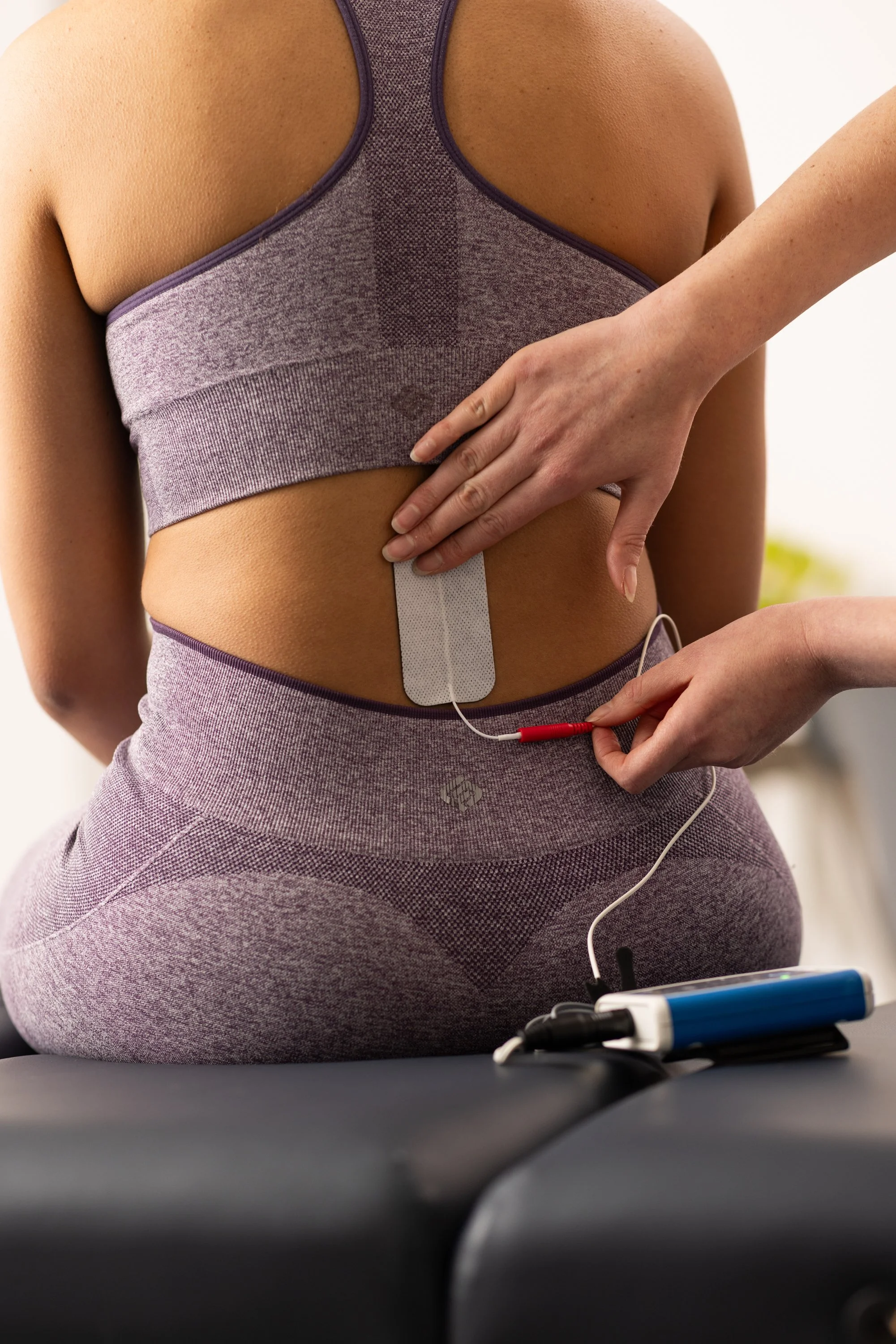
tSCS applied with a Stim2Go unit
Single-session use (as needed): 30 minutes at 33 or 50 Hz, using a sub-motor threshold current intensity. Expect a 2-hour acute effect window. This can be useful before therapy sessions, physical activity, or when spasticity is particularly troublesome.
Regular use protocol: Ideally, 2-3 sessions weekly for ongoing spasticity control. Consider a 4-8 week initial course to establish the likely response sensitivity. MAS improvements may persist 24 hours, potentially reducing required session frequency compared to TENS. (Hofstoetter et al. 2020; Hofstoetter et al. 2021; Gelenitis et al. 2025)
For electrode placement, we use a T11-L2 (lumbosacral) electrode for lower-limb spasticity, with return electrodes bilaterally over the iliac crests.
For Pain Management
Given the evidence gaps, a pragmatic approach is needed. We suggest a 2-4 week trial period of regular sessions to assess individual response. It’s important to monitor pain levels before, during, and after sessions at least subjectively. Also, document carryover duration—this varies substantially between individuals.
We would expect to try various stimulation parameter settings. The Stim2Go system offers six protocol templates. The Edition 5 we work with offers many more. This suggests it's not a one-size-fits-all approach. Individual optimisation may be needed. Pain relief mechanisms may involve slightly different parameters than spasticity—unfortunately, we lack specific guidance from trials
Expectation management:
Explain to clients that tSCS for pain is based on sound mechanisms but limited direct trial evidence. Some people respond well; others may not benefit. A trial period is the most sensible approach
For Functional Goals (Research Context)
If functional recovery is the goal, current evidence supports:
Minimum 60 sessions over 20-40 weeks (typically 2-3 sessions per week)
Combined protocol: 30-60 minutes tSCS with 60-90 minutes task-specific training per session
Targeted stimulation: Cervical (C3-C7) for upper extremity, lumbosacral (T11-L2) for gait and lower extremity
Continue beyond threshold: Improvements may continue beyond 60 sessions without clear plateau
This represents a clinic-based, resource-intensive intervention requiring specialised supervision.
Stimulation Parameter Recommendations
A framework synthesised from 77 participants across two large trials proposes the following hierarchical parameter adjustment: (Gelenitis et al. 2025; Moritz et al. 2024)

Stim2go allows an FES cycling session to include tSCS.
1. Current amplitude: Gradually increase to achieve desired effects or maximum tolerable intensity (typical ranges: 50-90 mA with biphasic waveforms; individuals with motor-complete injuries require significantly higher amplitudes). Stim2go features a tSCS priming programme to help with this process.
2. Waveform type: 83% of sessions utilised biphasic waveforms; monophasic may be considered if biphasic is not available.
3. Electrode positioning: Cathodal electrode at target spinal level; anodal electrodes bilaterally over iliac spines or clavicles
4. Frequency: 33 Hz typical; 50 Hz for anti-spasticity and pain applications
Additional specifications:
- Pulse width: 1 ms per phase
- Carrier frequency (if used): 5-10 kHz is suggested to enhance comfort
- Target intensity: 90% of posterior root-muscle (PRM) reflex threshold, adjusted for comfort and response (available via the tSCS priming programme with the Stim2go product)
Device-related adverse events were infrequent across diverse SCI populations, supporting the safety of these parameters.
Gaps in Current Evidence
Despite significant progress, several knowledge gaps constrain evidence-based implementation:
Pain-Specific Trials
The most pressing need is for randomised controlled trials specifically examining tSCS for neuropathic pain in SCI and MS populations, measuring pain outcomes (VAS, NRS) as primary endpoints. Current pain-licensing practices rely on broader electrotherapy evidence and a mechanistic rationale rather than tSCS-specific trials.
Dose-Response Optimisation
The field lacks systematic studies examining:
- Optimal session duration: Is 30 minutes ideal, or would shorter or longer sessions prove more efficient?
- Frequency-response relationships: Would daily sessions accelerate improvements, or is 2-3 times weekly optimal?
- Maintenance protocols: After achieving gains, what frequency maintains benefits?
Long-Term Carryover Predictors
While the 2-hour carryover window is mechanistically explained, the basis for weeks-to-months persistence remains incompletely understood. We cannot yet predict which individuals will develop sustained carryover and which will see their improvements fade quickly.
Conclusion
Transcutaneous spinal cord stimulation has matured from proof-of-concept to a practical neuromodulation tool, but the evidence base differs substantially depending on therapeutic goals.
For spasticity management, the evidence is strongest. Single sessions can provide 2-hour relief windows; multi-session protocols can extend carryover to days or weeks. The mechanism—transient restoration of inhibitory circuit function—is now well-understood. Home-based spasticity management with devices such as the Stim2go is practical and evidence-based.
For pain management, the mechanism is sound, but direct trial evidence is limited. tSCS modulates the same spinal circuits as implanted SCS, which has proven efficacy for neuropathic pain. However, tSCS-specific pain trials in SCI and MS populations are lacking. A pragmatic trial approach is reasonable given the minimal risk profile.
For functional recovery, the evidence points to intensive, multi-month protocols (60+ sessions) integrated with task-specific rehabilitation. This represents a fundamentally different application than symptom management—one that requires clinic-based supervision and resources beyond typical home use.
For rehabilitation professionals and individuals considering tSCS, these distinctions matter. The question "Does tSCS work?" must be answered in context: work for whom, for what application, and for how long?
The current device landscape reflects these distinctions. Devices like the Stim2go are appropriately licensed for pain and spasticity—applications where shorter, less intensive protocols can be effective. Functional recovery suggests a research application requiring specialised settings and intensive protocols. However, many clients are choosing Stim2go to explore possibilities across the board. As Stim2go supports FES cycling with tSCS, this could be a way to explore the broadest outcomes, as home-based FES cycling can be applied frequently and provide opportunities previously available only in a dedicated clinic setting.
For people with MS and spinal cord injury seeking alternatives to pharmacological spasticity management or exploring non-invasive approaches to neuropathic pain, tSCS offers a practical option with a growing evidence base. For those pursuing functional recovery, the path is longer, but the emerging research provides grounds for cautious optimism.
References
Peer-Reviewed Scientific Articles
1. McHugh LV, Miller AA, Leech KA, Salorio C, Martin RH. Feasibility and utility of transcutaneous spinal cord stimulation combined with walking-based therapy for people with motor incomplete spinal cord injury. Spinal Cord Ser Cases. 2020 Nov 25;6(1):104. doi: 10.1038/s41394-020-00359-1. PMID: 33235294.
2. Lorenz T, Klenk S, Hofstoetter US, et al. Short-term effect of transcutaneous spinal cord stimulation in patients with multiple sclerosis: a randomized sham-controlled crossover study. Front Neurol. 2025;16:1618519. doi: 10.3389/fneur.2025.1618519. PMID: 40917667.
3. Hofstoetter US, Freundl B, Lackner P, Binder H. Transcutaneous spinal cord stimulation enhances walking performance and reduces spasticity in individuals with multiple sclerosis. Brain Sci. 2021 Apr 8;11(4):472. doi: 10.3390/brainsci11040472. PMID: 33917893.
4. Guidetti MC, Forrest GF, Field-Fote EC, Greene JE, Solinsky SR, Becker DD, Galea NV, Knikou M, Evangelou AP, Hunter SC, Wood EA. Safety and effectiveness of multisite transcutaneous spinal cord stimulation combined with activity-based therapy when delivered in a community rehabilitation setting: a real-world pilot study. Neuromodulation. 2025 Feb 24. doi: 10.1016/j.neurom.2025.01.007. PMID: 39998450.
5. Garcia-Renedo M, Gil-Agudo A, Jimenez-Velasco I, et al. Transcutaneous spinal cord stimulation combined with robotic-assisted body weight-supported treadmill training enhances motor score and gait recovery in incomplete spinal cord injury: a double-blind randomized controlled clinical trial. J Neuroeng Rehabil. 2025 Jan 30;22(1):15. doi: 10.1186/s12984-025-01545-8. PMID: 39885542.
6. Zaferiou AM, Johnson B, Kallem SR, et al. Transcutaneous spinal stimulation combined with locomotor training improves functional outcomes in a child with cerebral palsy: a case study. Phys Ther. 2024;104(7):pzae062. doi: 10.1093/ptj/pzae062. PMID: 39767868.
7. Khan AA, John SL, Murphy MA, Gomez PL, Langhals NB, Miller RKJ, et al. Targeted transcutaneous spinal cord stimulation promotes persistent recovery of upper limb strength and tactile sensation in spinal cord injury: a pilot study. Front Neurosci. 2023;17:1210328. doi: 10.3389/fnins.2023.1210328. PMID: 37483349.
8. Cirnigliaro CM, Kuo W, Forrest GF, Spungen AM, Parrott JS, Cardozo CP, Pal S, Bauman WA. Exoskeletal-assisted walking combined with transcutaneous spinal cord stimulation to improve bone health in persons with spinal cord injury: study protocol for a prospective randomised controlled trial. BMJ Open. 2024 Sep 17;14(9):e086062. doi: 10.1136/bmjopen-2024-086062. PMID: 39288950.
9. Minassian K, Freundl B, Lackner P, Hofstoetter US. Transcutaneous spinal cord stimulation neuromodulates pre- and postsynaptic inhibition in the control of spinal spasticity. Cell Rep Med. 2024 Nov 19;5(11):101805. doi: 10.1016/j.xcrm.2024.101805. PMID: 39532101.
10. Gelenitis K, Santamaria A, Pradarelli J, Rieger M, Inanici F, Tefertiller C, Field-Fote E, Guest J, Suggitt J, Turner A, D'Amico JM, Moritz C. Non-invasive transcutaneous spinal cord stimulation programming recommendations for the treatment of upper extremity impairment in tetraplegia. Neuromodulation. 2025;28(1):162-173. doi: 10.1016/j.neurom.2024.05.005. PMID: 38958629.
11. Moritz C, Field-Fote EC, Tefertiller C, et al. Non-invasive spinal cord electrical stimulation for arm and hand function in chronic tetraplegia: a safety and efficacy trial. Nat Med. 2024;30(5):1276-1283. doi: 10.1038/s41591-024-02940-9. PMID: 38769431.
12. Phillips AA, Squair JW, Sayenko DG, Edgerton VR, Gerasimenko Y, Krassioukov AV. An autonomic neuroprosthesis: noninvasive electrical spinal cord stimulation restores autonomic cardiovascular function in individuals with spinal cord injury. J Neurotrauma. 2018 Feb 1;35(3):446-451. doi: 10.1089/neu.2017.5082. PMID: 28967294.
13. Inanici F, Samejima S, Gad P, Edgerton VR, Hofstetter CP, Moritz CT. Transcutaneous electrical spinal stimulation promotes long-term recovery of upper extremity function in chronic tetraplegia. IEEE Trans Neural Syst Rehabil Eng. 2018 Jun;26(6):1272-1278. doi: 10.1109/TNSRE.2018.2834339. PMID: 29877852.
14. Malloy DC, Bhimani A, Bhimani R, Cotey D, Cote MP. Multi-session transcutaneous spinal cord stimulation prevents chloride homeostasis imbalance and the development of hyperreflexia after spinal cord injury in rat. Exp Neurol. 2024 Jun;376:114754. doi: 10.1016/j.expneurol.2024.114754. PMID: 38493983.
15. Hofstoetter US, Freundl B, Danner SM, Krenn MJ, Mayr W, Binder H, Minassian K. Transcutaneous spinal cord stimulation induces temporary attenuation of spasticity in individuals with spinal cord injury. J Neurotrauma. 2020 Feb 1;37(3):481-493. doi: 10.1089/neu.2019.6588. PMID: 31333064.
16. Modulations in neural pathways excitability post transcutaneous spinal cord stimulation among individuals with spinal cord injury: a systematic review. Front Neurosci. 2024;18:1372222. doi: 10.3389/fnins.2024.1372222. PMID: 38628250.
17. Evancho JJ, Tyler J, McGregor K. A review of combined neuromodulation and physical therapy to promote neural plasticity and enhanced recovery. Front Neurol. 2023 Aug 8;14:1202834. doi: 10.3389/fneur.2023.1202834. PMID: 37545593.
18. Meier K, de Vos CC, Bordeleau M, van der Tuin S, Billet B, Ruland T, Blichfeldt-Eckhardt MR, Winkelmüller M, Gulisano HA, Gatzinsky K, Knudsen AL, Hedemann Sørensen JC, Milidou I, Carrondo Cottin S, et al. Examining the duration of carryover effect in patients with chronic pain treated with spinal cord stimulation (EChO Study): an open, interventional, investigator-initiated, international multicenter study. Neuromodulation. 2024 Jul;27(5):887-898. doi: 10.1016/j.neurom.2024.01.002. PMID: 38456888.
Non-Scientific References
The following references are clinical trial registrations, organisational summaries, or guidance documents rather than peer-reviewed research articles.
19. Spinal stimulation in chronic spinal cord injury. Health Research Authority (HRA) NHS UK. Clinical trial registration/protocol. Available from: https://www.hra.nhs.uk/planning-and-improving-research/application-summaries/research-summaries/spinal-stimulation-in-chronic-spinal-cord-injury/
20. Non-invasive spinal cord stimulation combined with activity-based rehabilitation in chronic spinal cord injury. Spinal Research (charity). Research summary. Available from: https://spinal-research.org/research/non-invasive-spinal-cord-stimulation-combined-with-activity-based-rehabilitation-in-chronic-spinal-cord-injury/
21. Spasticity After Spinal Cord Injury: When Medication Isn't the Answer. Anatomical Concepts. Website article. Available from: https://www.anatomicalconcepts.com/articles/spasticity-after-spinal-cord-injury-when-medication-isnt-the-answer