For some people, the obstacle to standing up is not weakness. It is the opposite problem: legs that are too stiff, too tense, or too unpredictable to cooperate. You go to move and the leg pushes out straight when you wanted it to bend, or a spasm arrives at the worst possible moment, or simply getting your feet into a sensible position feels like a negotiation. This is spasticity, and for a great many people, after an incomplete spinal cord injury or stroke, it is the single thing standing between them and a useful sit-to-stand.
We have written before about spasticity after spinal cord injury and the limits of medication. This article looks at a more specific question: when spasticity is the thing blocking a functional goal like standing, what can electrical stimulation do about it, and how do the pieces fit together?
What Spasticity Actually Is
Spasticity is easiest to understand by starting with what normally keeps muscles calm. In a healthy nervous system, the brain sends a steady stream of quiet signals down the spinal cord that hold the muscles' reflexes in check, so they relax and tense as needed in a balanced, controlled way. When a spinal cord injury, a stroke, or a condition such as multiple sclerosis interrupts those signals, that steadying control is reduced. The reflexes in the spinal cord, left without it, can become overactive.
The result is muscles that are too ready to contract. A small stretch can trigger a large response; the muscles feel stiff and tight, and spasms or clonus (that rhythmic bouncing of a foot or leg) can appear. It does not usually arrive straight away; it tends to develop over the weeks and months after an injury. It also comes and goes, and it is easily stirred up by other things, a full bladder, an infection, pain, or even cold weather, so it can be worse on some days than others.
Why Spasticity Makes Standing Hard
Sit-to-stand exercises are often favoured because they can lead to greater independence for many patients. A clean sit-to-stand needs a few things to happen in sequence. You must position your feet, lean forward over them, and let your thigh and buttock muscles drive you up in a smooth, controlled rise. Spasticity interferes with almost every step of that. Stiff extensor muscles can resist the forward lean and the knee bend you need to begin. A spasm can throw off the timing. Clonus, that repetitive bouncing of the foot or leg, can make a stable foot position difficult to hold. The result is a movement that feels like it is fighting you rather than following you.
It is worth saying that spasticity is not always the enemy. Some people use their extensor tone to help them stand or transfer, and the aim is rarely to abolish all tone. The goal is to reduce the interfering spasticity so that the movement you want becomes possible.
Two Ways Electrical Stimulation Helps
Electrical stimulation addresses this problem from two directions, and a device like the Stim2Go can provide both.
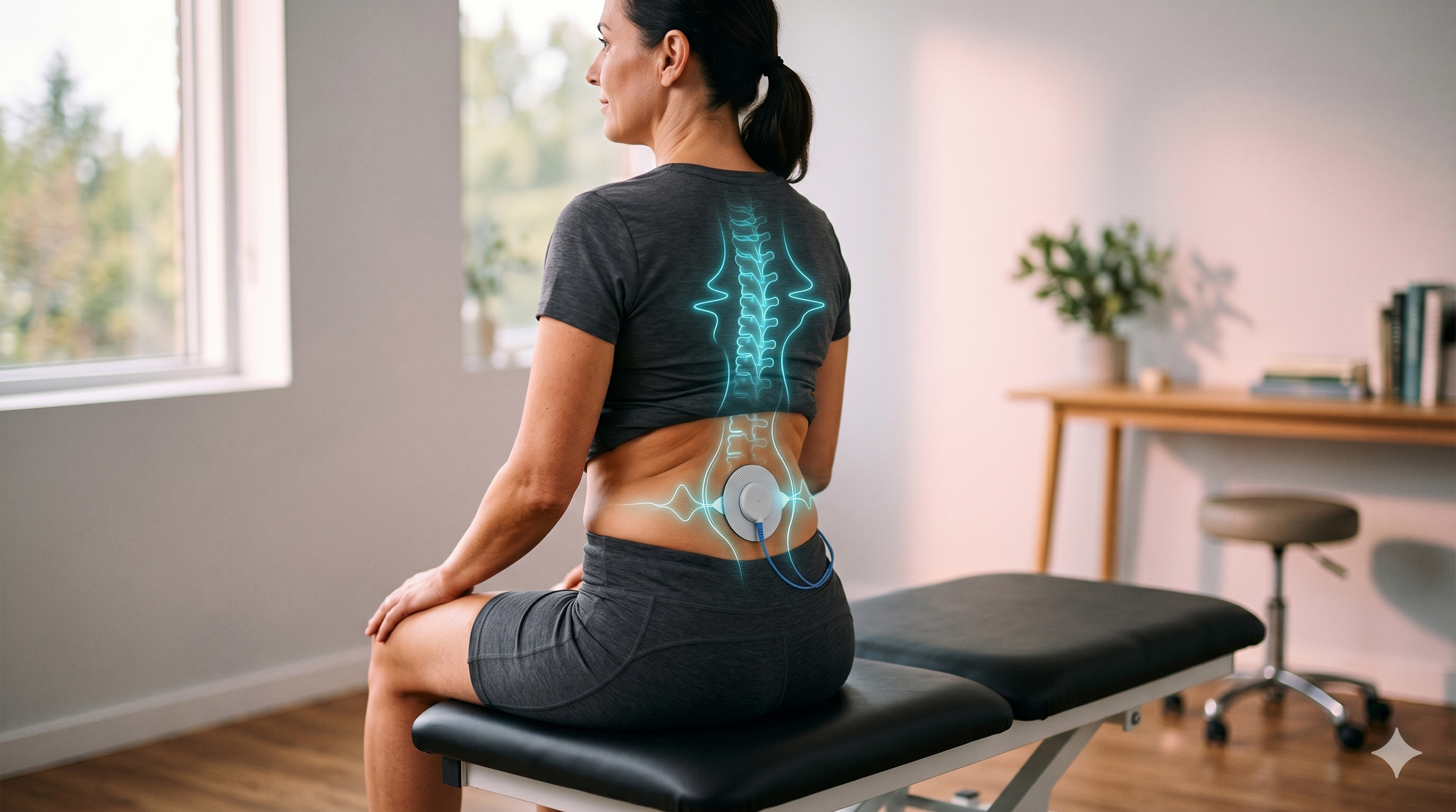
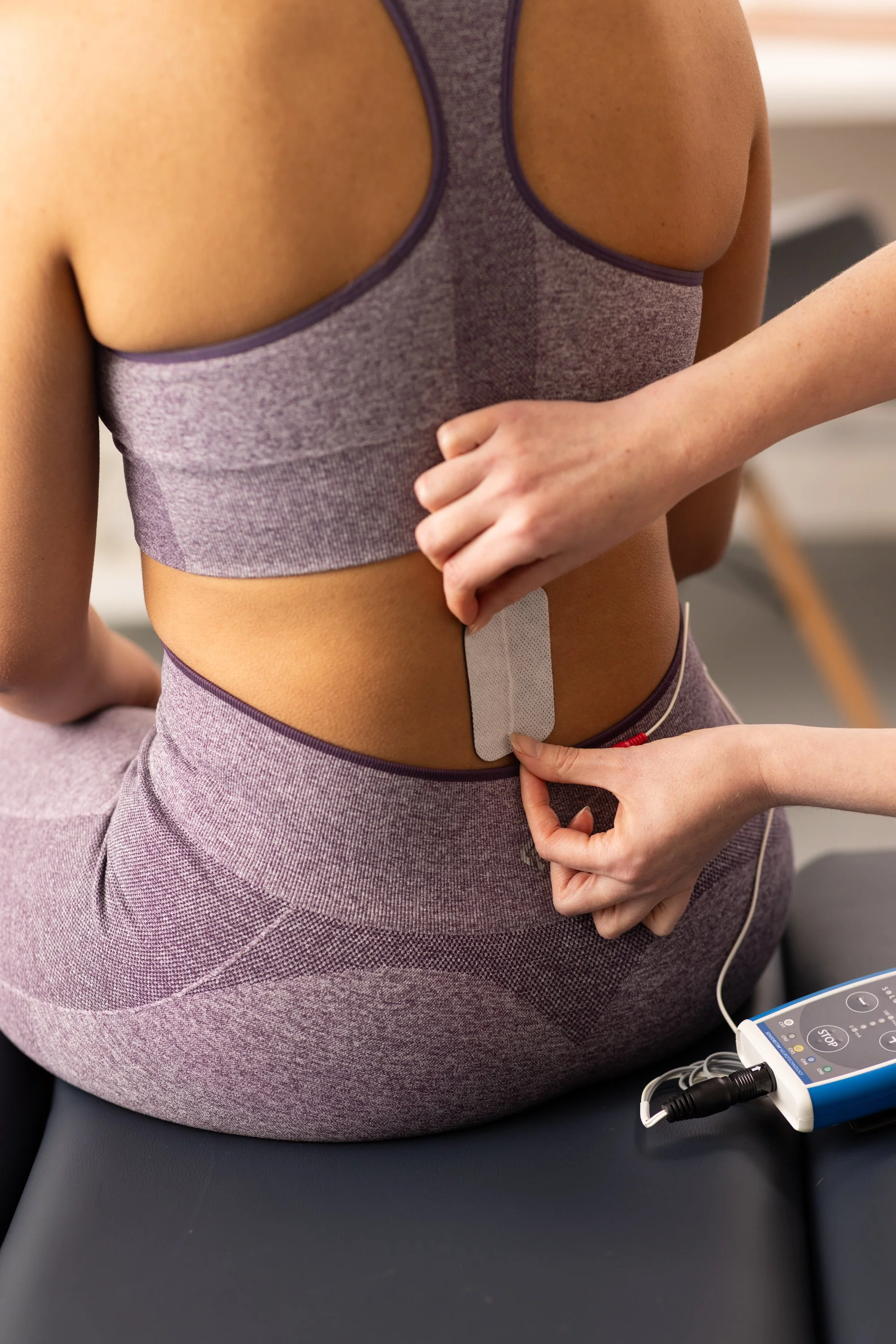
Calming the spasticity. Transcutaneous spinal cord stimulation (tSCS) applies stimulation through electrodes placed over the spine and abdomen. Research has linked it to reductions in spasticity, and the practical idea is to use it to quieten the stiffness and spasms before or alongside the work you want to do. There is also good evidence that functional electrical stimulation itself, the kind used in FES cycling, reduces spasticity over a programme of sessions, through the repeated, rhythmic muscle activation it produces. Stim2go offers two specific tSCS protocols for spasm reduction; both use biphasic rectangular pulses of 1 ms applied at either 33 Hz or 50 Hz. The current level to use with an individual is determined by a tSCS priming programme. The current intensity is set below the level at which muscle contractions would be evoked.
Assisting the movement. Once the spasticity is calmer, neuromuscular electrical stimulation (NMES) can add force to the muscles that drive the rise, in time with your own effort. This is the sit-to-stand practice we have described elsewhere, and it works far better when the legs are not fighting back. With Stim2Go it is easy to create a stimulation sequence to trigger the muscles necessary for the movement.
The Sequence That Makes the Difference
The useful insight here is not either technique on its own, but the order in which they are used. Quieten the spasticity first, then practise the task while the window is open.
In practice, this might look like a period of tSCS to reduce tone for 20 minutes whilst standing (perhaps in a standing frame) or lying down, followed by assisted sit-to-stand repetitions, where stimulation tops up the working muscles as you rise. Because Stim2Go provides both tSCS and triggered NMES on a single body-worn unit, this sequence can be run with a single device rather than assembled from several. That is a practical advantage when the whole point is to make a session simpler and more productive, not more complicated.
What to Expect
Spasticity is a complex area where overpromising is easy and unhelpful.
The evidence for FES reducing spasticity over a programme is well established. The evidence for tSCS is promising and growing rather than settled, and individual responses vary. What we expect to see is a short-term relief from spasticity initially, but a greater carryover effect with repeated sessions.
Spasticity is changeable but persistent. This is about management that supports function, not a one-off cure.
The right approach depends on your pattern of spasticity, your goals, and whether any of your tone is actually useful to you. That is a judgement for a knowledgeable clinician, not a setting to guess at.
There are sensible precautions, including the need to watch for autonomic dysreflexia in those at risk, which is one of several reasons a proper assessment comes first.
In Summary
When stiffness and spasms are the thing keeping you from standing, electrical stimulation offers a route that works on both halves of the problem: calming the spasticity, then assisting the movement. Used in that order, and within an assessed programme, it can turn a sit-to-stand that feels like a fight into one that feels possible. A device like the Stim2Go can provide both parts on a single unit, which keeps the practice manageable.
If spasticity is getting in the way of a goal that matters to you, we would be glad to talk it through and help you understand whether this approach is a sensible fit for your situation. As always, that conversation and a proper assessment are the right place to begin. You can contact us for guidance.