Articles
Filter by Topic
- Adaptive Sport 2
- Artificial Intelligence 1
- Bariatric 1
- Bike Labyrinth 3
- Bone density 1
- Brachial Plexus 2
- Bridging the Gap 1
- Bridging the Gap 1
- Carbonhand 4
- Cardiovascular 1
- Cauda Equina Syndrome 1
- Client Stories 4
- Cognition 1
- Company Updates 3
- Decision Making 2
- Dementia 1
- Denervation 30
- Diabetic Foot 12
- Dressings 1
- Efficiency 1
- Electrotherapy 34
- Epilepsy 1
- Exercise Benefits 34
- FES Cycling 24
- Fatigue 1
- Functional Electrical Stimulation (FES) 66
- Gait 2
- Goal Setting 5
- Grip 3
- Guidelines 2
- HRV 1
- Healthspan 2
- History 1
- Indego 13
- Lifestyle 10
- Lower Motor Neuron 2
- Mobility 17
- Motivation 2
- Multiple Sclerosis 1
- NMES 4
- Nerve injury 5
- NexStride 1
- Occupational Therapy 1
- Orthotic 15
- PRAFO 33
- Pain 7
- Parkinsons 2
- Pressure Ulcers 21
- Product Updates 7
- RISE Stimulator 14
Article Length
- 1 minute read 3
- 10 minute read 27
- 11 minute read 4
- 12 minute read 11
- 14 minute read 1
- 15 minute read 14
- 18 minute read 1
- 2 minute read 4
- 24 minute read 1
- 25 minute read 2
- 26 minute read 1
- 28 minute read 1
- 3 minutes read 9
- 4 minute read 33
- 5 Minute read 18
- 6 minute read 6
- 7 minute read 20
- 8 minute read 14
- 9 minute read 4
- FES 2
- FoG 1
- Long Read 1
- PRAFO 1
- Seven Minute Read 1
- awareness 1
- carbonhand 2
- cognitive 1
- cues 1
- freezing gait 1
- freezing of gait 1
- gait 1
- neurological 1
- neuroplasticity 1
- nexstride 2
- occupational therapy 1
- occupational therapy day 1
- orthopaedics 1
- orthotic 1
- parkinson's 1
- pressure 1
- pressure relief 1
- prevention 1
- rehabilitation 2
- stroke 1
- ulcers 1
- world stroke day 1
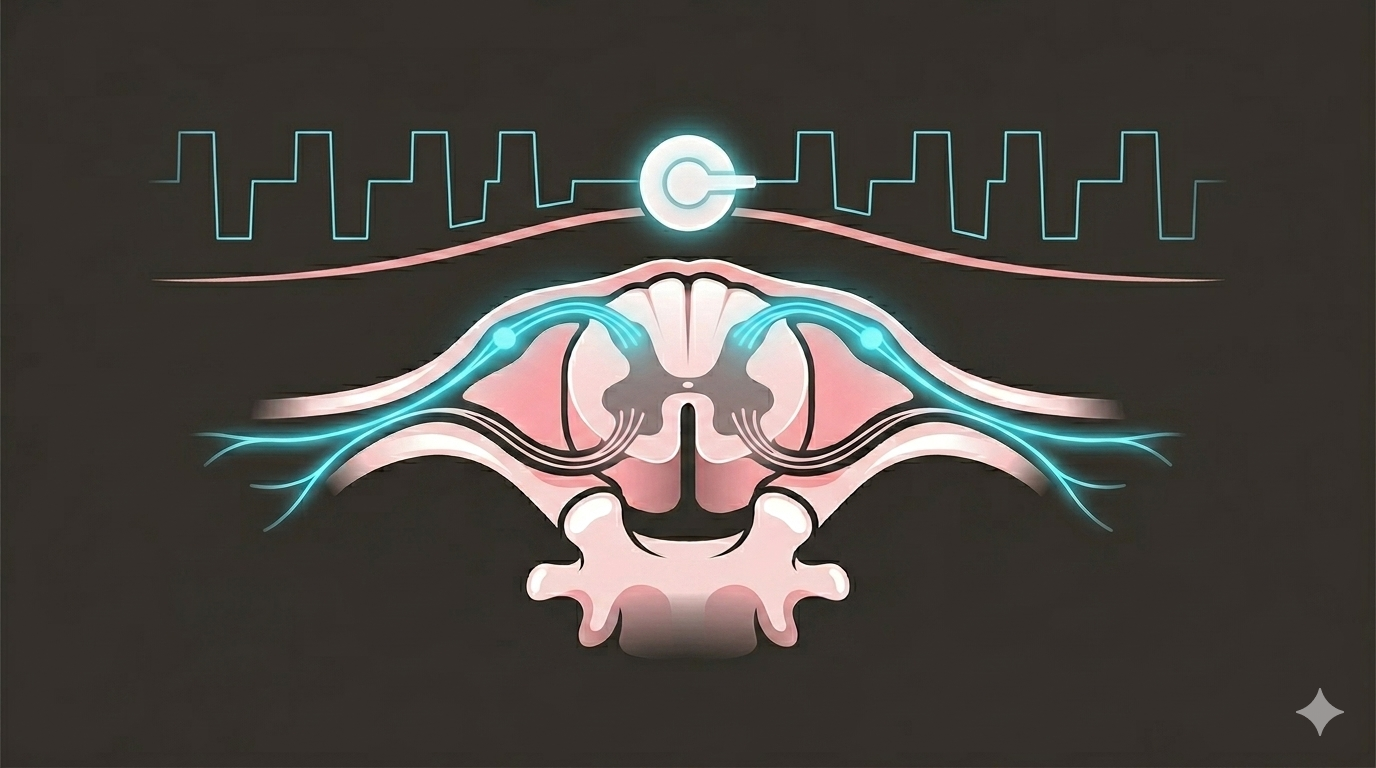
When Spasticity Gets in the Way of Standing
For some people, the obstacle to standing up is not weakness. It is the opposite problem: legs that are too stiff, too tense, or too unpredictable to cooperate. You go to move and the leg pushes out straight when you wanted it to bend, or a spasm arrives at the worst possible moment, or simply getting your feet into a sensible position feels like a negotiation. This is spasticity, and for a great many people, after an incomplete spinal cord injury or stroke, it is the single thing standing between them and a useful sit-to-stand.
We have written before about spasticity after spinal cord injury and the limits of medication. This article looks at a more specific question: when spasticity is the thing blocking a functional goal like standing, what can electrical stimulation do about it, and how do the pieces fit together?
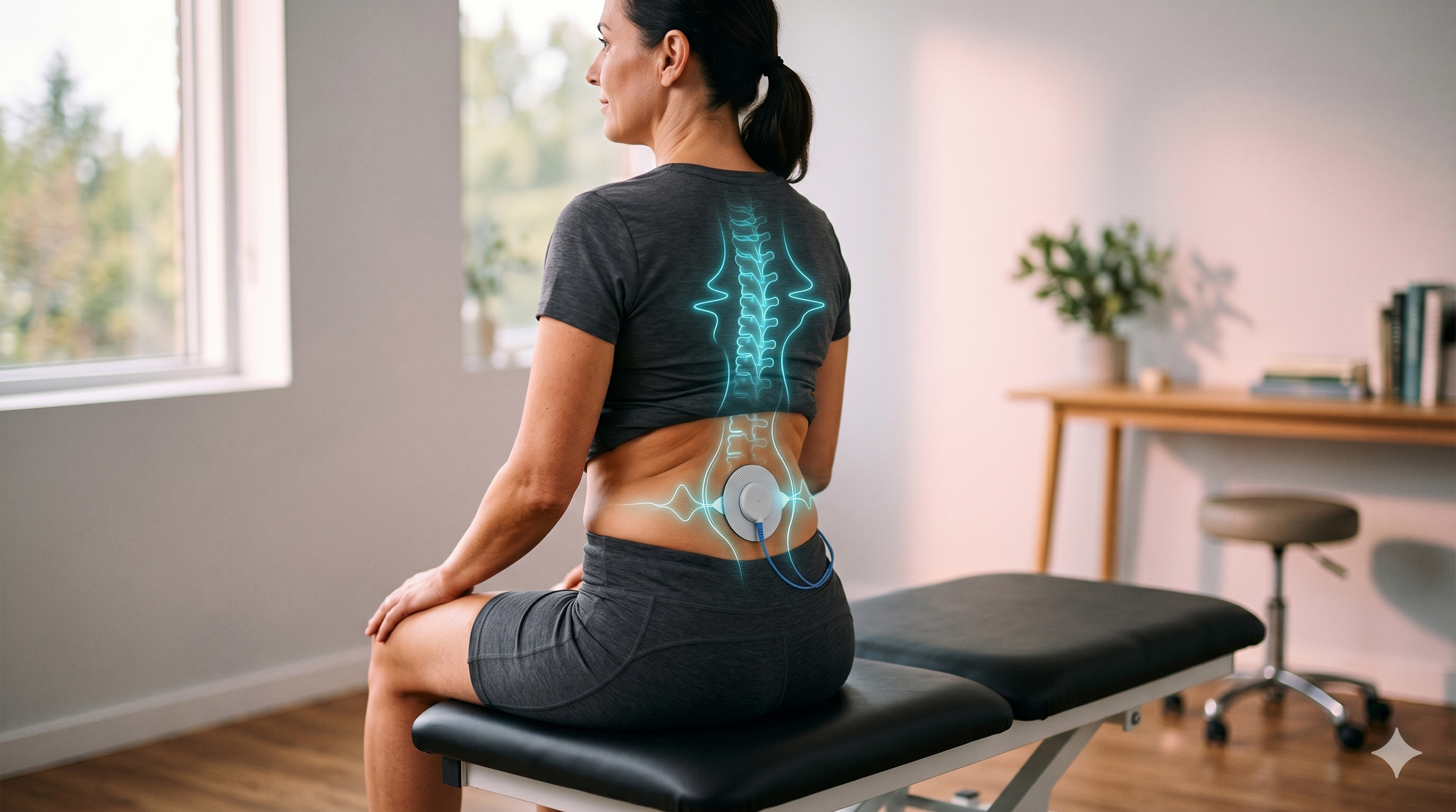
Waveform matters: what new evidence tells us about transcutaneous spinal cord stimulation
Transcutaneous spinal cord stimulation (tSCS) has moved quickly from a research curiosity to a recognised tool in neurological rehabilitation. People living with spinal cord injury, stroke, and multiple sclerosis are asking us about it. Clinicians want to know which device to recommend. Equipment commissioners want evidence-led guidance before authorising spend that can run into tens of thousands of pounds per system.
A paper published in Nature Biomedical Engineering on 12 May 2026 has added something important to that conversation. It is not a clinical trial. It is a careful study of the physics and physiology that govern which nerve fibres a tSCS device actually recruits. The finding is consequential, and it bears directly on the choice of device.
In short: the waveform you choose determines whether tSCS does the thing rehabilitation needs it to do.
Spasticity After Spinal Cord Injury: When Medication Isn't the Answer
Spasticity is common after spinal cord injury, and while medication can help, it isn’t always the best or only option. This article explores alternative ways to manage spasticity when medication isn’t effective or suitable. It looks at why symptoms can vary, what triggers may make spasticity worse, and the importance of an individualised approach. From rehabilitation strategies to practical day-to-day management, it provides a helpful overview for improving comfort, function, and quality of life.

Key findings from the Neurokinex trial of the Onward Medical ARC-ex device
The Neurokinex-led Pathfinder2 Study, sponsored by Spinal Research and published in Neuromodulation: Technology at Neural Interface on February 25, 2025, represents a landmark investigation into the long-term efficacy of ONWARD Medicalʼs ARC-EX Therapy for spinal cord injury (SCI) rehabilitation. This one-year trial demonstrated sustained functional improvements in chronic SCI patients, challenging historical assumptions about recovery plateaus and redefining expectations for neurorehabilitation outcomes.
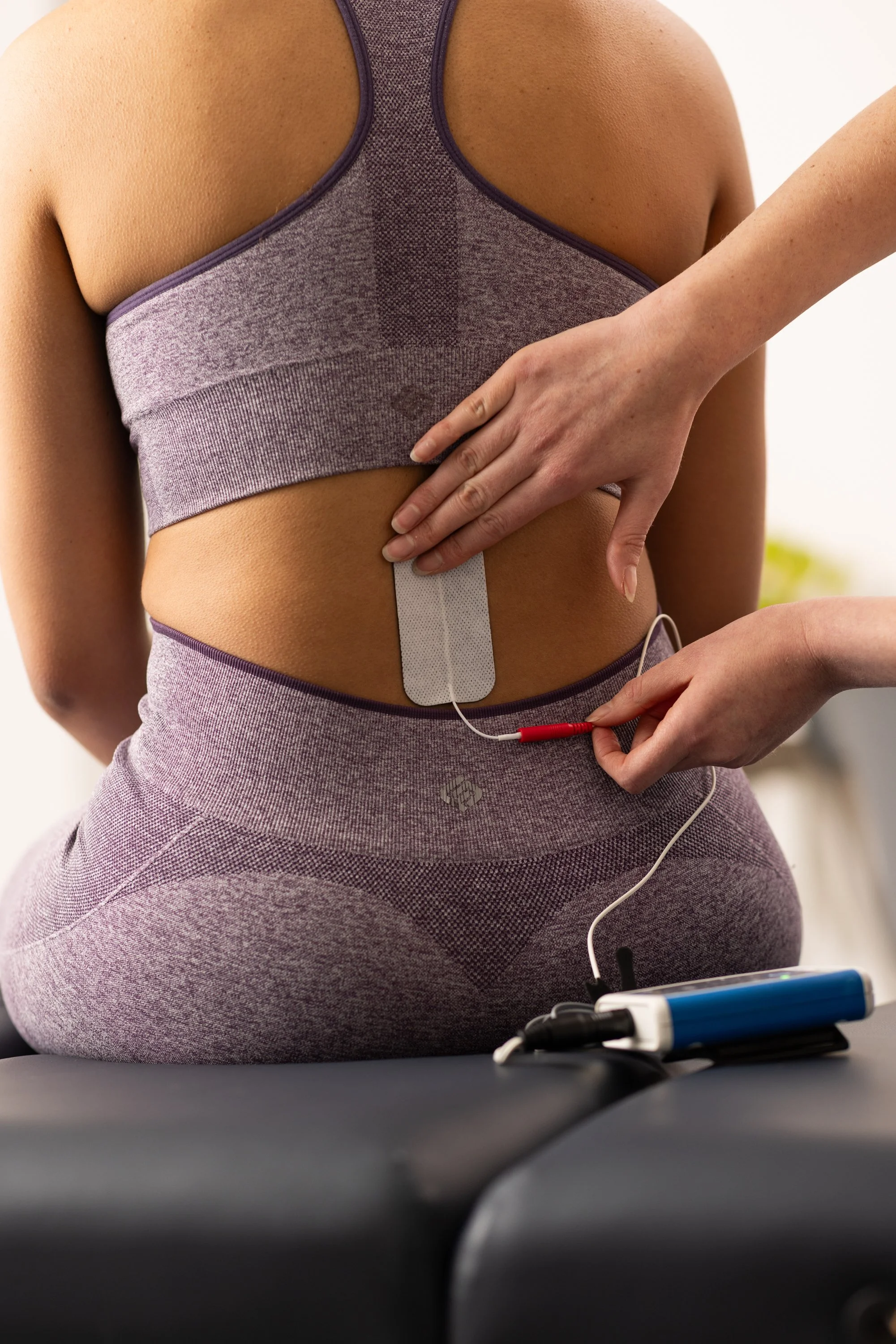
Transcutaneous spinal cord stimulation delivers electrical currents through surface electrodes positioned over the spinous processes, modulating spinal circuit excitability. Unlike invasive epidural stimulation, tSCS non-invasively targets dorsal roots and interneuronal networks, facilitating neuromodulation of both ascending sensory and descending motor pathways. The stimulation parameters (typically 30-50 Hz) are designed to enhance residual supraspinal connectivity while activating latent central pattern generators (CPGs) responsible for rhythmic motor outputs. Recent studies suggest that tSCS amplifies sensorimotor integration, enabling volitional movement by lowering activation thresholds for preserved neural pathways.

Transcutaneous Spinal Cord Stimulation: A New Hope for Spinal Injuries
Welcome to our latest exploration in the captivating realm of neurorehabilitation. Today, we venture into the innovative field of transcutaneous spinal cord stimulation (tSCS) - a groundbreaking approach that has been making waves in recent years. Like Functional Electrical Stimulation, Neurofeedback and biofeedback, tSCS is within the general category of applications being referred to as neuromodulation.
Essentially, tSCS is a non-invasive method that involves sending small electrical currents transcutaneously to stimulate the spinal cord. Research has been underway to utilise tSCS in rehabilitating individuals with spinal cord injuries, opening new doors to hope and recovery.
By the end of this blog post, we aim to enlighten you about the science behind tSCS, and the potential it holds for improving the quality of life in spinal cord injury survivors

Spinal Cord Stimulation - What it is and why it matters
We should shortly see the emergence of new spinal cord stimulation products that can assist rehabilitation, as the first examples are approaching commercialisation. Although not a cure for spinal cord injury, these devices have been shown to assist in the recovery of function in situations where this seemed lost for ever.
Spinal cord stimulation (SCS) has a rich history that dates back to the 1960s, when it was first introduced as a potential treatment for chronic pain management. Pioneered by Dr. Norman Shealy (1967) this innovative method was initially developed to alleviate intractable pain by delivering mild electrical pulse trains to the spinal cord via implantation of electrodes.
Over the years, the field of SCS has witnessed significant advancements in both technology and research, broadening its potential applications to include functional recovery following spinal cord injury (SCI).
This article looks briefly at the state of the art.