
Heel Protection and the High-Tone Limb: Why Positioning Is the Other Half of the Job
Physiotherapists inherit the consequences of the first weeks after a stroke, a brain injury or a spinal cord injury twice over.
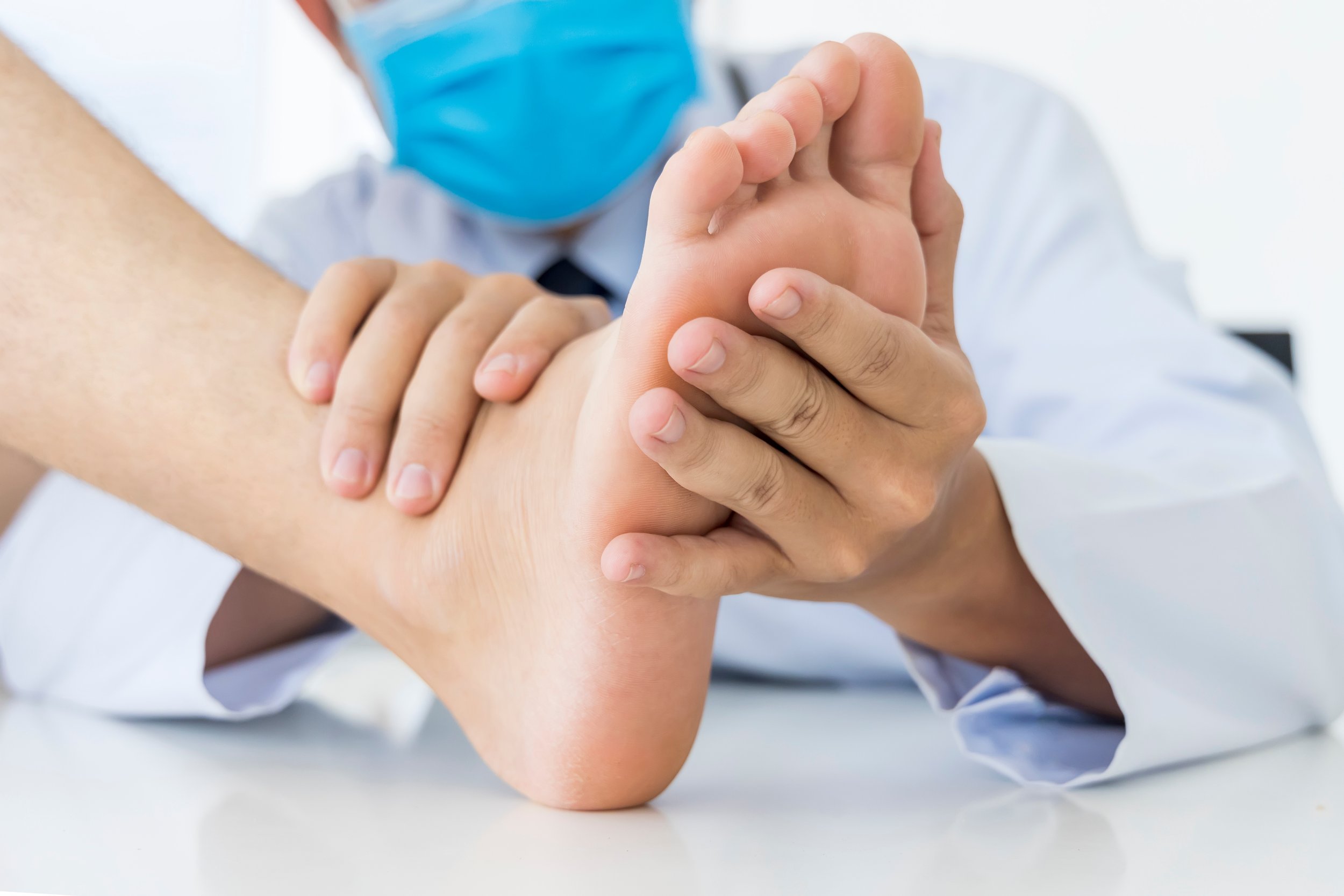
The first consequence is at the ankle itself. A foot that has spent weeks driven into plantarflexion by tone and gravity arrives in the rehabilitation gym short of the range it needs. A foot that cannot reach plantigrade cannot take weight properly, and everything that needs attention (standing practice, transfers, gait work) gets harder.
The second inherited problem relates to the skin. A heel pressure ulcer acquired during the acute phase can halt weight-bearing for weeks or months, right at the point in recovery when time matters most. Every day that the patient remains in bed results in loss of muscle mass. We also know that such an ulcer, even when healed, is much more likely to recur due to changes in the tissue's mechanical properties.
Most writing about heel pressure relief devices treats these as separate problems, one belonging to tissue viability and one to physiotherapy. In my experience, if we want continuity of care, they are best considered as part of the same problem seen from two directions, and the device on the end of the bed is where they meet. This article is about that meeting point, including some evidence that does not say what many people assume it says.
Why the foot drifts into equinus
The biomechanics are unforgiving. In supine lying, gravity pulls the forefoot down. Add increased plantarflexor tone after a central nervous system injury, and the foot is held in equinus for hours at a stretch, often with the limb rolled into external rotation as well. Muscle held short adapts to the shortened position, and what began as a posture issue becomes contracture and more difficult to deal with.
The consequences reach further than the ankle. A patient with a fixed plantarflexion contracture cannot get the heel to the floor. Standing frames, tilt tables and gait practice all presuppose a foot that can accept weight somewhere near plantigrade. I have watched rehabilitation potential drain away, not because the neurology dictated it, but because of this acquired problem.
KEY POINT: Plantarflexion contracture is a rehabilitation problem before it is an orthopaedic one. A foot that cannot reach plantigrade locks the patient out of standing and gait work, and the time window in which positioning is easy, before the contracture is established, is the same window in which the heel is most at risk from pressure.
What the evidence on positioning says
This is territory where clinical practice and trial evidence have not yet agreed. The largest synthesis we have, the Cochrane review of stretch for contracture by Harvey and colleagues, concludes that stretch, delivered by splints, positioning programmes or by hand, does not produce clinically important changes in joint mobility in the populations studied. A well-conducted randomised trial by Robinson and colleagues found no difference between wearing a night splint and standing on a tilt table for preventing ankle contracture early after stroke. If someone tells you a positioning device prevents contracture, the trial literature does not currently back them.
At the same time, a small case series by Grissom and Blanton, in which patients with established plantarflexion contracture after stroke or brain injury wore adjustable ankle-foot orthoses for 23 hours a day, reported an average gain in passive range of around 20 degrees over two weeks of sustained positioning. Six patients, nine ankles, no control group, so treat it as a signal rather than proof. Two intensive care trials of soft heel boots, by Meyers in 2017 and Arslan and colleagues in 2024, reported better preservation of ankle range alongside fewer heel injuries, though both were small.
My reading (and observation) is that sustained positioning can influence range in some patients and some settings. The effect is not reliable enough to promise, and the case for holding the foot near plantigrade rests as much on enabling weight-bearing practice as quickly as possible as on any claimed treatment effect on the muscle itself.
Two things the evidence is clear about. First, an ankle-foot orthosis is not a reliable treatment for spasticity, and stroke guidance does not recommend orthoses for reducing tone. Secondly, positioning is an adjunct to active rehabilitation, never a substitute for it.
The cost of positioning is paid by the skin
I think heel protection product design deserves more attention from physiotherapists than it usually gets.
That same series of adjustable orthoses, which reported 20 degrees of improved range, also reported some challenges: erythema, or blistering with pain, in 44% of treated ankles. This is the recurring pattern with sustained positioning. The longer a device holds a limb in a corrected position, the longer the same surfaces are loaded, and the posterior heel, with its thin soft-tissue cover over bone, is the first place to fail if it is in contact with a support surface. The international pressure injury guideline now lists device-related pressure injury among the recognised harms of heel devices generally, and asks for removal at least twice daily for skin checks.
So the physiotherapist is caught between two clocks. Take the device off, and the foot drifts back into equinus but leave it on, and the skin pays the price. The way out of the bind is not a schedule. It is geometry: a device that holds the foot toward plantigrade while suspending the heel completely, so that the one surface most likely to break down is loaded by nothing at all. The heel floats free inside the orthosis, the calf and foot carry the load, and sustained positioning stops being rationed by skin tolerance.
KEY POINT: In a foot and ankle positioning device, complete heel suspension is not a pressure-care feature accidentally bolted onto a physiotherapy tool, but it is the property that makes sustained positioning safe enough to sustain. A device that corrects the ankle but loads the heel simply exchanges one rehabilitation-stopping problem for another.
This is the design principle the PRAFO range is built around. The rigid frame holds the foot near plantigrade against moderate tone, resists the external rotation that bed rest encourages, and fully suspends the heel, with adjustability so an orthotist can track a changing limb. Some versions feature adjustable dorsiflexion and plantarflexion and valgus/varus at the ankle, so what can't be corrected can be accommodated.

No clinical trial compares this class of device against soft boots or against simple positioning splints. The argument is mechanical and observed to be effective in clinical practice. If sustained positioning is the goal, the heel must be out of the loading path, and a relatively rigid suspension frame is a direct way of achieving both at once. The mechanics are not in doubt. What trials would add is the comparison between device types.
The weight-bearing rule most wards do not know
There is a sentence in NHS Greater Glasgow and Clyde's inpatient heel guideline that deserves to be far better known in rehabilitation teams. Basically, it states that in-bed heel redistribution devices are not recommended in weight-bearing "unless specifically assessed by an orthotist", and redistribution for walking calls for an orthotics referral.
Think about what that means on a rehabilitation timeline. The patient progresses; standing practice begins; and the soft device that protected the heel in bed is either removed for therapy, leaving the heel and the positioning unguarded, or, worse, stood in, doing a job it was never designed or assessed for. Either way, the moment of definite progress is the moment protection lapses.
The rule points at the answer: the transition to weight-bearing is an orthotic assessment moment. Ambulatory configurations of heel suspension orthoses exist precisely for this transition, with a walking base fitted so that standing practice can begin without giving up heel suspension for tissue protection or ankle positioning. Whether a given patient should walk in one is a judgement for the orthotist and the therapy team together, and that is the point. This should be somebody's judgement, not an accident of whatever was left on the ward shelf.
KEY POINT: The start of weight-bearing is the highest-risk transition in the whole heel-protection journey, because it is when in-bed devices silently exceed their design brief. Treat the first opportunity to stand the patient as a referral trigger, not just a milestone.
Continuity across the rehabilitation day
A rehabilitation day is a series of positions such as bed, wheelchair, tilt table, standing frame, plinth, bed again. I encourage teams to map where, in that sequence, the heel is actually protected and the ankle actually positioned. The usual finding is a patchwork: good protection in bed, nothing in the chair with the feet on footplates, nothing on the tilt table, improvisation in the gym.
A device that travels with the patient through those positions closes the gaps, and it also closes the institutional ones. The orthosis fitted on the acute ward can go to the rehabilitation unit and home with the patient, which means the positioning programme and the heel protection survive every handover in between. Discontinuity of equipment is one of the quiet ways progress is lost between settings, and it is avoidable.
What I would suggest
If you are a physiotherapist or part of a rehabilitation team, three practical steps are worth taking with your colleagues. First, map the rehabilitation day for one high-tone patient and mark where the heel is unprotected and the ankle unpositioned; the gaps usually surprise people. Second, consider with nursing colleagues that the first stand triggers an orthotic review, not just a celebration. Third, when a positioning device is in use, build the twice-daily skin check into the therapy timetable rather than leaving it to chance.
Anatomical Concepts (UK) has supplied and supported the PRAFO range for more than three decades. Where we can help is with assessment: if you have a patient whose tone is defeating standard devices, or a transition to weight-bearing that needs an orthotic answer, we are happy to work through the options with you and your orthotist.
Decisions about an individual patient's positioning, weight-bearing and orthotic prescription belong with the treating team; nothing here is a substitute for that assessment.
And if you disagree with my reading of the positioning evidence, I would genuinely like to hear it; the conversation is how this field moves. You can reach us through the contact page.
Further reading
Harvey LA, Katalinic OM, Herbert RD, Moseley AM, Lannin NA, Schurr K. Stretch for the treatment and prevention of contractures. Cochrane Database of Systematic Reviews. 2017;1:CD007455. https://doi.org/10.1002/14651858.CD007455.pub3
Robinson W, Smith R, Aung O, Ada L. No difference between wearing a night splint and standing on a tilt table in preventing ankle contracture early after stroke: a randomised trial. Australian Journal of Physiotherapy. 2008;54(1):33-38. https://doi.org/10.1016/S0004-9514(08)70063-1
Meyers T. Prevention of heel pressure injuries and plantar flexion contractures with use of a heel protector in high-risk neurotrauma, medical, and surgical intensive care units: a randomized controlled trial. Journal of Wound, Ostomy and Continence Nursing. 2017;44(5):429-433. https://pubmed.ncbi.nlm.nih.gov/28877108/
Arslan K, Ates S. The effects of using heel protectors on the prevention of heel pressure injuries and plantar flexion contractures. Nursing in Critical Care. 2024;29(6):1729-1738. https://doi.org/10.1111/nicc.13071
Grissom SP, Blanton S. Treatment of upper motoneuron plantarflexion contractures by using an adjustable ankle-foot orthosis. Archives of Physical Medicine and Rehabilitation. 2001;82(2):270-273. https://doi.org/10.1053/apmr.2001.19018
Haesler E (ed). Prevention and Treatment of Pressure Ulcers/Injuries: Clinical Practice Guideline. The International Guideline, 4th edition. EPUAP, NPIAP, PPPIA; 2025. https://internationalguideline.com
Related articles on our site
Protecting Heels After Stroke: Balancing Recovery and Prevention
Solve equinus contractures with an innovative orthotic device
Floating Heels: What the 2025 International Pressure Injury Guideline Means for the PRAFO