
Articles
Filter by Topic
- Adaptive Sport 2
- Artificial Intelligence 1
- Bariatric 1
- Bike Labyrinth 3
- Bone density 1
- Brachial Plexus 2
- Bridging the Gap 1
- Bridging the Gap 1
- Carbonhand 4
- Cardiovascular 1
- Cauda Equina Syndrome 1
- Client Stories 4
- Cognition 1
- Company Updates 3
- Decision Making 2
- Dementia 1
- Denervation 30
- Diabetic Foot 12
- Efficiency 1
- Electrotherapy 33
- Exercise Benefits 34
- FES Cycling 23
- Fatigue 1
- Functional Electrical Stimulation (FES) 64
- Gait 2
- Goal Setting 5
- Grip 3
- Guidelines 2
- HRV 1
- Healthspan 2
- Indego 13
- Lifestyle 10
- Lower Motor Neuron 2
- Mobility 17
- Motivation 2
- NMES 3
- Nerve injury 5
- NexStride 1
- Occupational Therapy 1
- Orthotic 15
- PRAFO 32
- Pain 7
- Parkinsons 2
- Pressure Ulcers 20
- Product Updates 7
- RISE Stimulator 14
- Safety 2
- Spasticity 4
- Sponsor 1
- Standing 5
Article Length
- 1 minute read 3
- 10 minute read 24
- 11 minute read 4
- 12 minute read 11
- 14 minute read 1
- 15 minute read 14
- 18 minute read 1
- 2 minute read 4
- 24 minute read 1
- 25 minute read 2
- 26 minute read 1
- 28 minute read 1
- 3 minutes read 9
- 4 minute read 33
- 5 Minute read 17
- 6 minute read 6
- 7 minute read 20
- 8 minute read 12
- 9 minute read 4
- FES 2
- FoG 1
- Long Read 1
- PRAFO 1
- Seven Minute Read 1
- awareness 1
- carbonhand 2
- cognitive 1
- cues 1
- freezing gait 1
- freezing of gait 1
- gait 1
- neurological 1
- neuroplasticity 1
- nexstride 2
- occupational therapy 1
- occupational therapy day 1
- orthopaedics 1
- orthotic 1
- parkinson's 1
- pressure 1
- pressure relief 1
- prevention 1
- rehabilitation 2
- stroke 1
- ulcers 1
- world stroke day 1

Spinal Cord Stimulation - What it is and why it matters
We should shortly see the emergence of new spinal cord stimulation products that can assist rehabilitation, as the first examples are approaching commercialisation. Although not a cure for spinal cord injury, these devices have been shown to assist in the recovery of function in situations where this seemed lost for ever.
Spinal cord stimulation (SCS) has a rich history that dates back to the 1960s, when it was first introduced as a potential treatment for chronic pain management. Pioneered by Dr. Norman Shealy (1967) this innovative method was initially developed to alleviate intractable pain by delivering mild electrical pulse trains to the spinal cord via implantation of electrodes.
Over the years, the field of SCS has witnessed significant advancements in both technology and research, broadening its potential applications to include functional recovery following spinal cord injury (SCI).
This article looks briefly at the state of the art.

The effect of FES Cycling on bone density
Combining a passive/active exercise bike with synchronised FES (Functional Electrical Stimulation) is a well-researched and well-known exercise modality for persons to use after a spinal cord injury or other neurological condition. One of the benefits often sought by our spinal cord injured clients is preservation of bone density and we will look at the evidence for this in this article. Bone is a dynamic tissue - it responds to the needs placed upon it - getting stronger under load and weaker in the absence of load. Paralysis after a spinal cord injury and lack of activity that loads the bones results in a loss of bone strength and increased risk of fractures.. FES Cycing is one way of helping to prevent this.

Dont Back Down: A new book
Company director Derek Jones has a few years (actually decades) of experience working face to face with people following a spinal cord injury. His new book is aimed at newly injured persons and titled “Dont Back Down: Your guide to living well with a spinal cord injury”. It’s now available on Amazon as a paperback and Kindle book.
The content is a broad ranging and empowering guide to getting life back on track after a spinal cord injury.
FES Cycling and improving health after spinal cord injury
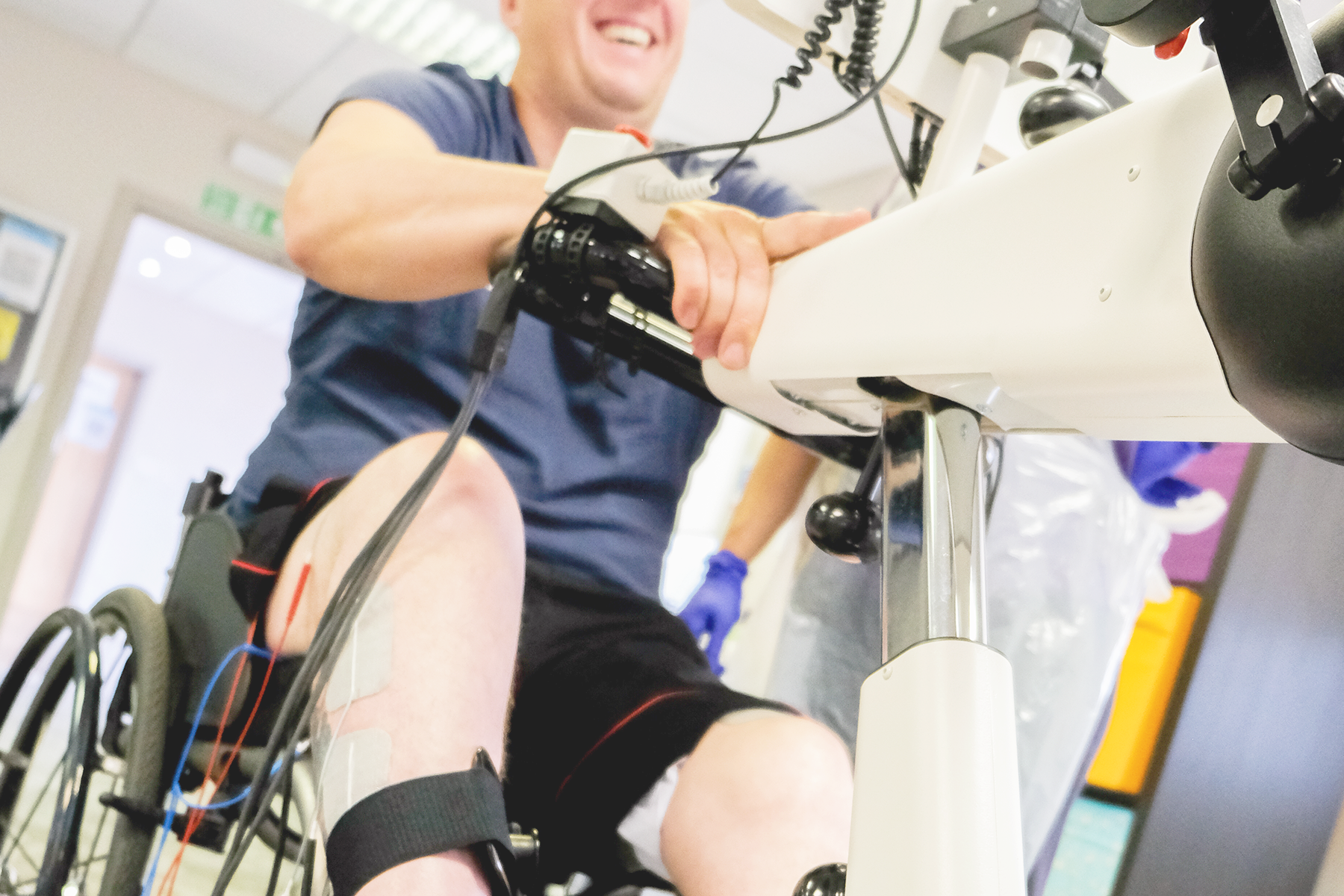
Physically disabled people are the least active group in society. According to Sports England, disabled people are twice as likely to be inactive as able-bodied people. A RehaMove FES Cycling system provides a method that many spinal cord injured people use at home for long term fitness. Recent developments have made this exercise choice more engaging than ever