
Articles
Filter by Topic
- Adaptive Sport 2
- Artificial Intelligence 1
- Bariatric 1
- Bike Labyrinth 3
- Bone density 1
- Brachial Plexus 2
- Bridging the Gap 1
- Bridging the Gap 1
- Carbonhand 4
- Cardiovascular 1
- Cauda Equina Syndrome 1
- Client Stories 4
- Cognition 1
- Company Updates 3
- Decision Making 2
- Dementia 1
- Denervation 31
- Diabetic Foot 12
- Dressings 1
- Efficiency 1
- Electrotherapy 34
- Epilepsy 1
- Exercise Benefits 34
- FES Cycling 24
- Fatigue 1
- Functional Electrical Stimulation (FES) 66
- Gait 2
- Goal Setting 5
- Grip 3
- Guidelines 2
- HRV 1
- Healthspan 2
- History 1
- Indego 13
- Lifestyle 10
- Lower Motor Neuron 2
- Mobility 17
- Motivation 2
- Multiple Sclerosis 1
- NMES 4
- Nerve injury 5
- NexStride 1
- Occupational Therapy 1
- Orthotic 15
- PRAFO 33
- Pain 7
- Parkinsons 2
- Pressure Ulcers 21
- Product Updates 7
- RISE Stimulator 15
Article Length
- 1 minute read 3
- 10 minute read 27
- 11 minute read 4
- 12 minute read 11
- 14 minute read 1
- 15 minute read 15
- 18 minute read 1
- 2 minute read 4
- 24 minute read 1
- 25 minute read 2
- 26 minute read 1
- 28 minute read 1
- 3 minutes read 9
- 4 minute read 33
- 5 Minute read 18
- 6 minute read 6
- 7 minute read 20
- 8 minute read 14
- 9 minute read 4
- FES 2
- FoG 1
- Long Read 1
- PRAFO 1
- Seven Minute Read 1
- awareness 1
- carbonhand 2
- cognitive 1
- cues 1
- freezing gait 1
- freezing of gait 1
- gait 1
- neurological 1
- neuroplasticity 1
- nexstride 2
- occupational therapy 1
- occupational therapy day 1
- orthopaedics 1
- orthotic 1
- parkinson's 1
- pressure 1
- pressure relief 1
- prevention 1
- rehabilitation 2
- stroke 1
- ulcers 1
- world stroke day 1
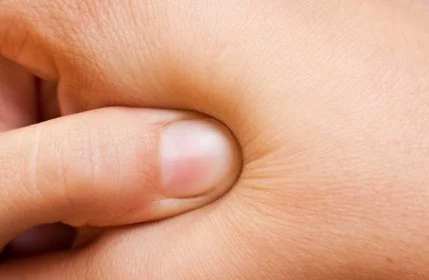
What a Prophylactic Dressing Can and Cannot Do for a Heel
There is a thread on an American nurses' forum with a four-word title: "To mepilex or not?" The nurse who started it described an arrangement many wards will recognise. Once a patient's risk score crossed a threshold, foam dressings went onto the sacrum and both heels more or less automatically, and nobody had ever explained when a dressing earns its place and when turning would do. One reply answered in four words of its own: "No dressing prevents pressure."
The thread is American, but the question is not. I've spent more than thirty years supplying devices that float the heel, so you might expect me to side with that reply. I don't, entirely. A dressing and a floating heel do different jobs, and the formal evidence for each is thinner than either camp tends to admit.
Put plainly we can say that a dressing changes the surface. Offloading changes the load.

Five Reasons to Add Stim2Go to Your Passive-Active Bike If You Have MS
We first started to work with FES cycling around 17 or 18 years ago now. We were told that many people with MS would be our clients. Actually that hasn't been the case, largely because the cost of most FES cycling systems were unaffordable. We couldn't help them. As we've started to work with the Stim2Go, we've found many more of our clients now have MS. They've been able to use the Stim2go for FES cycling and much more.
Most people with MS who own a motorised passive-active bike did not start out with one. They started with an ordinary exercise bike, and at some point it stopped being usable. They could no longer get on the upright one. The standard bike became unusable because they could not generate enough momentum. Their feet would not stay on the pedals, or a heel kept catching the frame, or tone made the whole thing impossible. A MOTOmed or a THERA-Trainer, with a motor that moves the legs when they will not move on their own, was the answer to that problem, and for many people, it has been a good one.
The question this article answers is whether the electrical stimulation you may have seen on a bike in a rehabilitation gym can be added to the bike you already have at home, and whether it is worth it. The Stim2Go, a very flexible yet powerful stimulator, is not tied to any bike. Let's look at what the evidence supports.
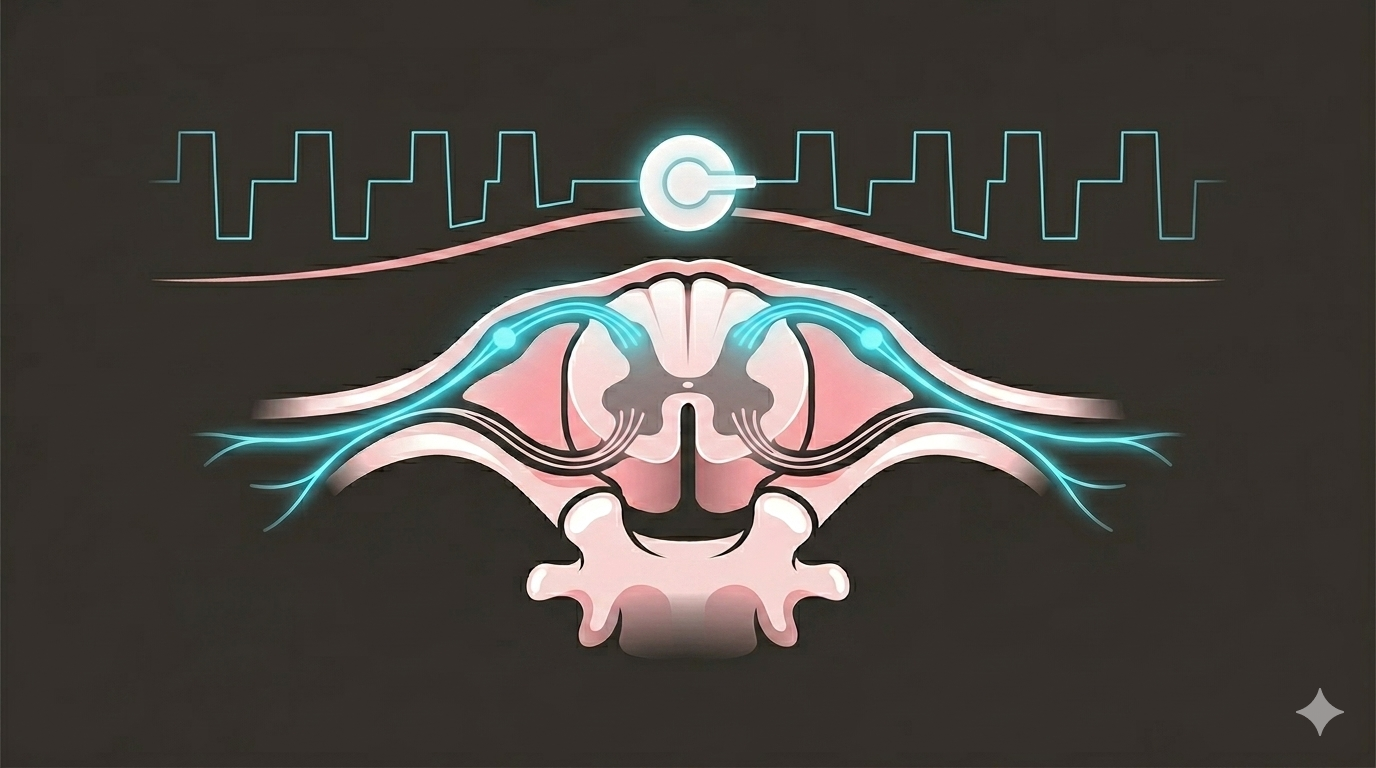
When Spasticity Gets in the Way of Standing
For some people, the obstacle to standing up is not weakness. It is the opposite problem: legs that are too stiff, too tense, or too unpredictable to cooperate. You go to move and the leg pushes out straight when you wanted it to bend, or a spasm arrives at the worst possible moment, or simply getting your feet into a sensible position feels like a negotiation. This is spasticity, and for a great many people, after an incomplete spinal cord injury or stroke, it is the single thing standing between them and a useful sit-to-stand.
We have written before about spasticity after spinal cord injury and the limits of medication. This article looks at a more specific question: when spasticity is the thing blocking a functional goal like standing, what can electrical stimulation do about it, and how do the pieces fit together?
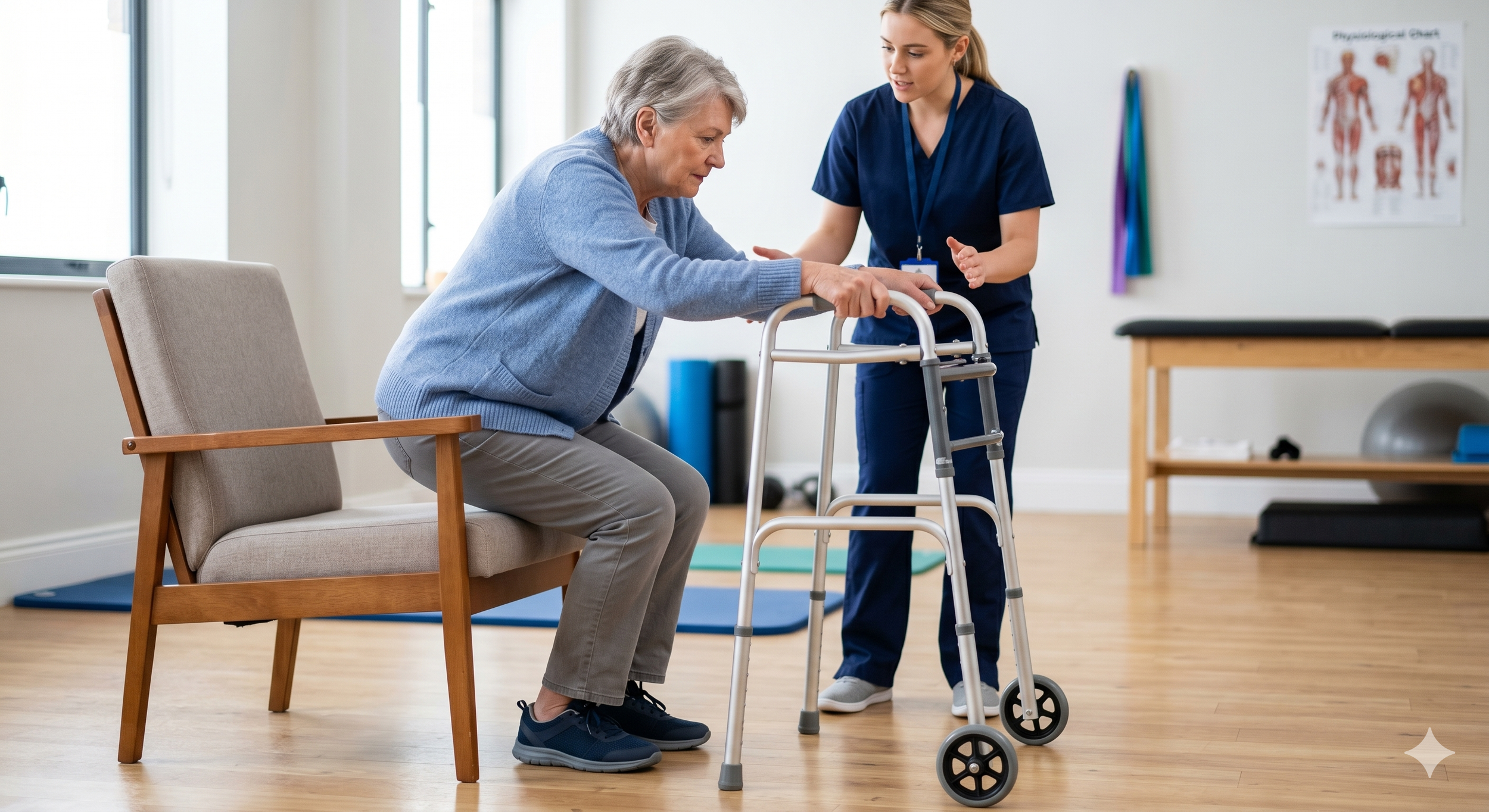
Standing Up Again: How Responsive Electrical Stimulation Can Support Sit-to-Stand Practice
Ask someone in the early stages of recovery from a spinal cord injury or stroke what they most want to do again, and the answers are often smaller and more specific than you might expect. Not "run a marathon." More often, it is something like rising from a chair without help, managing a transfer to the bed, or pushing up to standing so that getting to the toilet is your own business and nobody else's.
Sit-to-stand sits at the centre of all of that. It is one of the most important movements in daily life and one of the first functional milestones a therapist will work on. If you can move reliably between sitting and standing, a great deal of independence follows. This article looks at how electrical stimulation, and in particular a responsive electrical stimulation device like the Stim2Go, can support sit-to-stand practice as part of a wider rehabilitation programme.
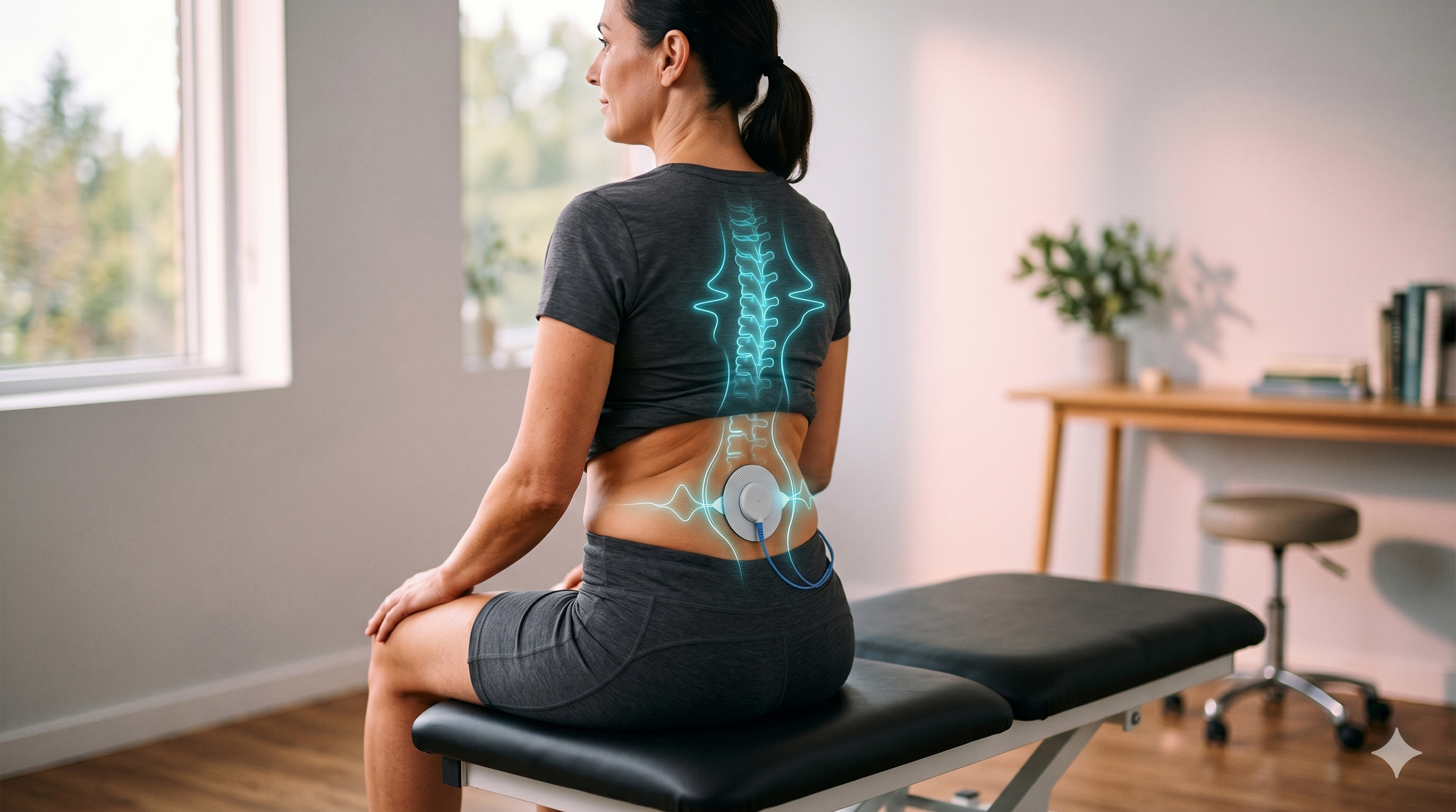
Waveform matters: what new evidence tells us about transcutaneous spinal cord stimulation
Transcutaneous spinal cord stimulation (tSCS) has moved quickly from a research curiosity to a recognised tool in neurological rehabilitation. People living with spinal cord injury, stroke, and multiple sclerosis are asking us about it. Clinicians want to know which device to recommend. Equipment commissioners want evidence-led guidance before authorising spend that can run into tens of thousands of pounds per system.
A paper published in Nature Biomedical Engineering on 12 May 2026 has added something important to that conversation. It is not a clinical trial. It is a careful study of the physics and physiology that govern which nerve fibres a tSCS device actually recruits. The finding is consequential, and it bears directly on the choice of device.
In short: the waveform you choose determines whether tSCS does the thing rehabilitation needs it to do.

Floating Heels: What the 2025 International Pressure Injury Guideline Means for the PRAFO
Heel pressure injuries are one of those problems where the evidence has been ahead of everyday practice for years. We have known for many years that pillows and improvised supports rarely keep a heel clear of the bed for long, and that a heel touching anything is a heel under pressure and shear. The 2025 International Pressure Injury Guideline (the fourth edition produced by NPIAP, EPUAP, and PPPIA) has now caught up to that reality, and in doing so it has changed the language clinicians and commissioners should use when they think about heel protection.
The guideline introduces a phrase worth noticing: "floating heels."
It is not a marketing line. It is a clinical description of what an effective heel offloading intervention has to achieve, taken from the guideline itself. And it has practical implications for any service that has to choose, fund, or audit heel protection equipment.