
Articles
Filter by Topic
- Adaptive Sport 1
- Artificial Intelligence 1
- Bike Labyrinth 3
- Bone density 1
- Brachial Plexus 1
- Bridging the Gap 1
- Bridging the Gap 1
- Carbonhand 4
- Cardiovascular 1
- Client Stories 4
- Cognition 1
- Company Updates 3
- Decision Making 1
- Dementia 1
- Denervation 22
- Diabetic Foot 12
- Efficiency 1
- Electrotherapy 30
- Exercise Benefits 32
- FES Cycling 18
- Fatigue 1
- Functional Electrical Stimulation (FES) 60
- Gait 2
- Goal Setting 5
- Grip 3
- Guidelines 1
- Healthspan 2
- Indego 13
- Lifestyle 10
- Lower Motor Neuron 1
- Mobility 17
- Motivation 2
- NMES 2
- Nerve injury 1
- NexStride 1
- Occupational Therapy 1
- Orthotic 15
- PRAFO 25
- Pain 7
- Parkinsons 2
- Pressure Ulcers 13
- Product Updates 7
- RISE Stimulator 10
- Safety 2
- Spasticity 2
- Sponsor 1
- Standing 5
- Stim2Go 6
- Stimulette den2x 5
- Support 1
Article Length
- 1 minute read 3
- 10 minute read 20
- 11 minute read 4
- 12 minute read 8
- 15 minute read 10
- 18 minute read 1
- 2 minute read 4
- 26 minute read 1
- 28 minute read 1
- 3 minutes read 9
- 4 minute read 34
- 5 Minute read 15
- 6 minute read 6
- 7 minute read 16
- 8 minute read 7
- 9 minute read 3
- FES 2
- FoG 1
- PRAFO 1
- Seven Minute Read 1
- awareness 1
- carbonhand 2
- cognitive 1
- cues 1
- freezing gait 1
- freezing of gait 1
- gait 1
- neurological 1
- neuroplasticity 1
- nexstride 2
- occupational therapy 1
- occupational therapy day 1
- orthopaedics 1
- orthotic 1
- parkinson's 1
- pressure 1
- pressure relief 1
- prevention 1
- rehabilitation 2
- stroke 1
- ulcers 1
- world stroke day 1

Why should you stand regularly following a spinal cord injury?
Standing after a spinal cord injury is recommended for health. Standing frames, standing wheelchairs, exoskeletons and the Tek RMD - how do they compare?

Trying an Indego exoskeleton in 2019
As we pointed out in a recent article “How to Buy an Indego Exoskeleton”, we expect that potential users will want to try each exoskeleton on the market and explore what they can do. This is not something that should be done with a “quick demo”. In fact, it might be unsafe to take this approach because each exoskeleton will demand a certain level of “competence” from the user to get the best out of it.
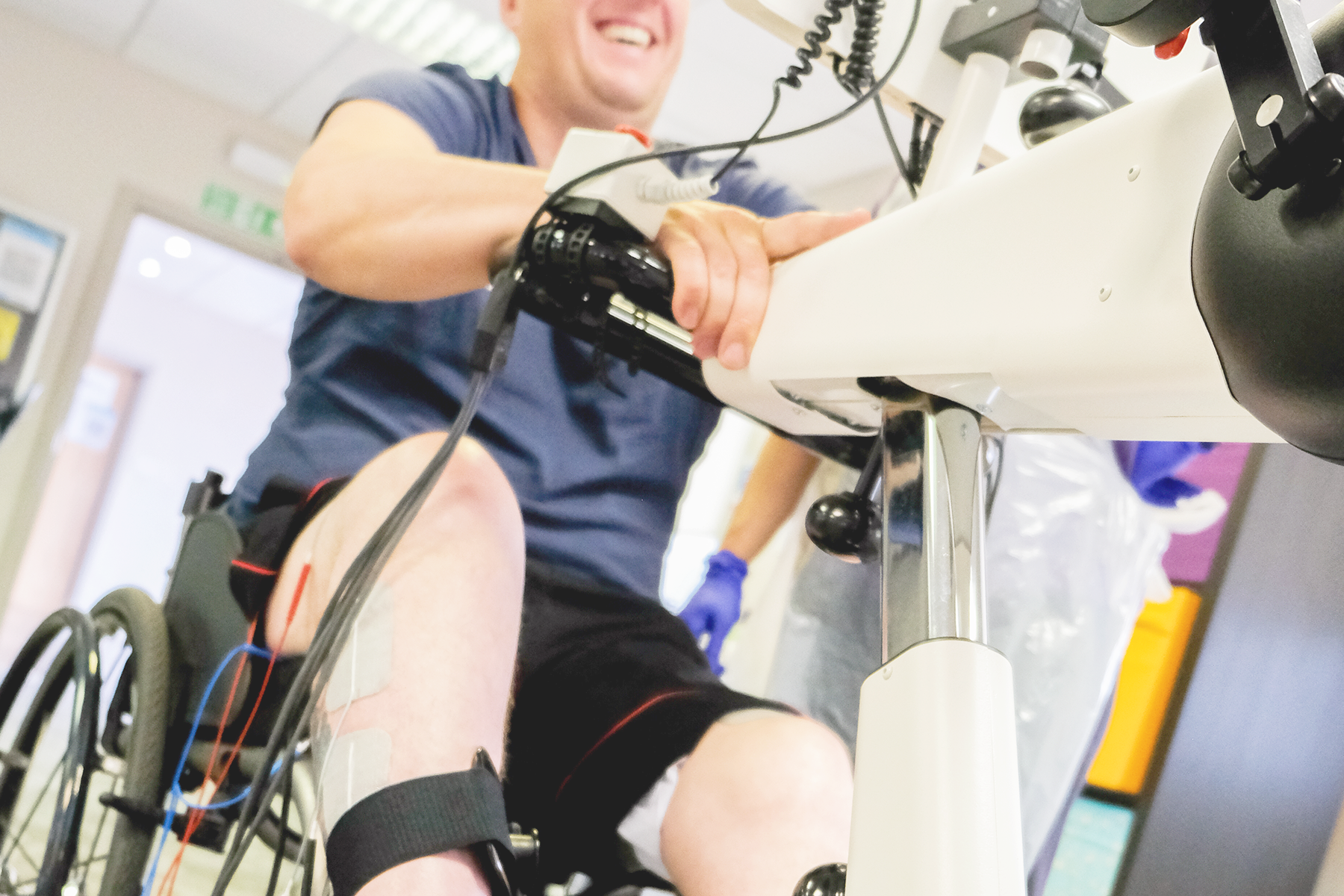
FES Cycling and improving health after spinal cord injury
Physically disabled people are the least active group in society. According to Sports England, disabled people are twice as likely to be inactive as able-bodied people. A RehaMove FES Cycling system provides a method that many spinal cord injured people use at home for long term fitness. Recent developments have made this exercise choice more engaging than ever

Staving off Alzheimers in advancing age
One of the least “spectacular” products we deal with is the Bike Labyrinth system. It is however, one of the products that can have the biggest impact in practice. When cognitive decline due to Alzheimers or dementia is stealing quality of life, this approach provides a practical intervention that makes a real difference. What does science tell us about maintaining long term brain health? We take a look at this

FES Cycling can build muscle mass after paralysis
We have known for decades that functional, electrically stimulated (FES) cycle training such as with the RehaMove FES bike can improve the cardiorespiratory fitness of spinal cord injured persons and others with neurological conditions such as MS, Parkinsons or recovering from a stroke. This is a massive benefit for long term health and fitness but what clients tend to notice is that their muscles get bigger - and that’s not a bad thing either.

Bike Labyrinth and Combating Dementia
Exergaming with Bike Labyrinth is an intervention in which physical exercise is combined with cognitive stimulation in a single task. A recent study deployed Bike Labyrinth’s interactive cycle route technology with older adults with dementia. The study found that exergame training improved psychomotor speed, compared to an active control group. This finding may be clinically relevant as psychomotor speed is an important predictor for functional decline.