
Articles
Filter by Topic
- Adaptive Sport 2
- Artificial Intelligence 1
- Bariatric 1
- Bike Labyrinth 3
- Bone density 1
- Brachial Plexus 2
- Bridging the Gap 1
- Bridging the Gap 1
- Carbonhand 4
- Cardiovascular 1
- Cauda Equina Syndrome 1
- Client Stories 4
- Cognition 1
- Company Updates 3
- Decision Making 2
- Dementia 1
- Denervation 30
- Diabetic Foot 12
- Dressings 1
- Efficiency 1
- Electrotherapy 34
- Epilepsy 1
- Exercise Benefits 34
- FES Cycling 24
- Fatigue 1
- Functional Electrical Stimulation (FES) 66
- Gait 2
- Goal Setting 5
- Grip 3
- Guidelines 2
- HRV 1
- Healthspan 2
- History 1
- Indego 13
- Lifestyle 10
- Lower Motor Neuron 2
- Mobility 17
- Motivation 2
- Multiple Sclerosis 1
- NMES 4
- Nerve injury 5
- NexStride 1
- Occupational Therapy 1
- Orthotic 15
- PRAFO 33
- Pain 7
- Parkinsons 2
- Pressure Ulcers 21
- Product Updates 7
- RISE Stimulator 14
Article Length
- 1 minute read 3
- 10 minute read 27
- 11 minute read 4
- 12 minute read 11
- 14 minute read 1
- 15 minute read 14
- 18 minute read 1
- 2 minute read 4
- 24 minute read 1
- 25 minute read 2
- 26 minute read 1
- 28 minute read 1
- 3 minutes read 9
- 4 minute read 33
- 5 Minute read 18
- 6 minute read 6
- 7 minute read 20
- 8 minute read 14
- 9 minute read 4
- FES 2
- FoG 1
- Long Read 1
- PRAFO 1
- Seven Minute Read 1
- awareness 1
- carbonhand 2
- cognitive 1
- cues 1
- freezing gait 1
- freezing of gait 1
- gait 1
- neurological 1
- neuroplasticity 1
- nexstride 2
- occupational therapy 1
- occupational therapy day 1
- orthopaedics 1
- orthotic 1
- parkinson's 1
- pressure 1
- pressure relief 1
- prevention 1
- rehabilitation 2
- stroke 1
- ulcers 1
- world stroke day 1
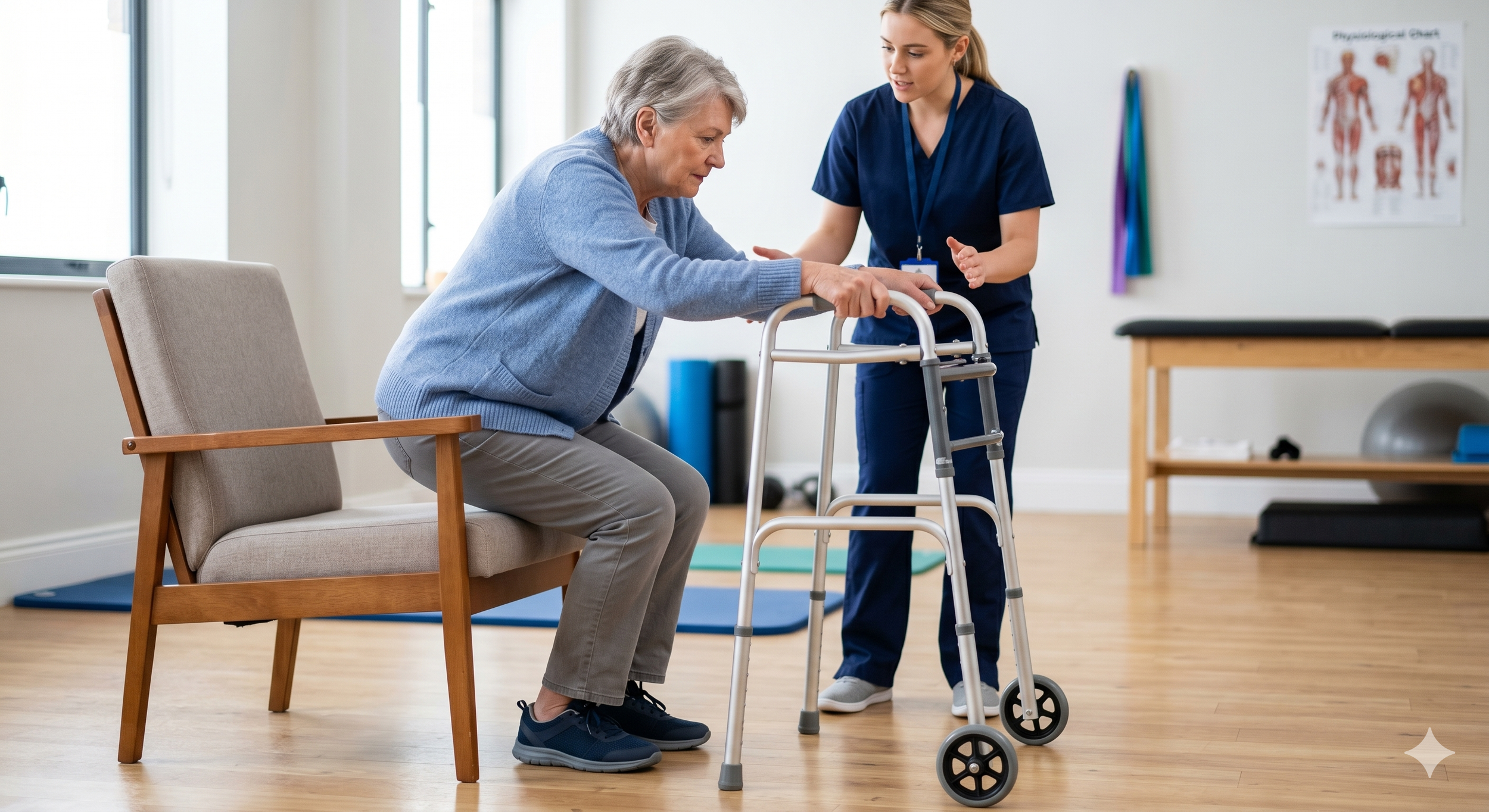
Standing Up Again: How Responsive Electrical Stimulation Can Support Sit-to-Stand Practice
Ask someone in the early stages of recovery from a spinal cord injury or stroke what they most want to do again, and the answers are often smaller and more specific than you might expect. Not "run a marathon." More often, it is something like rising from a chair without help, managing a transfer to the bed, or pushing up to standing so that getting to the toilet is your own business and nobody else's.
Sit-to-stand sits at the centre of all of that. It is one of the most important movements in daily life and one of the first functional milestones a therapist will work on. If you can move reliably between sitting and standing, a great deal of independence follows. This article looks at how electrical stimulation, and in particular a responsive electrical stimulation device like the Stim2Go, can support sit-to-stand practice as part of a wider rehabilitation programme.

Why structure beats willpower in neurological rehabilitation
If motivation were enough, rehabilitation adherence (sticking to the effort of training to recover) would not decline so predictably. But it does. Across conditions, across populations, the pattern is the same: strong engagement in the early weeks, followed by a steady fade. Not because people stop wanting to recover — but because motivation, by its nature, is temporary. It is a mood, not a method.
After decades of working in this field, I can tell you that the people who sustain their efforts over months and years are rarely the most motivated. They are the most structured. They have built something that works regardless of how they feel on any given morning — when they are tired, in pain, frustrated by slow progress, and wondering whether any of this is actually working.
To achieve significant functional gains and take advantage of neuroplasticity, it takes sustained, high-quality repetitions. Without structure, success will be elusive.

Volume vs Intensity in Neurological Rehabilitation: Why Consistency Often Matters More
I recently came across an interesting newsletter item from "Building the Elite" about the relative importance of training volume versus intensity.
The argument—made by someone preparing candidates for special forces selection—was that volume is the primary training variable to manage. This is because it has the greatest impact on the training programme's effectiveness, while intensity determines the type of adaptation you're targeting.
This struck me as highly relevant to neurological rehabilitation. Let's see if you agree.

The Hidden Benefits of Standing: Why Upright Time Matters After SCI
Standing can offer more than simply being upright - especially after spinal cord injury (SCI). This article explores the wider benefits of regular standing, including support for circulation, joint and muscle health, digestion, bone density, and overall wellbeing. It also explains why upright time can be a valuable part of rehabilitation and long-term health management. A useful overview for anyone considering standing programmes or looking to understand how consistent upright time may support comfort, function, and quality of life after SCI.

How Long Before I See Results from FES Cycling?
Wondering how long it takes to notice benefits from FES cycling? This article breaks down what to expect in the first few sessions and over the following weeks, from early improvements in muscle activation and comfort to longer-term gains in strength, endurance, and performance. It explains why consistency matters, how individual factors can affect progress, and what milestones may indicate you’re on the right track. A helpful overview for anyone starting FES cycling and wanting a realistic timeline for results.

A Single Exercise Session Rewires Your Immune System - Relevance for SCI
A single bout of exercise may be enough to create measurable changes in immune activity. This article looks at recent findings on how physical activity can influence immune cells, potentially improving how the body regulates inflammation and defends itself. It breaks down the key takeaways and what they might mean for health, resilience, recovery and everyday wellbeing.