
Articles
Filter by Topic
- Adaptive Sport 2
- Artificial Intelligence 1
- Bike Labyrinth 3
- Bone density 1
- Brachial Plexus 2
- Bridging the Gap 1
- Bridging the Gap 1
- Carbonhand 4
- Cardiovascular 1
- Cauda Equina Syndrome 1
- Client Stories 4
- Cognition 1
- Company Updates 3
- Decision Making 2
- Dementia 1
- Denervation 30
- Diabetic Foot 12
- Efficiency 1
- Electrotherapy 32
- Exercise Benefits 34
- FES Cycling 22
- Fatigue 1
- Functional Electrical Stimulation (FES) 63
- Gait 2
- Goal Setting 5
- Grip 3
- Guidelines 1
- HRV 1
- Healthspan 2
- Indego 13
- Lifestyle 10
- Lower Motor Neuron 2
- Mobility 17
- Motivation 2
- NMES 3
- Nerve injury 5
- NexStride 1
- Occupational Therapy 1
- Orthotic 15
- PRAFO 29
- Pain 7
- Parkinsons 2
- Pressure Ulcers 16
- Product Updates 7
- RISE Stimulator 14
- Safety 2
- Spasticity 3
- Sponsor 1
- Standing 5
- Stim2Go 9
Article Length
- 1 minute read 3
- 10 minute read 23
- 11 minute read 4
- 12 minute read 10
- 14 minute read 1
- 15 minute read 13
- 18 minute read 1
- 2 minute read 4
- 24 minute read 1
- 25 minute read 1
- 26 minute read 1
- 28 minute read 1
- 3 minutes read 9
- 4 minute read 33
- 5 Minute read 17
- 6 minute read 6
- 7 minute read 19
- 8 minute read 12
- 9 minute read 3
- FES 2
- FoG 1
- Long Read 1
- PRAFO 1
- Seven Minute Read 1
- awareness 1
- carbonhand 2
- cognitive 1
- cues 1
- freezing gait 1
- freezing of gait 1
- gait 1
- neurological 1
- neuroplasticity 1
- nexstride 2
- occupational therapy 1
- occupational therapy day 1
- orthopaedics 1
- orthotic 1
- parkinson's 1
- pressure 1
- pressure relief 1
- prevention 1
- rehabilitation 2
- stroke 1
- ulcers 1
- world stroke day 1

Electrotherapy, FES and it's historical roots
Functional Electrical Stimulation and its parent topic, Electrotherapy have been around a long time now but it seems to me are still not well-understood or embraced in the mainstream of healthcare in the UK. In a series of articles im going to take a look at this topic from a number of points of view. In this first article we peek at the historical roots of electrotherapy.

Spasticity and FES Cycling
Individuals who have troublesome spasticity in their legs can generally use a RehaMove FES Cycling system but there are certain things that can be done to make this more effective.
Let’s start with the fundamentals
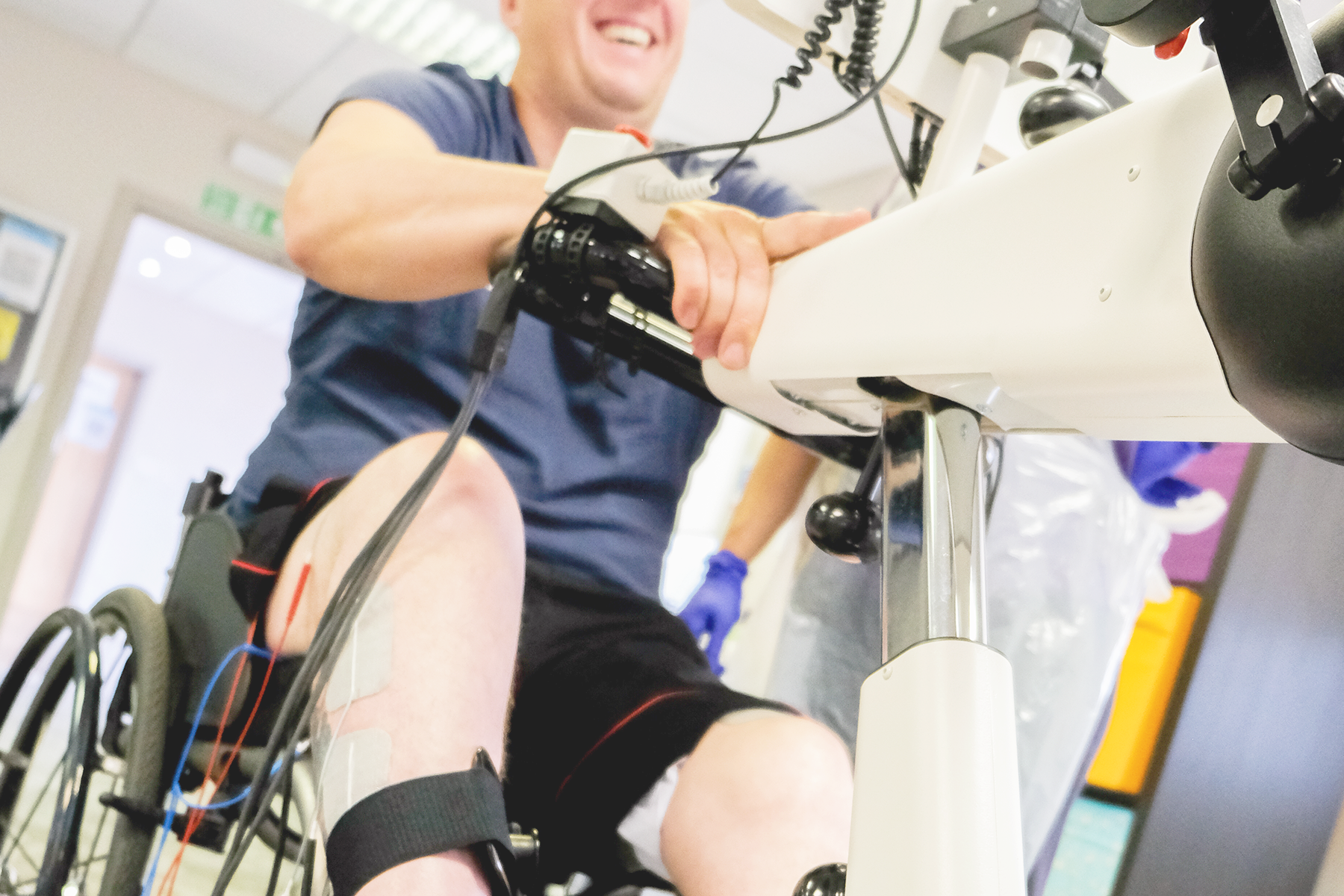
FES Cycling and improving health after spinal cord injury
Physically disabled people are the least active group in society. According to Sports England, disabled people are twice as likely to be inactive as able-bodied people. A RehaMove FES Cycling system provides a method that many spinal cord injured people use at home for long term fitness. Recent developments have made this exercise choice more engaging than ever

FES Cycling can build muscle mass after paralysis
We have known for decades that functional, electrically stimulated (FES) cycle training such as with the RehaMove FES bike can improve the cardiorespiratory fitness of spinal cord injured persons and others with neurological conditions such as MS, Parkinsons or recovering from a stroke. This is a massive benefit for long term health and fitness but what clients tend to notice is that their muscles get bigger - and that’s not a bad thing either.
Planning an FES Cycling session with the RehaMove system
We recently put together a Pilot “FES Cycling Tune Up Course” which is free for our clients who get an access code from us. The aim is to give more in-depth information on the background science as well as how to programme the RehaMove FES Cycling system for optimal usage.

Finding fitness despite disability
Being resilient is a great quality to gain. Improving and maintaining our fitness is important for all of us. If you are disabled and have limited mobility, keeping fit and active can feel much more difficult, but it doesn't have to be this way. In any case, keeping fit has a big pay off when it comes to gaining quality of life for the long term. You can look upon exercise as the best medicine - so how do we get it?