
Articles
Filter by Topic
- Adaptive Sport 2
- Artificial Intelligence 1
- Bariatric 1
- Bike Labyrinth 3
- Bone density 1
- Brachial Plexus 2
- Bridging the Gap 1
- Bridging the Gap 1
- Carbonhand 4
- Cardiovascular 1
- Cauda Equina Syndrome 1
- Client Stories 4
- Cognition 1
- Company Updates 3
- Decision Making 2
- Dementia 1
- Denervation 30
- Diabetic Foot 12
- Efficiency 1
- Electrotherapy 33
- Exercise Benefits 34
- FES Cycling 23
- Fatigue 1
- Functional Electrical Stimulation (FES) 66
- Gait 2
- Goal Setting 5
- Grip 3
- Guidelines 2
- HRV 1
- Healthspan 2
- History 1
- Indego 13
- Lifestyle 10
- Lower Motor Neuron 2
- Mobility 17
- Motivation 2
- NMES 4
- Nerve injury 5
- NexStride 1
- Occupational Therapy 1
- Orthotic 15
- PRAFO 32
- Pain 7
- Parkinsons 2
- Pressure Ulcers 20
- Product Updates 7
- RISE Stimulator 14
- Safety 2
- Spasticity 4
- Sponsor 1
Article Length
- 1 minute read 3
- 10 minute read 25
- 11 minute read 4
- 12 minute read 11
- 14 minute read 1
- 15 minute read 14
- 18 minute read 1
- 2 minute read 4
- 24 minute read 1
- 25 minute read 2
- 26 minute read 1
- 28 minute read 1
- 3 minutes read 9
- 4 minute read 33
- 5 Minute read 18
- 6 minute read 6
- 7 minute read 20
- 8 minute read 12
- 9 minute read 4
- FES 2
- FoG 1
- Long Read 1
- PRAFO 1
- Seven Minute Read 1
- awareness 1
- carbonhand 2
- cognitive 1
- cues 1
- freezing gait 1
- freezing of gait 1
- gait 1
- neurological 1
- neuroplasticity 1
- nexstride 2
- occupational therapy 1
- occupational therapy day 1
- orthopaedics 1
- orthotic 1
- parkinson's 1
- pressure 1
- pressure relief 1
- prevention 1
- rehabilitation 2
- stroke 1
- ulcers 1
- world stroke day 1

History of the wheelchair and the evolution of mobility
Today the wheelchair is one of the most, if not the most, commonly used assistive device for the personal mobility of people with disabilities. I suspect that, throughout history, wheelchairs have often been seen as a source of frustration, and a necessary evil; something that no one actually wanted to use. What matters though is that we consider a wheelchair just like any object we design - within the context of it’s use. We can’t judge the product design in isolation from it’s functional use in the environment and the ambitions of the user. We look at how robotics has allowed a rethink of products for standing and moving.

Claire Lomas - Why I’m Committed to FES Cycling
FES Cycling with the RehaMove system is a foundation in Claire’s routine. In this short video she describes how she discovered FES Cycling, why she felt it was important to continue to exercise the parts that were paralysed as well as the parts that weren’t, and the benefits she has seen from doing so.

Rehab & Training Part 2 - The Dose
In this article, we explore the second most important training principle from strength and conditioning which considers the “Dose” of training - in other words the Volume, Intensity and Frequency of training. We look at how these factors relate to neurorehabilitation and learning.
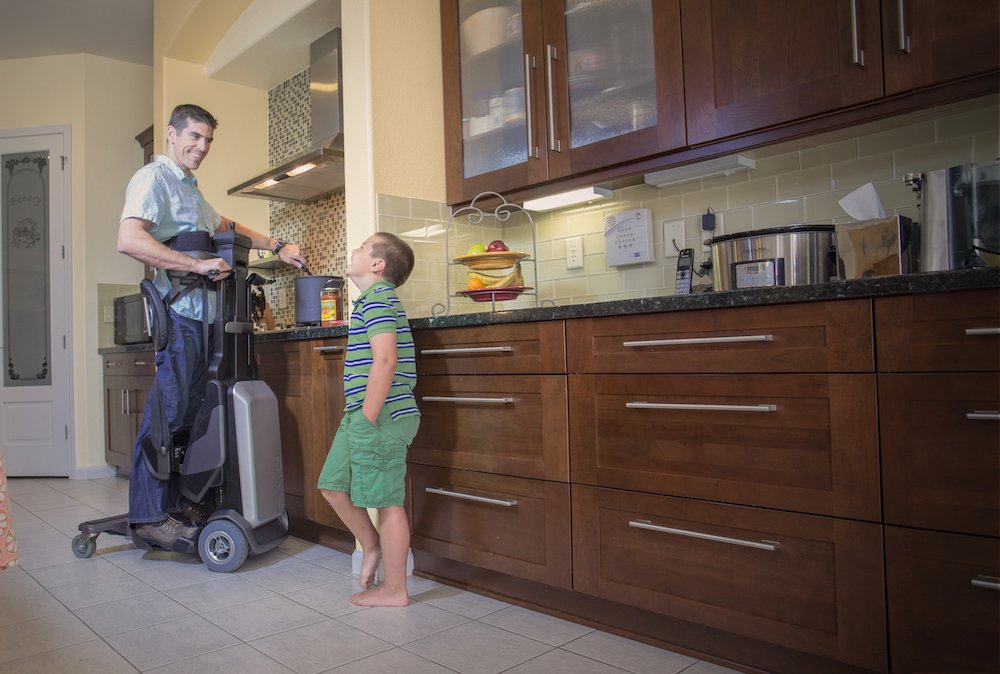
Is a Tek RMD value for money?
One of the clear and obvious benefits of a Tek RMD is that it allows clients to stand with good posture and move around indoors. For most people that might be appreciated by their therapist but it’s not enough of a benefit to justify purchase. So how do clients find value from the Tek RMD?