
Articles
Filter by Topic
- Adaptive Sport 2
- Artificial Intelligence 1
- Bariatric 1
- Bike Labyrinth 3
- Bone density 1
- Brachial Plexus 2
- Bridging the Gap 1
- Bridging the Gap 1
- Carbonhand 4
- Cardiovascular 1
- Cauda Equina Syndrome 1
- Client Stories 4
- Cognition 1
- Company Updates 3
- Decision Making 2
- Dementia 1
- Denervation 30
- Diabetic Foot 12
- Dressings 1
- Efficiency 1
- Electrotherapy 33
- Exercise Benefits 34
- FES Cycling 24
- Fatigue 1
- Functional Electrical Stimulation (FES) 66
- Gait 2
- Goal Setting 5
- Grip 3
- Guidelines 2
- HRV 1
- Healthspan 2
- History 1
- Indego 13
- Lifestyle 10
- Lower Motor Neuron 2
- Mobility 17
- Motivation 2
- Multiple Sclerosis 1
- NMES 4
- Nerve injury 5
- NexStride 1
- Occupational Therapy 1
- Orthotic 15
- PRAFO 33
- Pain 7
- Parkinsons 2
- Pressure Ulcers 21
- Product Updates 7
- RISE Stimulator 14
- Safety 2
Article Length
- 1 minute read 3
- 10 minute read 26
- 11 minute read 4
- 12 minute read 11
- 14 minute read 1
- 15 minute read 14
- 18 minute read 1
- 2 minute read 4
- 24 minute read 1
- 25 minute read 2
- 26 minute read 1
- 28 minute read 1
- 3 minutes read 9
- 4 minute read 33
- 5 Minute read 18
- 6 minute read 6
- 7 minute read 20
- 8 minute read 14
- 9 minute read 4
- FES 2
- FoG 1
- Long Read 1
- PRAFO 1
- Seven Minute Read 1
- awareness 1
- carbonhand 2
- cognitive 1
- cues 1
- freezing gait 1
- freezing of gait 1
- gait 1
- neurological 1
- neuroplasticity 1
- nexstride 2
- occupational therapy 1
- occupational therapy day 1
- orthopaedics 1
- orthotic 1
- parkinson's 1
- pressure 1
- pressure relief 1
- prevention 1
- rehabilitation 2
- stroke 1
- ulcers 1
- world stroke day 1

How to buy an Indego exoskeleton in 2020
Purchasing something like the Indego exoskeleton is potentially a life-changing event and deserves careful consideration. You should at least consider - Why would I purchase an exoskeleton? What would I like to think, feel and be able to do? Is this purchase realistic based on guidance from my clinical advisors? It is a good idea to try all of the exoskeleton systems that are available if you can.

Fitting the E-Rom or Quad elbow orthosis
The E-ROM and Quad elbow orthoses are two of the popular designs in the Anatomical Concepts range of elbow orthoses. The designs share a common overall structure with a “single strut design” that positions the jorthotic joint behind the elbow. This makes these designs comfortable for patients to wear - leading to better overall compliance with useage. A video shows the general fitting procedure. You can turn the subtitles on and off as you choose.

Comparing the Indego exoskeleton and the Tek RMD
As we noted in a recent article, we are sometimes asked, “You work with both the Indego Exoskeleton and the Tek RMD - which is better?” This is really like trying to compare oranges and apples. It very much depends on the functional ability and aspirations of the individual client. Whilst both can potentially allow someone with lower limb paralysis to stand and move, both products have very different features and benefits. Both are outstanding products but their true value can only be judged in relation to individual goals and priorities.

Fitting and adjusting a 650SKG PRAFO
The 650SKG is an easy to fit PRAFO (Pressure Relief Ankle Foot Orthosis) design that is ideal to protect the heels of an at-risk patient. It is only the only design on the market with a metal upright and intrinsic walking base to ensure safe positioning and protection of the heel whether the patient is in bed, wheelchiar or carrying out limited ambulation. Here we look at fitting and adjustment.

The PRAFO and preventing pressure sores
The PRAFO designs of ankle foot orthoses are an effective way of (ideally) preventing or healing pressure sores at the heel. So why are these designs successful in achieving this in both immobile and ambulant patients? The answer to the PRAFO’s effectiveness is very simple - even if understanding how pressure ulcers can develop is complex. In this article we touch on the biomechanics of pressure ulcers.
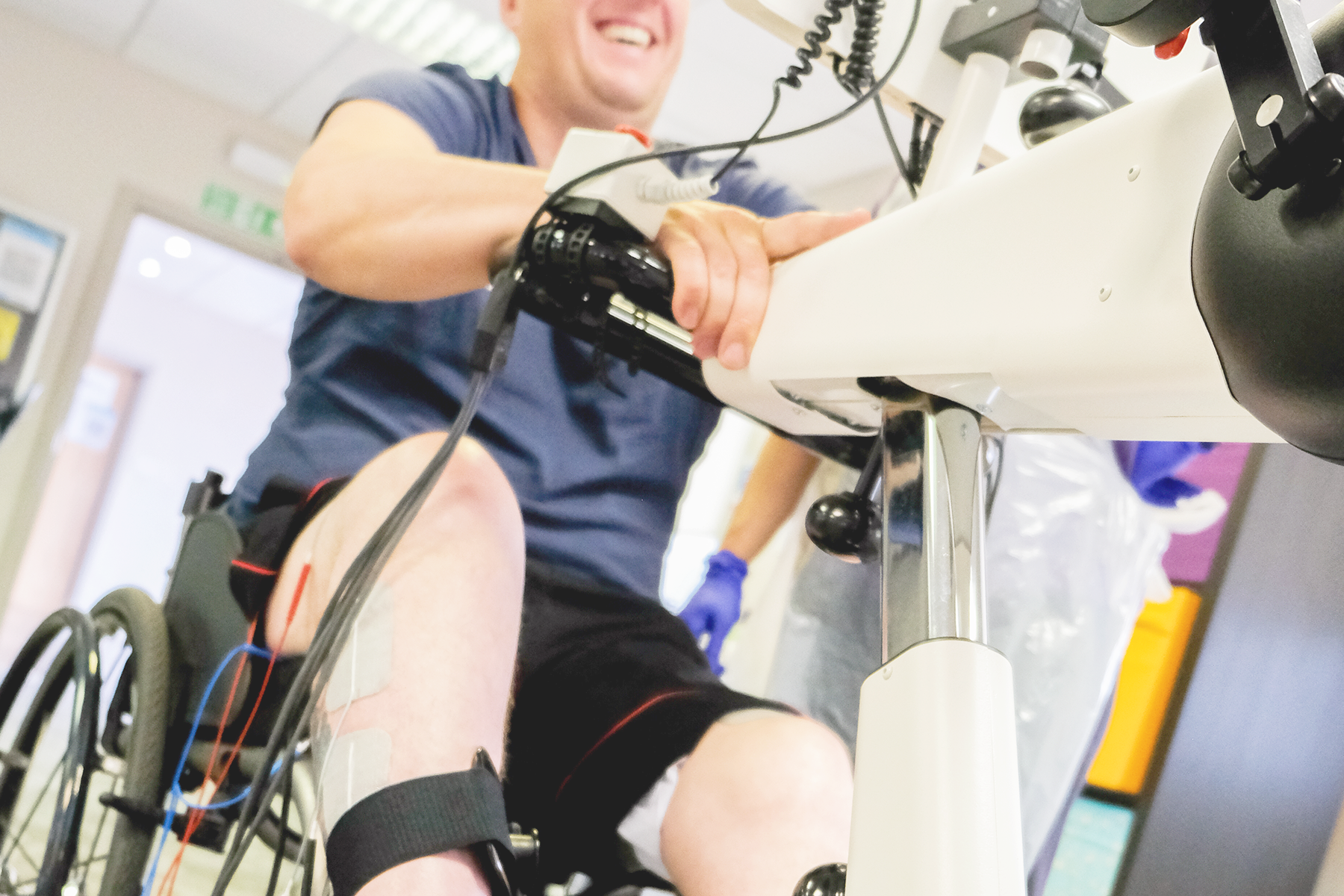
FES Cycling and improving health after spinal cord injury
Physically disabled people are the least active group in society. According to Sports England, disabled people are twice as likely to be inactive as able-bodied people. A RehaMove FES Cycling system provides a method that many spinal cord injured people use at home for long term fitness. Recent developments have made this exercise choice more engaging than ever