Articles
Filter by Topic
- Adaptive Sport 2
- Artificial Intelligence 1
- Bariatric 1
- Bike Labyrinth 3
- Bone density 1
- Brachial Plexus 2
- Bridging the Gap 1
- Bridging the Gap 1
- Carbonhand 4
- Cardiovascular 1
- Cauda Equina Syndrome 1
- Client Stories 4
- Cognition 1
- Company Updates 3
- Decision Making 2
- Dementia 1
- Denervation 30
- Diabetic Foot 12
- Efficiency 1
- Electrotherapy 33
- Exercise Benefits 34
- FES Cycling 23
- Fatigue 1
- Functional Electrical Stimulation (FES) 66
- Gait 2
- Goal Setting 5
- Grip 3
- Guidelines 2
- HRV 1
- Healthspan 2
- History 1
- Indego 13
- Lifestyle 10
- Lower Motor Neuron 2
- Mobility 17
- Motivation 2
- NMES 4
- Nerve injury 5
- NexStride 1
- Occupational Therapy 1
- Orthotic 15
- PRAFO 32
- Pain 7
- Parkinsons 2
- Pressure Ulcers 20
- Product Updates 7
- RISE Stimulator 14
- Safety 2
- Spasticity 4
- Sponsor 1
Article Length
- 1 minute read 3
- 10 minute read 25
- 11 minute read 4
- 12 minute read 11
- 14 minute read 1
- 15 minute read 14
- 18 minute read 1
- 2 minute read 4
- 24 minute read 1
- 25 minute read 2
- 26 minute read 1
- 28 minute read 1
- 3 minutes read 9
- 4 minute read 33
- 5 Minute read 18
- 6 minute read 6
- 7 minute read 20
- 8 minute read 12
- 9 minute read 4
- FES 2
- FoG 1
- Long Read 1
- PRAFO 1
- Seven Minute Read 1
- awareness 1
- carbonhand 2
- cognitive 1
- cues 1
- freezing gait 1
- freezing of gait 1
- gait 1
- neurological 1
- neuroplasticity 1
- nexstride 2
- occupational therapy 1
- occupational therapy day 1
- orthopaedics 1
- orthotic 1
- parkinson's 1
- pressure 1
- pressure relief 1
- prevention 1
- rehabilitation 2
- stroke 1
- ulcers 1
- world stroke day 1

Spasticity and Muscle Spasms: A Plain English Guide for People Living With Them
When I demonstrate an FES cycling system, spasticity is usually in the room before I have finished setting up. A leg that will not settle onto the pedal. A knee that pushes out straight at the wrong moment. A foot that starts bouncing the instant it takes any weight. The person in the chair rarely calls it spasticity. They say their legs have a mind of their own, or that everything goes rigid when they transfer, or that the spasms wake them at three in the morning. The clinical word comes later, if it comes at all.
This article is for the person who has just been introduced to that word, or who has lived with the thing itself for years without anyone quite explaining it. I want to cover what spasticity and spasms actually are, why they happen after a spinal cord injury, a stroke or with multiple sclerosis, what they do to daily life, and what genuinely helps, from medication through to electrical stimulation. I will try to be clear about what the evidence shows and what it does not; if different people have told you contradictory things, that is partly because the field itself contains genuine uncertainty.

One Device, Many Exercises: Getting More From a Single Stimulator
One of the quieter worries in rehabilitation is rarely about the therapy itself. It is about money. Equipment is expensive, budgets are tight, and funding is often uncertain until late in the process. The fear we hear most is not "will this work," but rather "will I spend a significant sum and end up with the wrong thing, or with several things that do not work well together." Does this sound familiar?
It is a reasonable worry, and it deserves a straight answer rather than a sales pitch. This article looks at one practical way of reducing that risk: choosing a single, flexible stimulator that covers several rehabilitation needs, rather than a separate machine for each. The device we have in mind is the Stim2Go, and the point is not so much the brand as the principle behind it.
Waveform matters: what new evidence tells us about transcutaneous spinal cord stimulation
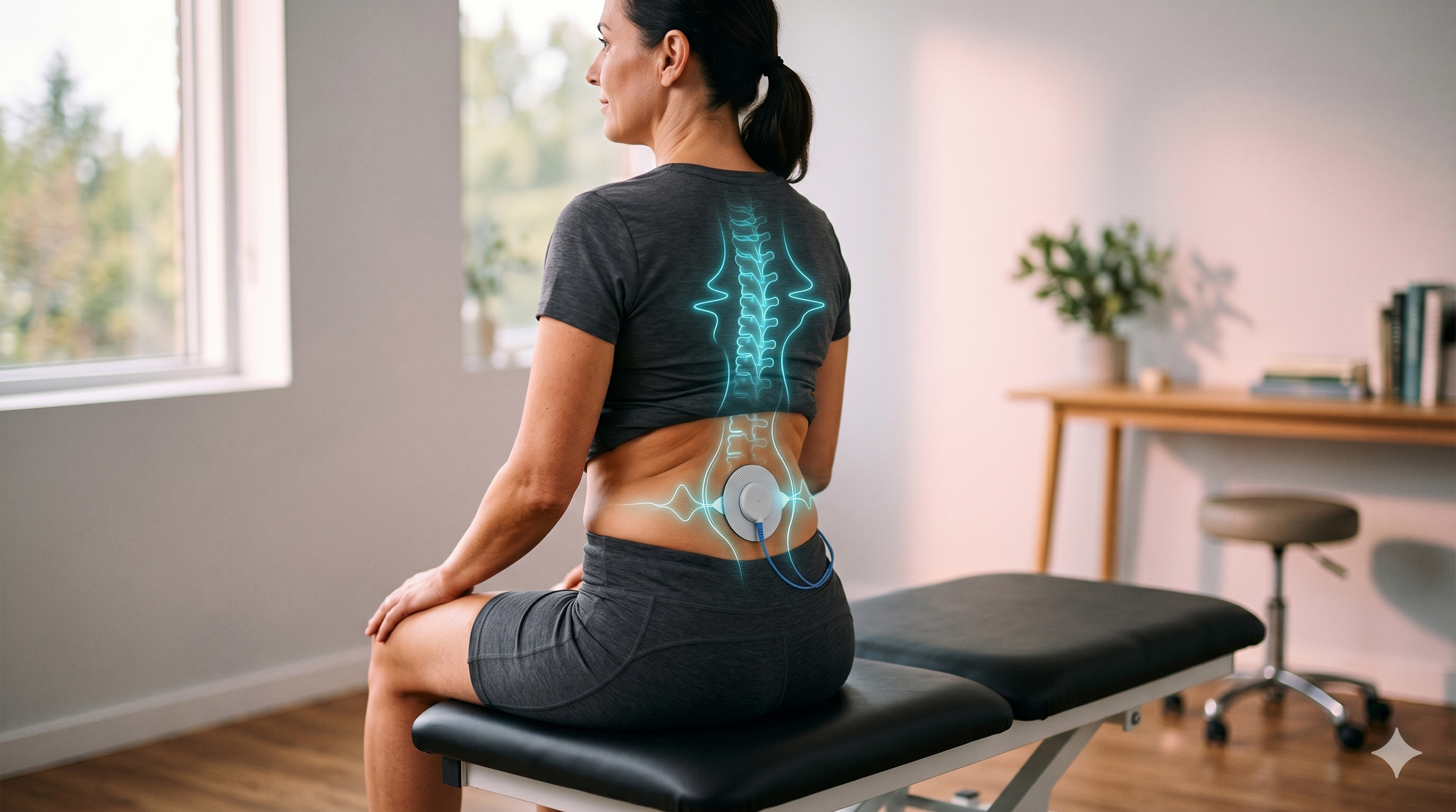
Transcutaneous spinal cord stimulation (tSCS) has moved quickly from a research curiosity to a recognised tool in neurological rehabilitation. People living with spinal cord injury, stroke, and multiple sclerosis are asking us about it. Clinicians want to know which device to recommend. Equipment commissioners want evidence-led guidance before authorising spend that can run into tens of thousands of pounds per system.
A paper published in Nature Biomedical Engineering on 12 May 2026 has added something important to that conversation. It is not a clinical trial. It is a careful study of the physics and physiology that govern which nerve fibres a tSCS device actually recruits. The finding is consequential, and it bears directly on the choice of device.
In short: the waveform you choose determines whether tSCS does the thing rehabilitation needs it to do.

Our FES Cycling Reading List: Nine New Articles from fescycling.com
We have just recently redeveloped our sister site, fescycling.com, dedicated to functional electrical stimulation cycling: the evidence, the practicalities, and the questions that come up most often in clinic. The articles below are written for people considering FES cycling, the families and case managers supporting them, and clinicians who want a clearer view of what the technology can and cannot do.
If you are new to FES cycling, the first three are the natural starting point. The rest go deeper into specific questions, conditions, and day-to-day reality. Although our offered system is based on the Stim2Go unit from Pajunk, the articles should be of general interest to those who wish to learn more about FES cycling.
If you'd like more, there is a comprehensive online resource available at https://fescycling.com/guide and a AI powered chat to let you explore it.

Transcutaneous Spinal Cord Stimulation for Priming-based Rehabilitation
Transcutaneous spinal cord stimulation (tSCS) represents a promising noninvasive neuromodulation technique for rehabilitation in spinal cord injury (SCI) and other neurological conditions.
From this article you will gain a clear understanding of how tSCS is used as a priming tool within rehabilitation, the research principles that guide its clinical application, how it is integrated alongside task-specific therapy, and what types of functional improvements and neuroplastic changes clinicians aim to achieve when it is delivered consistently over time.

Volume vs Intensity in Neurological Rehabilitation: Why Consistency Often Matters More
I recently came across an interesting newsletter item from "Building the Elite" about the relative importance of training volume versus intensity.
The argument—made by someone preparing candidates for special forces selection—was that volume is the primary training variable to manage. This is because it has the greatest impact on the training programme's effectiveness, while intensity determines the type of adaptation you're targeting.
This struck me as highly relevant to neurological rehabilitation. Let's see if you agree.