
Articles
Filter by Topic
- Adaptive Sport 2
- Artificial Intelligence 1
- Bariatric 1
- Bike Labyrinth 3
- Bone density 1
- Brachial Plexus 2
- Bridging the Gap 1
- Bridging the Gap 1
- Carbonhand 4
- Cardiovascular 1
- Cauda Equina Syndrome 1
- Client Stories 4
- Cognition 1
- Company Updates 3
- Decision Making 2
- Dementia 1
- Denervation 30
- Diabetic Foot 12
- Efficiency 1
- Electrotherapy 33
- Exercise Benefits 34
- FES Cycling 23
- Fatigue 1
- Functional Electrical Stimulation (FES) 66
- Gait 2
- Goal Setting 5
- Grip 3
- Guidelines 2
- HRV 1
- Healthspan 2
- History 1
- Indego 13
- Lifestyle 10
- Lower Motor Neuron 2
- Mobility 17
- Motivation 2
- NMES 4
- Nerve injury 5
- NexStride 1
- Occupational Therapy 1
- Orthotic 15
- PRAFO 32
- Pain 7
- Parkinsons 2
- Pressure Ulcers 20
- Product Updates 7
- RISE Stimulator 14
- Safety 2
- Spasticity 4
- Sponsor 1
Article Length
- 1 minute read 3
- 10 minute read 25
- 11 minute read 4
- 12 minute read 11
- 14 minute read 1
- 15 minute read 14
- 18 minute read 1
- 2 minute read 4
- 24 minute read 1
- 25 minute read 2
- 26 minute read 1
- 28 minute read 1
- 3 minutes read 9
- 4 minute read 33
- 5 Minute read 18
- 6 minute read 6
- 7 minute read 20
- 8 minute read 12
- 9 minute read 4
- FES 2
- FoG 1
- Long Read 1
- PRAFO 1
- Seven Minute Read 1
- awareness 1
- carbonhand 2
- cognitive 1
- cues 1
- freezing gait 1
- freezing of gait 1
- gait 1
- neurological 1
- neuroplasticity 1
- nexstride 2
- occupational therapy 1
- occupational therapy day 1
- orthopaedics 1
- orthotic 1
- parkinson's 1
- pressure 1
- pressure relief 1
- prevention 1
- rehabilitation 2
- stroke 1
- ulcers 1
- world stroke day 1

Is 20 minutes of FES Cycling good enough for health gains?
Functional Electrical Stimulation cycling, also known as FES cycling or using an FES bike, is a rehabilitation technique that uses electrical stimulation to activate skeletal muscle in individuals with spinal cord injury or other types of neurological injury. This technique is well established in the homes of hundreds of people in the UK as well as in NHS and private facilities. In this article we address the topic of how often you should exercise with this technology. For example, is 20 minutes, three times per week really enough?
Measuring performance in spinal cord injury rehabilitation: New possibilities?
Many of us today walk around or exercise with products that sense many aspects of our daily activity. Smartphones and sensor developments mean that we can be more in tune with what is happening to our health and fitness. My Suunto watch monitors my heart rate and heart rate variability, blood oxygenation, skin temperature and activities in many ways. It can nudge me to exercise more, tell me how I recovered from exercise and alert me to how well or how badly I am sleeping.. I personally do like having these insights, but of course, some people will hate the idea of this.
The smartwatch and related sensor technologies have opened up some new possibilities. In this article, im going beyond the smartwatch of today and take a look at what additional sensor technologies might assist us with spinal cord injury rehabilitation in the near future. In particular, we take a look at two sensor areas that have grown in popularity with elite athletes - Muscle oxygen sensing and Lactate sensing. If you want to know why, then read on.

Pitfalls in measuring healthcare outcomes
This article discusses how to counter Goodhart's Law in healthcare, focusing on quality metrics and patient outcomes. You might not have heard of Goodhart's Law, but it describes an extremely common tendency that has almost certainly affected us all at some point.
The temptation with complex services such as healthcare, is to focus on some simple metric that might reflect overall performance. Unfortunately this often results in misrepresenting the true performance of the system.
This article offers strategies to balance care quality with quantitative measures, enhancing rehabilitation services.

Hope on the Horizon: The Challenging Journey of Stroke Recovery in the UK
The challenge of providing effective and affordable rehabilitation for stroke survivors in the UK, and indeed globally, is multifaceted. It involves the development, availability, and cost of safe and effective technology and services. We can't take the development of new medical technology for granted. The time and cost of taking an idea forward and creating a product are becoming increasingly significant. Developers of such technology need to imagine making a return on their investment, and this needs more than the assurance of a clinical need - it takes someone willing to pay.
Stroke is a significant global healthcare challenge affecting millions, but this alone will not drive technology development unless there is a likely path toward a return on investment. This article considers the challenge of supporting stroke survivors in their recovery journey when resources seem lacking. We point to some products we loved that never developed sustained sales and some that might.

Making FES Cycling system adjustments
The RehaMove FES Cycling system (sometimes known as an FES bike) is widely used by clients to allow them to exercise paralysed muscles actively. There are many benefits of doing this following a neurological condition such as a spinal cord injury.
This video may be of general interest, but will be particularly useful to existing users of our FES Cycling system who wish to get more from using the product. The video is around 15 minutes long and it addresses three commonly asked questions
Why should I use an FES bike?
When and why should I change the stimulation settings?
How should I make these changes?
The video distinguishes between training for a goal and general exercise and looks at a useful structure to think about how to train, The effect of changing each of the stimulation parameters is considered. You might want to term on subtitles when viewing the video.

Rehabilitation for Spinal Cord Injury:
Experiencing a spinal cord injury (SCI) can be life-altering and poses significant challenges in everyday life. However, with comprehensive rehabilitation and the right support, restoring some functionality, independence, and an enhanced quality of life is not just a dream, but a realistic goal.
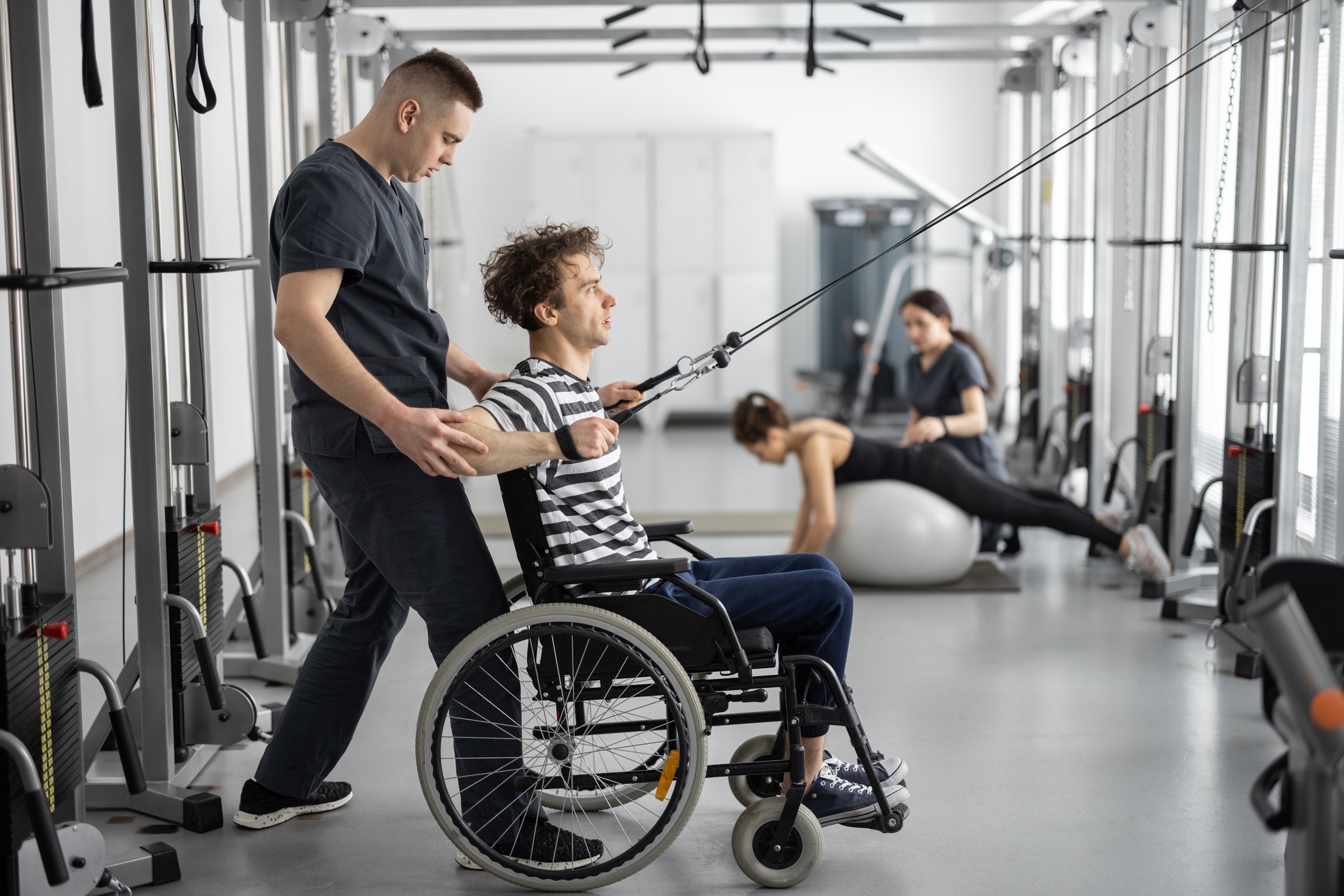
This article shines a light on the journey of SCI rehabilitation, highlighting the array of specialised strategies and programs that are designed to cater to the unique needs of each. It discusses the limitations of state healthcare and alternative resources, such as private therapists and rehabilitation facilities, while also highlighting the importance of early personal injury legal advice in negligence cases. The piece underscores the impact of rehabilitation on physical and psychological well-being and advocates for a multidisciplinary treatment approach.