
Articles
Filter by Topic
- Adaptive Sport 2
- Artificial Intelligence 1
- Bariatric 1
- Bike Labyrinth 3
- Bone density 1
- Brachial Plexus 2
- Bridging the Gap 1
- Bridging the Gap 1
- Carbonhand 4
- Cardiovascular 1
- Cauda Equina Syndrome 1
- Client Stories 4
- Cognition 1
- Company Updates 3
- Decision Making 2
- Dementia 1
- Denervation 30
- Diabetic Foot 12
- Dressings 1
- Efficiency 1
- Electrotherapy 33
- Exercise Benefits 34
- FES Cycling 24
- Fatigue 1
- Functional Electrical Stimulation (FES) 66
- Gait 2
- Goal Setting 5
- Grip 3
- Guidelines 2
- HRV 1
- Healthspan 2
- History 1
- Indego 13
- Lifestyle 10
- Lower Motor Neuron 2
- Mobility 17
- Motivation 2
- Multiple Sclerosis 1
- NMES 4
- Nerve injury 5
- NexStride 1
- Occupational Therapy 1
- Orthotic 15
- PRAFO 33
- Pain 7
- Parkinsons 2
- Pressure Ulcers 21
- Product Updates 7
- RISE Stimulator 14
- Safety 2
Article Length
- 1 minute read 3
- 10 minute read 26
- 11 minute read 4
- 12 minute read 11
- 14 minute read 1
- 15 minute read 14
- 18 minute read 1
- 2 minute read 4
- 24 minute read 1
- 25 minute read 2
- 26 minute read 1
- 28 minute read 1
- 3 minutes read 9
- 4 minute read 33
- 5 Minute read 18
- 6 minute read 6
- 7 minute read 20
- 8 minute read 14
- 9 minute read 4
- FES 2
- FoG 1
- Long Read 1
- PRAFO 1
- Seven Minute Read 1
- awareness 1
- carbonhand 2
- cognitive 1
- cues 1
- freezing gait 1
- freezing of gait 1
- gait 1
- neurological 1
- neuroplasticity 1
- nexstride 2
- occupational therapy 1
- occupational therapy day 1
- orthopaedics 1
- orthotic 1
- parkinson's 1
- pressure 1
- pressure relief 1
- prevention 1
- rehabilitation 2
- stroke 1
- ulcers 1
- world stroke day 1
Transcutaneous Spinal Cord Stimulation: What Patients Need to Know
This article explains transcutaneous spinal cord stimulation (tSCS), a non-surgical approach that is generating significant interest in the spinal cord injury community. We'll explore what it is, how it differs from implanted stimulation, what the current research shows - including applications for pain and spasticity management - and what questions you might want to discuss with your clinical team.

Stop Muscle Atrophy Before It Starts with Proactive FES
Muscle loss doesn’t wait and neither should prevention. This article explains how proactive FES can support early muscle activation, helping reduce atrophy during periods of limited mobility. Learn why starting sooner can make a difference, who it may be suitable for, and how FES fits into a broader rehabilitation plan.

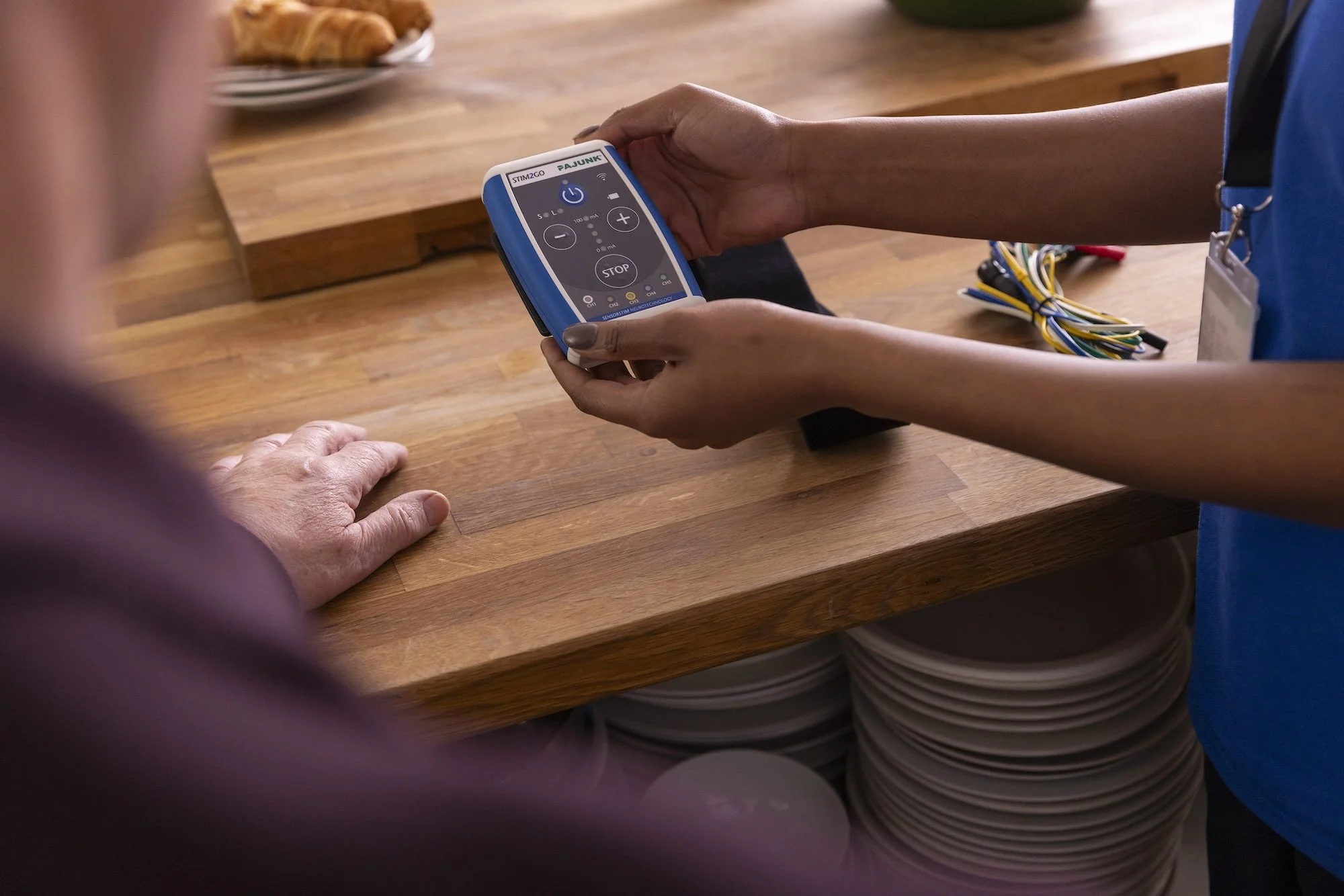
Stim2Go and Support for Transcutaneous Spinal Cord Stimulation
Transcutaneous spinal cord stimulation (TSCS) is an exciting and evolving area of neurorehabilitation, and having the right support is essential to get the most from it. This article introduces Stim2Go and explains how it can be used to support TSCS programmes in practice. It outlines the importance of correct set-up, guidance, and ongoing input to help clinicians and services implement TSCS safely and effectively. A helpful overview for anyone exploring TSCS delivery and the practical considerations around support and use.

Denervated Muscle Stimulation: Why Optimal Intensity Beats Maximum Intensity
When treating denervated muscles with electrical stimulation, a common assumption is that stronger is better—that maximum current intensity will produce the best results. However, clinical evidence tells a different story: optimal outcomes come from finding the minimum effective intensity, not the maximum tolerable one.
I generally advise clients at the beginning not to worry too much about the specific current level, but to increase the current intensity until they start to see a contraction, and then increase by about 10% over that. I would call that the minimum effective intensity.

How Muscle Fibre Composition Impacts Electrical Stimulation Effectiveness
Electrical stimulation is a popular and widely used approach for physical rehabilitation. When used for muscle strengthening, it is necessary to take into account the fact that electrical stimulation produces muscle contractions in a relatively inefficient way.
In this article, we take a brief look at muscle fibre types. Following a neurological insult, muscle fibre types undergo transformation, producing changes that affect the ability of muscles to do work. We examine the particular case of spinal cord injury and consider how this affects the effectiveness of electrical stimulation.
Approaches to combat fatigue are examined. Finally, we consider attempts being made to improve the performance of stimulators and produce consistent muscle contractions under all circumstances.

Exploring Electrical Stimulation for Pain Relief
Neuropathic pain is a complex and debilitating condition that affects millions worldwide, disrupting daily life with sensations that defy typical pain narratives. For those living with chronic discomfort, the challenges often feel insurmountable. However, with an estimated 7–10% of the global population impacted, the demand for solutions has never been greater.
This article explores an exciting frontier in treatment—electrical stimulation. By directly engaging the nervous system, this innovative approach offers the possibility of relief where traditional methods have fallen short. What makes neuropathic pain so difficult to treat? And could electrical stimulation hold the key to improving quality of life for countless individuals?
Join us as we examine this cutting-edge therapy and its potential to reshape the future of pain management.