
Articles
Filter by Topic
- Adaptive Sport 2
- Artificial Intelligence 1
- Bariatric 1
- Bike Labyrinth 3
- Bone density 1
- Brachial Plexus 2
- Bridging the Gap 1
- Bridging the Gap 1
- Carbonhand 4
- Cardiovascular 1
- Cauda Equina Syndrome 1
- Client Stories 4
- Cognition 1
- Company Updates 3
- Decision Making 2
- Dementia 1
- Denervation 30
- Diabetic Foot 12
- Efficiency 1
- Electrotherapy 33
- Exercise Benefits 34
- FES Cycling 23
- Fatigue 1
- Functional Electrical Stimulation (FES) 64
- Gait 2
- Goal Setting 5
- Grip 3
- Guidelines 2
- HRV 1
- Healthspan 2
- Indego 13
- Lifestyle 10
- Lower Motor Neuron 2
- Mobility 17
- Motivation 2
- NMES 3
- Nerve injury 5
- NexStride 1
- Occupational Therapy 1
- Orthotic 15
- PRAFO 32
- Pain 7
- Parkinsons 2
- Pressure Ulcers 20
- Product Updates 7
- RISE Stimulator 14
- Safety 2
- Spasticity 4
- Sponsor 1
- Standing 5
Article Length
- 1 minute read 3
- 10 minute read 24
- 11 minute read 4
- 12 minute read 11
- 14 minute read 1
- 15 minute read 14
- 18 minute read 1
- 2 minute read 4
- 24 minute read 1
- 25 minute read 2
- 26 minute read 1
- 28 minute read 1
- 3 minutes read 9
- 4 minute read 33
- 5 Minute read 17
- 6 minute read 6
- 7 minute read 20
- 8 minute read 12
- 9 minute read 4
- FES 2
- FoG 1
- Long Read 1
- PRAFO 1
- Seven Minute Read 1
- awareness 1
- carbonhand 2
- cognitive 1
- cues 1
- freezing gait 1
- freezing of gait 1
- gait 1
- neurological 1
- neuroplasticity 1
- nexstride 2
- occupational therapy 1
- occupational therapy day 1
- orthopaedics 1
- orthotic 1
- parkinson's 1
- pressure 1
- pressure relief 1
- prevention 1
- rehabilitation 2
- stroke 1
- ulcers 1
- world stroke day 1
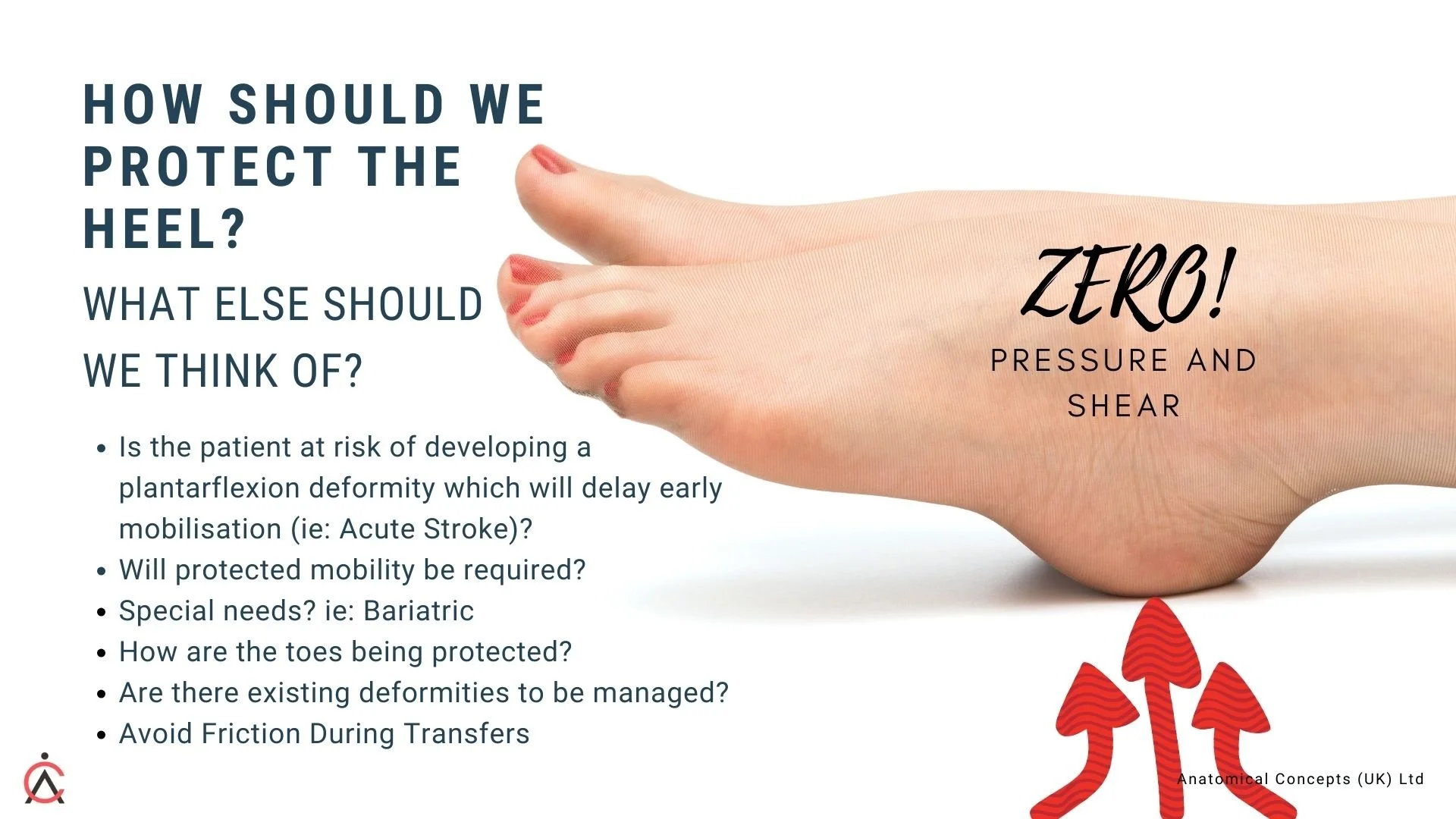
Shear Forces at the Heel: The Hidden Damage Mechanism
When clinicians think about pressure ulcer prevention, they typically focus on pressure—the perpendicular force that compresses tissue against a surface. This is understandable. The condition is called a pressure ulcer. Pressure is in the name.
But pressure tells only part of the story. Shear—the force acting parallel to the support surface that distorts tissue layers relative to each other—may be even more damaging than pressure alone. Research dating back to Bennett's seminal 1979 study demonstrated that when shear is present, the pressure required to produce vascular occlusion is reduced by approximately 50%. At shear levels of roughly 100 g/cm², the pressure needed to stop blood flow was half that required when little shear was present.
This finding has profound implications for heel protection. A device that reduces pressure but doesn't address shear may leave the heel vulnerable to the very damage it was meant to prevent.

ICU Heel Protection: Starting Prevention Early
Intensive care patients face the highest pressure ulcer prevalence of any hospital setting—14.32% according to international prevalence surveys. The heels account for a substantial proportion of these injuries. And unlike many ICU complications, heel pressure ulcers are largely preventable with appropriate intervention.
Yet in the complex, high-acuity environment of intensive care, heel protection can be overlooked. The focus—rightly—is on keeping the patient alive. Organ support, haemodynamic stability, ventilation, sedation. Heel protection rarely tops the priority list. But if a heel pressure ulcer occurs then this complicates continuity of care.
This article makes the case for implementing prophylactic heel offloading as a standard component of ICU care, and examines what effective implementation looks like in practice.

Pressure Reduction vs Complete Offloading: Why the Distinction Matters for Tissue Viability
The terms get used interchangeably in clinical practice. Pressure reduction. Offloading. Heel protection. Redistribution. But they are not the same thing. And the distinction matters to clinical outcomes —particularly at the heel, where anatomy conspires against us.
The 2025 International Pressure Injury Guideline makes this explicit. For heels, the recommendation is unambiguous: heels should be "fully free from contact with the support surface." Not reduced pressure. Not redistributed pressure. Zero contact.
This article explains the biomechanical difference between pressure reduction and complete offloading, why it matters specifically at the heel, and what the evidence shows. Let's be clear about definitions first.
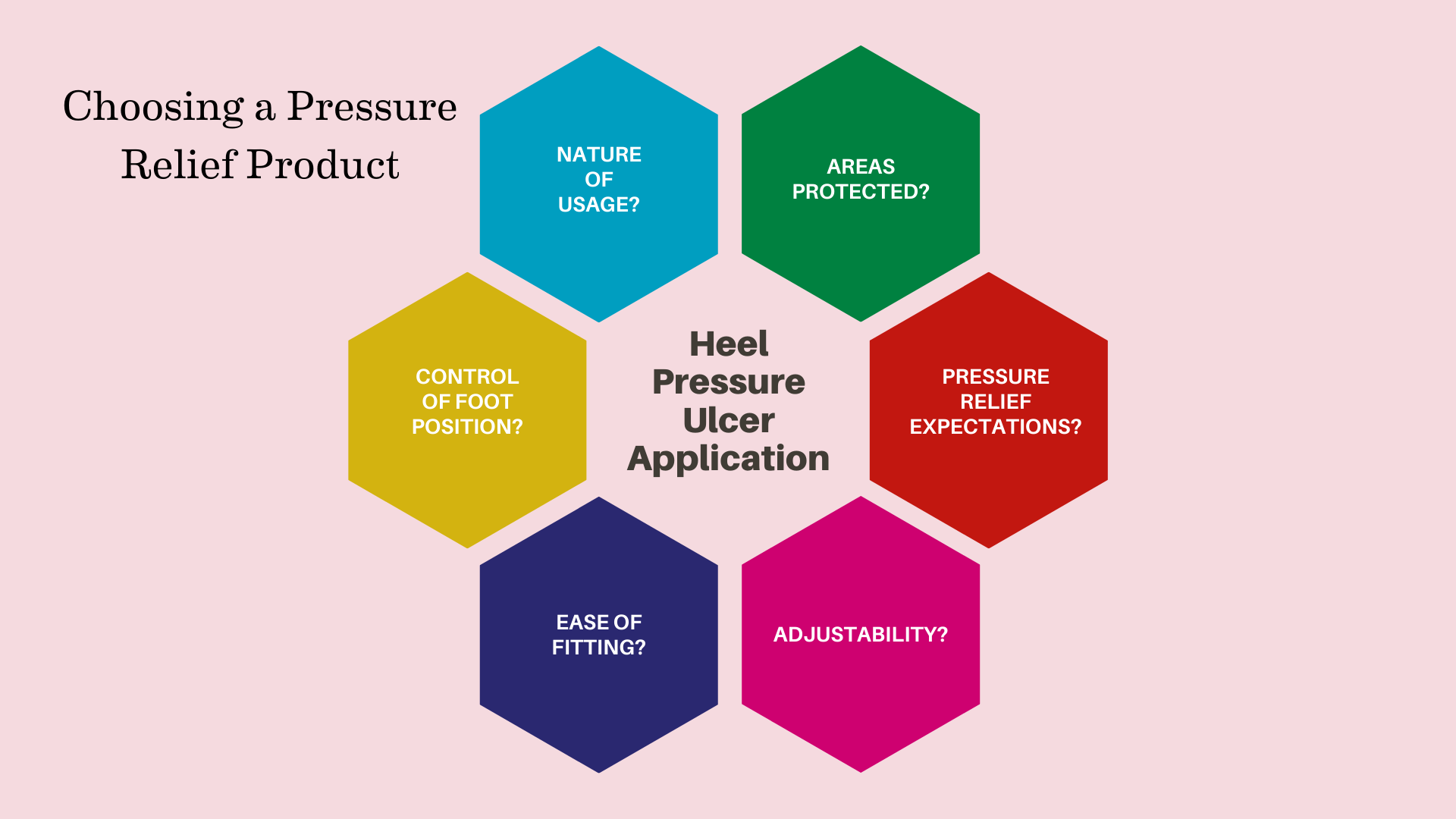
The NHS is updating its pressure ulcer pathways - here's what's changed
Recent NHS pathway updates include important changes to pressure ulcer prevention guidance, particularly around heel protection and offloading. This article explains the key updates, how they align with current evidence, and the practical implications for services reviewing prevention strategies. It also clarifies the difference between products that reduce pressure and those that fully offload the heel.
Pressure ulcers: The common risk factors
Pressure ulcers are a significant problem in the UK, particularly for bedridden patients or those with limited mobility. They occur in up to 23% of patients in acute care facilities and up to 33% of patients in long-term care facilities. At Anatomical Concepts, we are particularly interested in heel pressure ulcers, accounting for approximately 25% of all ulcers.
To prevent these ulcers, we should know the risk factors which are partly "mechanical" and partly "medical". We discuss the major ones and notice how these factors can overlap. We finish by looking at how the PRAFO range of orthoses can help
Heel Ulcers: Symptoms, Causes, and Treatments
A heel ulcer, also known as a pressure ulcer or, in the past, as a pressure sore, is a wound that develops from prolonged pressure on the skin and underlying tissue. It is most common in the elderly who may be immobile and nutritionally challenged - and those with medical conditions such as diabetes, peripheral arterial disease, or spinal cord injury. Heel ulcers occur when pressure is applied to the heel for extended periods, cutting off blood flow to the localised tissue and causing skin and subcutaneous tissue damage.
Heel ulcers are not a new problem. They represent a massive cost to the NHS and of course an emotional and physical burden on those who experience them. In this article we describe the characteristics of heel ulcers and the role of the PRAFO range in their prevention or treatment.