
Articles
Filter by Topic
- Adaptive Sport 2
- Artificial Intelligence 1
- Bariatric 1
- Bike Labyrinth 3
- Bone density 1
- Brachial Plexus 2
- Bridging the Gap 1
- Bridging the Gap 1
- Carbonhand 4
- Cardiovascular 1
- Cauda Equina Syndrome 1
- Client Stories 4
- Cognition 1
- Company Updates 3
- Decision Making 2
- Dementia 1
- Denervation 30
- Diabetic Foot 12
- Dressings 1
- Efficiency 1
- Electrotherapy 33
- Exercise Benefits 34
- FES Cycling 24
- Fatigue 1
- Functional Electrical Stimulation (FES) 66
- Gait 2
- Goal Setting 5
- Grip 3
- Guidelines 2
- HRV 1
- Healthspan 2
- History 1
- Indego 13
- Lifestyle 10
- Lower Motor Neuron 2
- Mobility 17
- Motivation 2
- Multiple Sclerosis 1
- NMES 4
- Nerve injury 5
- NexStride 1
- Occupational Therapy 1
- Orthotic 15
- PRAFO 33
- Pain 7
- Parkinsons 2
- Pressure Ulcers 21
- Product Updates 7
- RISE Stimulator 14
- Safety 2
Article Length
- 1 minute read 3
- 10 minute read 26
- 11 minute read 4
- 12 minute read 11
- 14 minute read 1
- 15 minute read 14
- 18 minute read 1
- 2 minute read 4
- 24 minute read 1
- 25 minute read 2
- 26 minute read 1
- 28 minute read 1
- 3 minutes read 9
- 4 minute read 33
- 5 Minute read 18
- 6 minute read 6
- 7 minute read 20
- 8 minute read 14
- 9 minute read 4
- FES 2
- FoG 1
- Long Read 1
- PRAFO 1
- Seven Minute Read 1
- awareness 1
- carbonhand 2
- cognitive 1
- cues 1
- freezing gait 1
- freezing of gait 1
- gait 1
- neurological 1
- neuroplasticity 1
- nexstride 2
- occupational therapy 1
- occupational therapy day 1
- orthopaedics 1
- orthotic 1
- parkinson's 1
- pressure 1
- pressure relief 1
- prevention 1
- rehabilitation 2
- stroke 1
- ulcers 1
- world stroke day 1
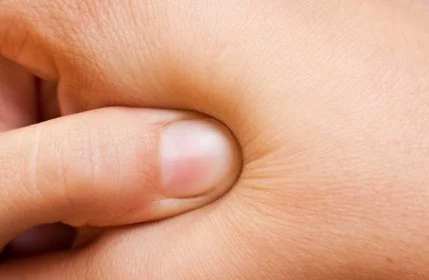
What a Prophylactic Dressing Can and Cannot Do for a Heel
There is a thread on an American nurses' forum with a four-word title: "To mepilex or not?" The nurse who started it described an arrangement many wards will recognise. Once a patient's risk score crossed a threshold, foam dressings went onto the sacrum and both heels more or less automatically, and nobody had ever explained when a dressing earns its place and when turning would do. One reply answered in four words of its own: "No dressing prevents pressure."
The thread is American, but the question is not. I've spent more than thirty years supplying devices that float the heel, so you might expect me to side with that reply. I don't, entirely. A dressing and a floating heel do different jobs, and the formal evidence for each is thinner than either camp tends to admit.
Put plainly we can say that a dressing changes the surface. Offloading changes the load.
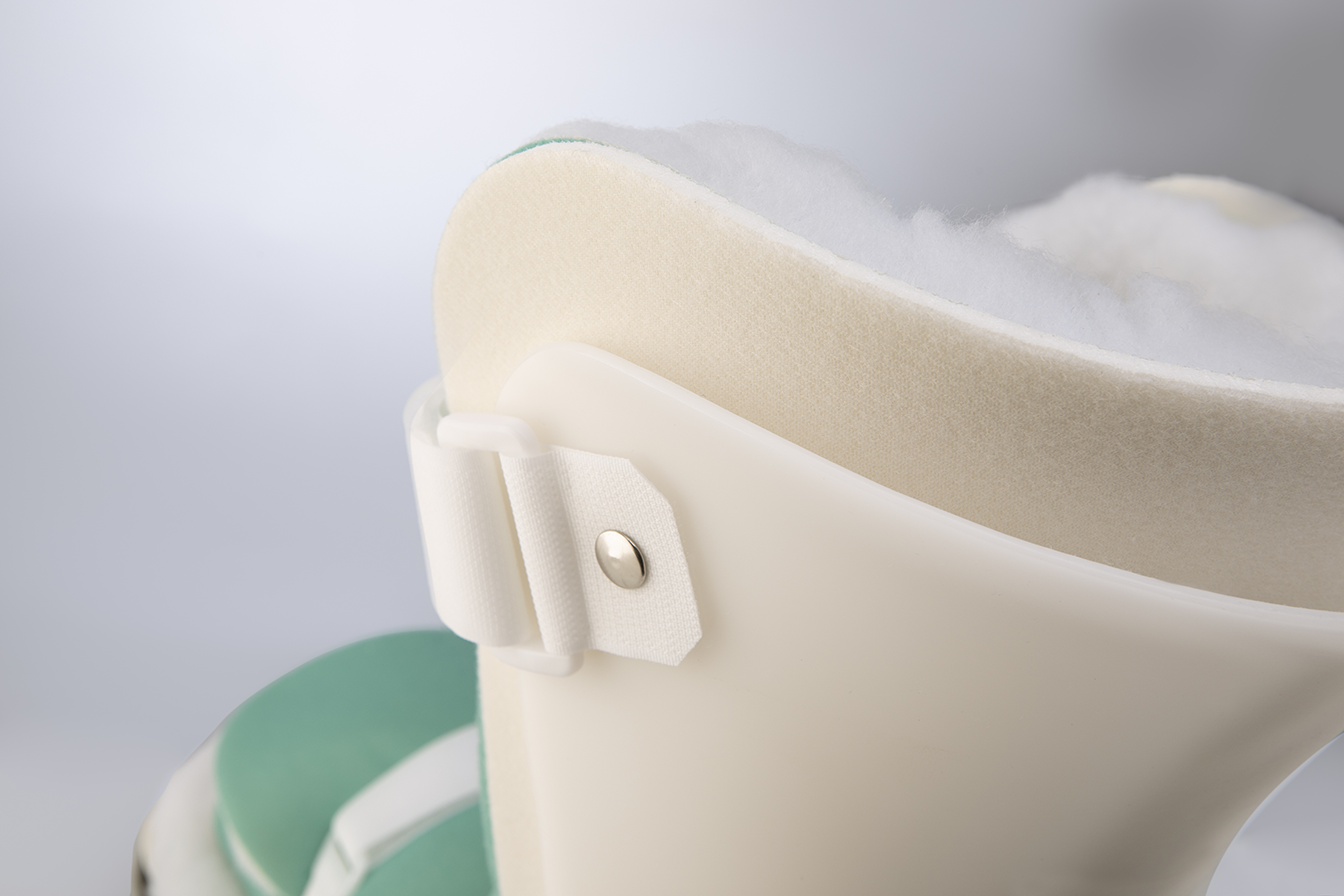
Heel Protection for the Plus-Size Patient: What the Guidelines Do Not Say
You might expect the guidance on pressure ulcer prevention to have plenty to say about protecting the heels of larger patients, but that is not the case. In this article I want to show where the guidance goes quiet, what the research evidence really says about body size and heel ulcer risk (it is not what most people assume), and how I suggest thinking about the problem instead: as a question of equipment fit rather than a question of risk scores.
A note on language before we start. Following the Obesity UK "Language Matters" guidance, I use person-first phrasing for people, and I keep the word "bariatric" for equipment, pathways and products, where it remains the standard term. In manual handling circles, "plus-size" is the preferred word for the person, and I follow that convention here.

Pressure and Shear: What the Words Mean, and Why Living Tissue Makes It Complicated
Clinical guidelines name pressure and shear as the cause of pressure ulcers, but rarely explain what the words mean. Drawing on thirty years in rehabilitation engineering, I unpack pressure, shear, stress and strain in plain language, show why the skin check can look normal while damage develops over the bone, and explain why the heels are so vulnerable. This one of our longer articles.
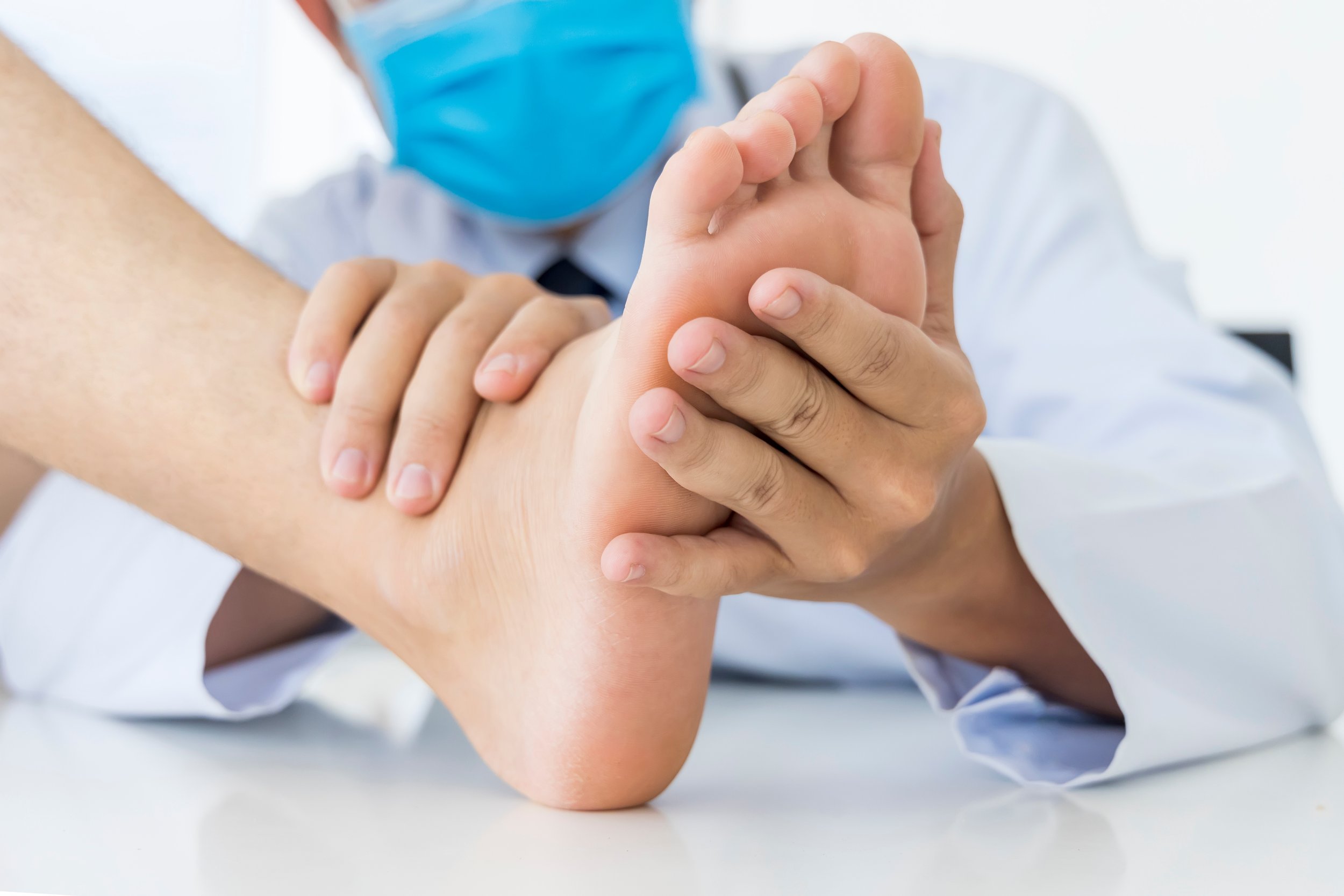
Heel Protection and the High-Tone Limb: Why Positioning Is the Other Half of the Job
Physiotherapists inherit the consequences of the first weeks after a stroke, a brain injury or a spinal cord injury twice over.
The first consequence is at the ankle itself. A foot that has spent weeks driven into plantarflexion by tone and gravity arrives in the rehabilitation gym short of the range it needs. A foot that cannot reach plantigrade cannot take weight properly, and everything that needs attention (standing practice, transfers, gait work) gets harder.
The second inherited problem relates to the skin. A heel pressure ulcer acquired during the acute phase can halt weight-bearing for weeks or months, right at the point in recovery when time matters most. Every day that the patient remains in bed results in loss of muscle mass. We also know that such an ulcer, even when healed, is much more likely to recur due to changes in the tissue's mechanical properties.
Most writing about heel pressure relief devices treats these as separate problems, one belonging to tissue viability and one to physiotherapy. In my experience, if we want continuity of care, they are best considered as part of the same problem seen from two directions, and the device on the end of the bed is where they meet. This article is about that meeting point, including some evidence that does not say what many people assume it says.
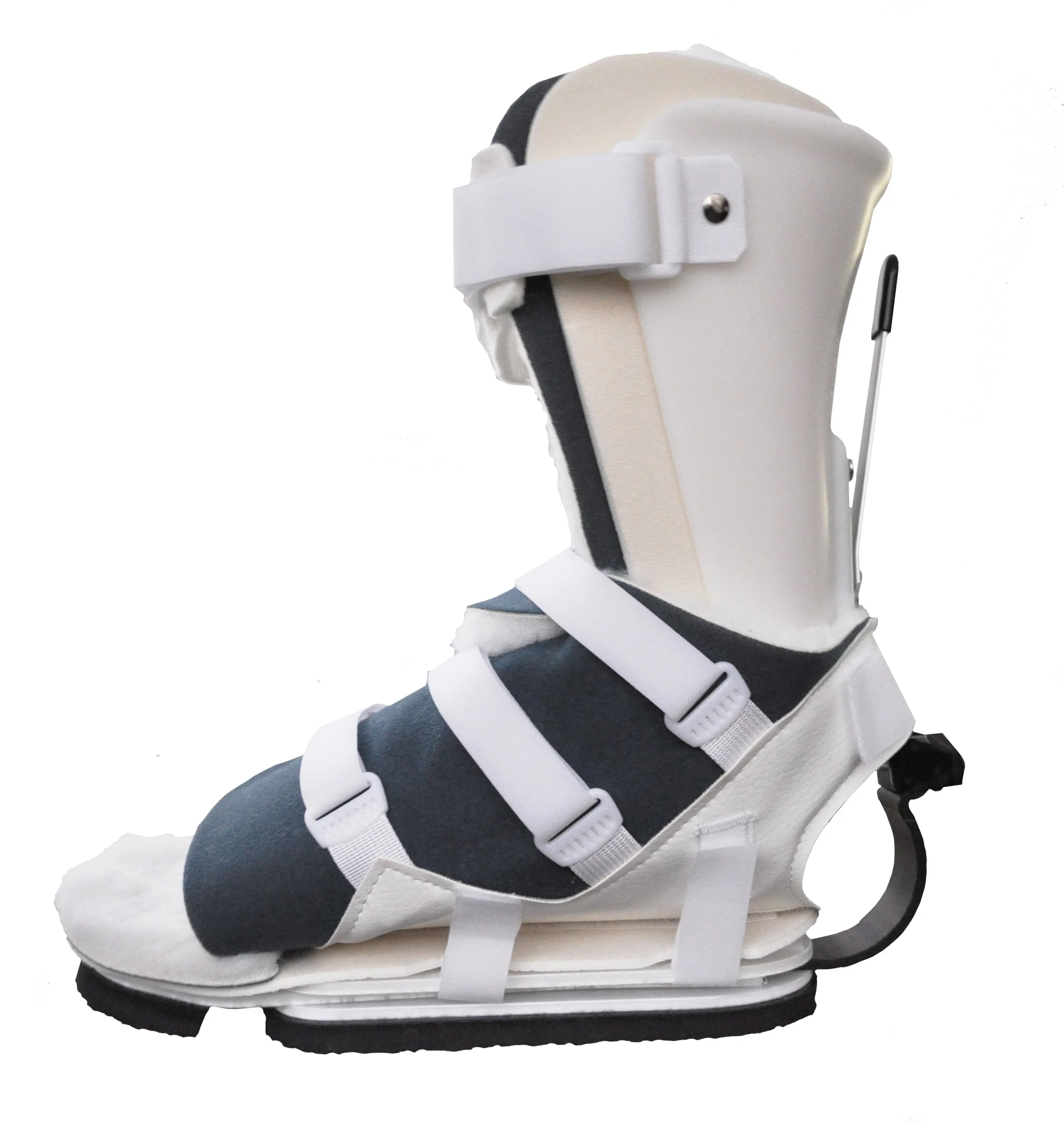
When a Soft Heel Boot Is Not Enough: How Heel Protection Escalates in the NHS
In 1994, I was visiting the Cleveland Clinic and saw a product design I came to know as the PRAFO (pressure relief ankle-foot orthosis). I recognised this as a practical orthosis being used to reduce the risk of heel pressure ulcers developing in at-risk patients following orthopaedic procedures. It's true that I liked the concept so much that we created a company, Anatomical Concepts (UK), to bring the products to the UK. Thirty years have now gone by, and we still deal with the PRAFO range. We still see the challenge that heel pressure ulcers present to affected individuals and our healthcare systems. For decades, we've emphasised prevention, yet acquired ulcers remain a widespread problem. We have some understanding of the mechanical and medical factors that heighten risk and lead to pressure ulcers, but something is missing.

Floating Heels: What the 2025 International Pressure Injury Guideline Means for the PRAFO
Heel pressure injuries are one of those problems where the evidence has been ahead of everyday practice for years. We have known for many years that pillows and improvised supports rarely keep a heel clear of the bed for long, and that a heel touching anything is a heel under pressure and shear. The 2025 International Pressure Injury Guideline (the fourth edition produced by NPIAP, EPUAP, and PPPIA) has now caught up to that reality, and in doing so it has changed the language clinicians and commissioners should use when they think about heel protection.
The guideline introduces a phrase worth noticing: "floating heels."
It is not a marketing line. It is a clinical description of what an effective heel offloading intervention has to achieve, taken from the guideline itself. And it has practical implications for any service that has to choose, fund, or audit heel protection equipment.