
Articles
Filter by Topic
- Adaptive Sport 2
- Artificial Intelligence 1
- Bariatric 1
- Bike Labyrinth 3
- Bone density 1
- Brachial Plexus 2
- Bridging the Gap 1
- Bridging the Gap 1
- Carbonhand 4
- Cardiovascular 1
- Cauda Equina Syndrome 1
- Client Stories 4
- Cognition 1
- Company Updates 3
- Decision Making 2
- Dementia 1
- Denervation 30
- Diabetic Foot 12
- Dressings 1
- Efficiency 1
- Electrotherapy 33
- Exercise Benefits 34
- FES Cycling 24
- Fatigue 1
- Functional Electrical Stimulation (FES) 66
- Gait 2
- Goal Setting 5
- Grip 3
- Guidelines 2
- HRV 1
- Healthspan 2
- History 1
- Indego 13
- Lifestyle 10
- Lower Motor Neuron 2
- Mobility 17
- Motivation 2
- Multiple Sclerosis 1
- NMES 4
- Nerve injury 5
- NexStride 1
- Occupational Therapy 1
- Orthotic 15
- PRAFO 33
- Pain 7
- Parkinsons 2
- Pressure Ulcers 21
- Product Updates 7
- RISE Stimulator 14
- Safety 2
Article Length
- 1 minute read 3
- 10 minute read 25
- 11 minute read 4
- 12 minute read 11
- 14 minute read 1
- 15 minute read 14
- 18 minute read 1
- 2 minute read 4
- 24 minute read 1
- 25 minute read 2
- 26 minute read 1
- 28 minute read 1
- 3 minutes read 9
- 4 minute read 33
- 5 Minute read 18
- 6 minute read 6
- 7 minute read 20
- 8 minute read 14
- 9 minute read 4
- FES 2
- FoG 1
- Long Read 1
- PRAFO 1
- Seven Minute Read 1
- awareness 1
- carbonhand 2
- cognitive 1
- cues 1
- freezing gait 1
- freezing of gait 1
- gait 1
- neurological 1
- neuroplasticity 1
- nexstride 2
- occupational therapy 1
- occupational therapy day 1
- orthopaedics 1
- orthotic 1
- parkinson's 1
- pressure 1
- pressure relief 1
- prevention 1
- rehabilitation 2
- stroke 1
- ulcers 1
- world stroke day 1
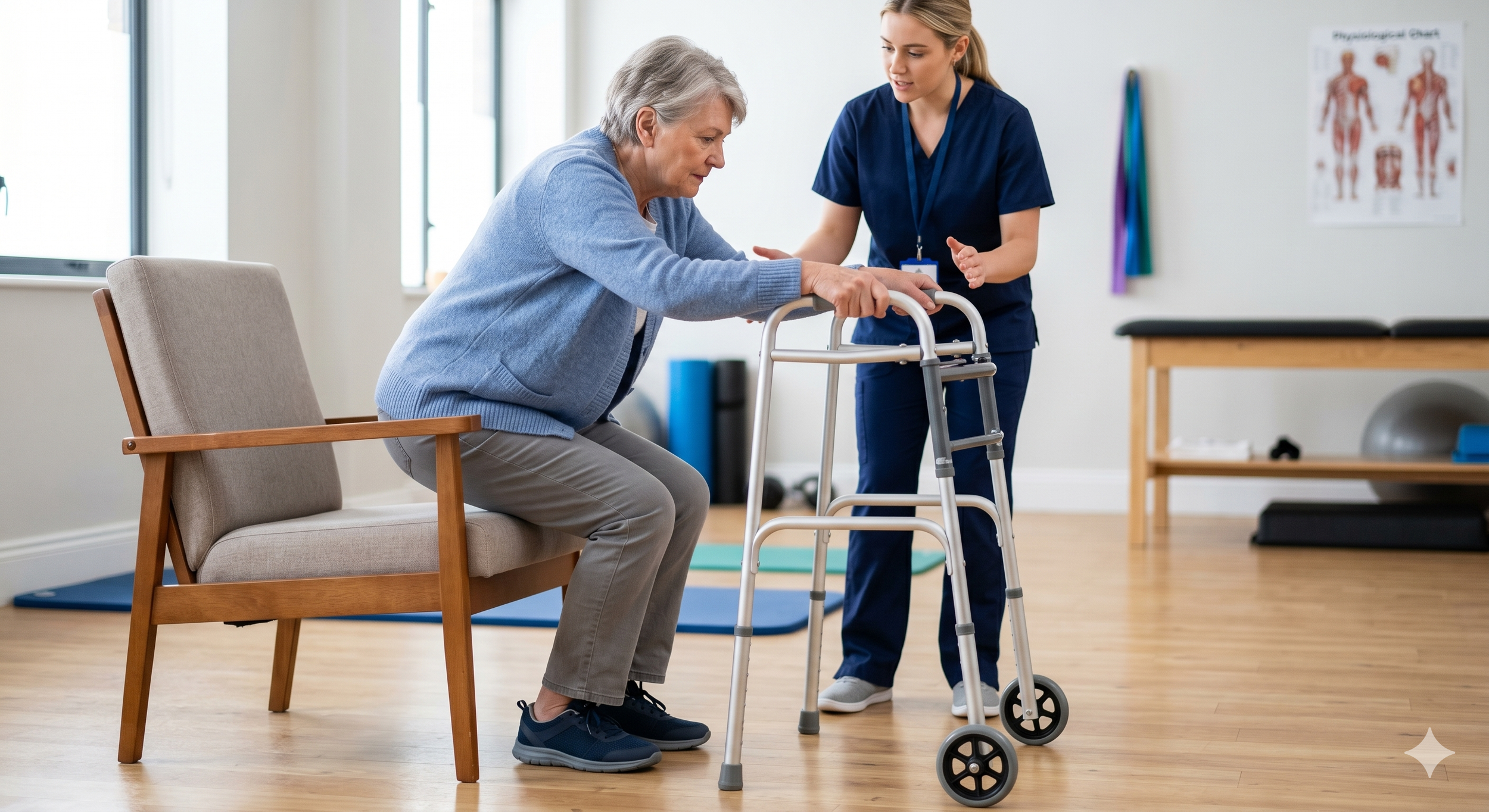
Standing Up Again: How Responsive Electrical Stimulation Can Support Sit-to-Stand Practice
Ask someone in the early stages of recovery from a spinal cord injury or stroke what they most want to do again, and the answers are often smaller and more specific than you might expect. Not "run a marathon." More often, it is something like rising from a chair without help, managing a transfer to the bed, or pushing up to standing so that getting to the toilet is your own business and nobody else's.
Sit-to-stand sits at the centre of all of that. It is one of the most important movements in daily life and one of the first functional milestones a therapist will work on. If you can move reliably between sitting and standing, a great deal of independence follows. This article looks at how electrical stimulation, and in particular a responsive electrical stimulation device like the Stim2Go, can support sit-to-stand practice as part of a wider rehabilitation programme.
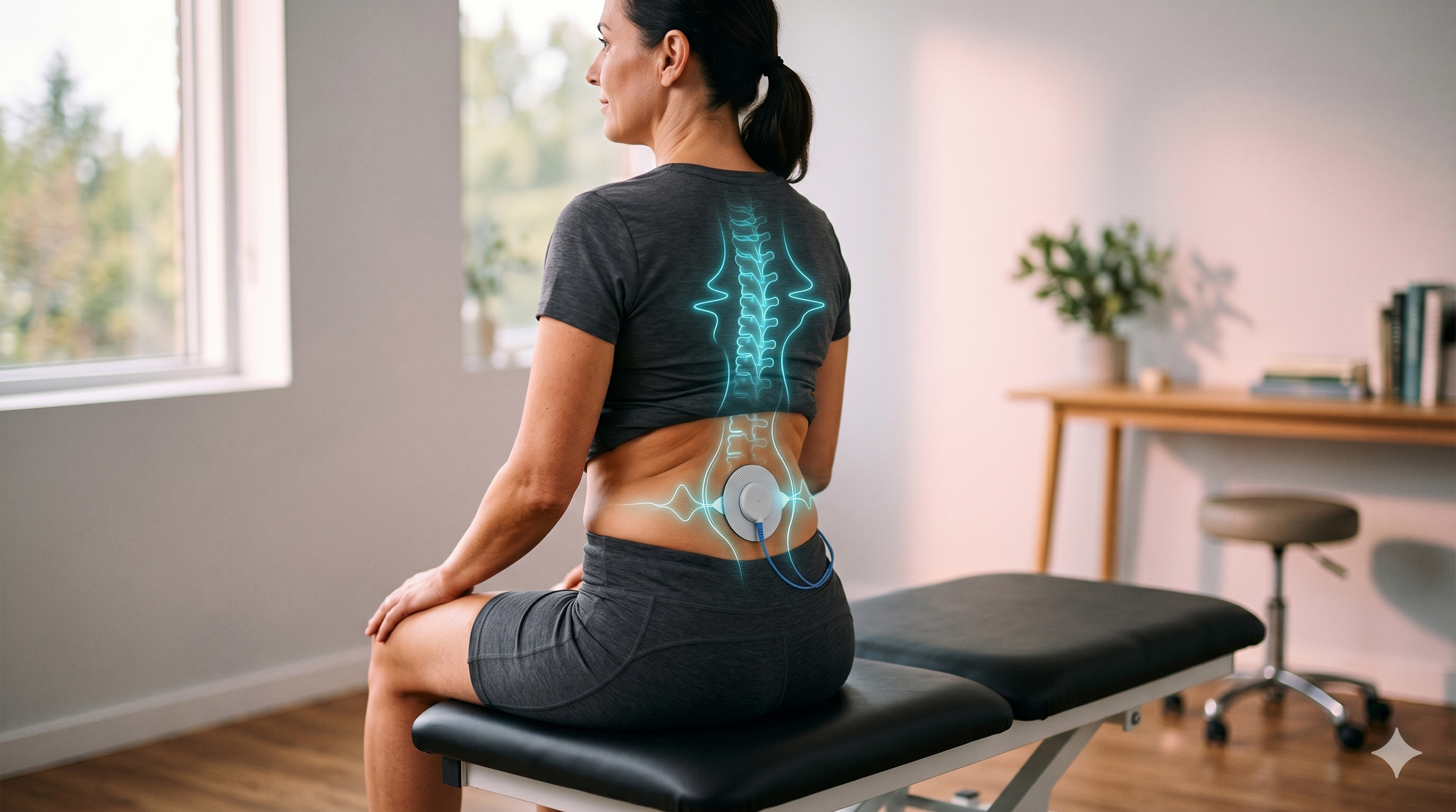
Waveform matters: what new evidence tells us about transcutaneous spinal cord stimulation
Transcutaneous spinal cord stimulation (tSCS) has moved quickly from a research curiosity to a recognised tool in neurological rehabilitation. People living with spinal cord injury, stroke, and multiple sclerosis are asking us about it. Clinicians want to know which device to recommend. Equipment commissioners want evidence-led guidance before authorising spend that can run into tens of thousands of pounds per system.
A paper published in Nature Biomedical Engineering on 12 May 2026 has added something important to that conversation. It is not a clinical trial. It is a careful study of the physics and physiology that govern which nerve fibres a tSCS device actually recruits. The finding is consequential, and it bears directly on the choice of device.
In short: the waveform you choose determines whether tSCS does the thing rehabilitation needs it to do.

Floating Heels: What the 2025 International Pressure Injury Guideline Means for the PRAFO
Heel pressure injuries are one of those problems where the evidence has been ahead of everyday practice for years. We have known for many years that pillows and improvised supports rarely keep a heel clear of the bed for long, and that a heel touching anything is a heel under pressure and shear. The 2025 International Pressure Injury Guideline (the fourth edition produced by NPIAP, EPUAP, and PPPIA) has now caught up to that reality, and in doing so it has changed the language clinicians and commissioners should use when they think about heel protection.
The guideline introduces a phrase worth noticing: "floating heels."
It is not a marketing line. It is a clinical description of what an effective heel offloading intervention has to achieve, taken from the guideline itself. And it has practical implications for any service that has to choose, fund, or audit heel protection equipment.

Our FES Cycling Reading List: Nine New Articles from fescycling.com
We have just recently redeveloped our sister site, fescycling.com, dedicated to functional electrical stimulation cycling: the evidence, the practicalities, and the questions that come up most often in clinic. The articles below are written for people considering FES cycling, the families and case managers supporting them, and clinicians who want a clearer view of what the technology can and cannot do.
If you are new to FES cycling, the first three are the natural starting point. The rest go deeper into specific questions, conditions, and day-to-day reality. Although our offered system is based on the Stim2Go unit from Pajunk, the articles should be of general interest to those who wish to learn more about FES cycling.
If you'd like more, there is a comprehensive online resource available at https://fescycling.com/guide and a AI powered chat to let you explore it.
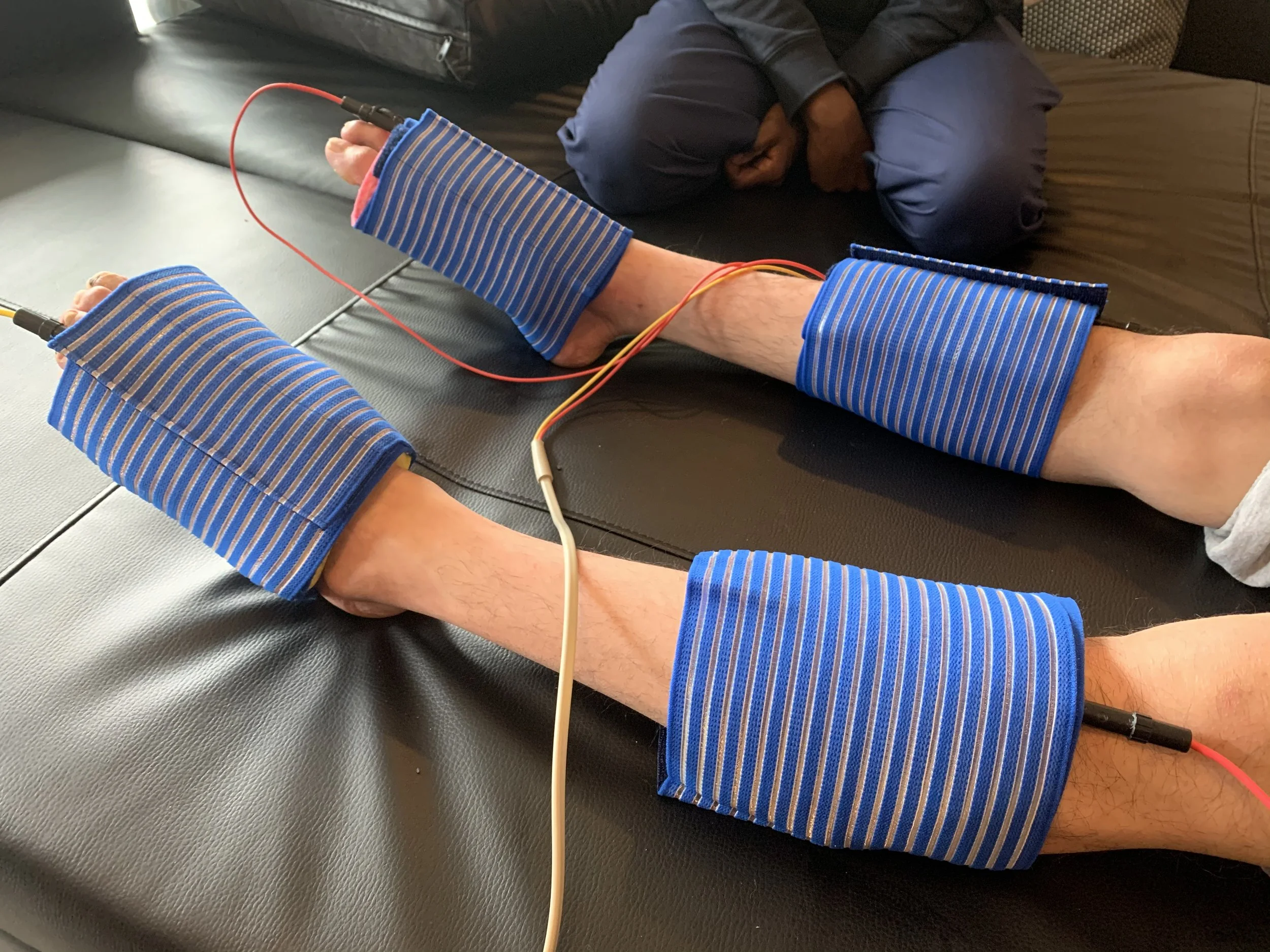
Normal vs Denervated Muscle: Why the Rules of Electrical Stimulation Change After Nerve Injury
It is quite common for us to meet clients who have tried electrical stimulation on a limb and found that nothing happened. No matter how high the intensity was set, the muscle simply would not contract. They arrive frustrated, sometimes having been told that nothing more can be done. When we then use the RISE Stimulator, a specialist device capable of producing the long-impulse-duration waveforms that denervated muscle actually requires, they are often surprised and relieved to see a contraction for the first time.
That moment of surprise reveals an important gap in understanding. The muscle did not fail to respond because it was beyond help. It failed because the wrong electrical 'language' was being spoken. A denervated muscle is not simply a weak muscle. It is, in a very real sense, a different tissue with altered structure, electrical properties, and activation rules. Understanding these differences is the foundation for making sense of any treatment approach.
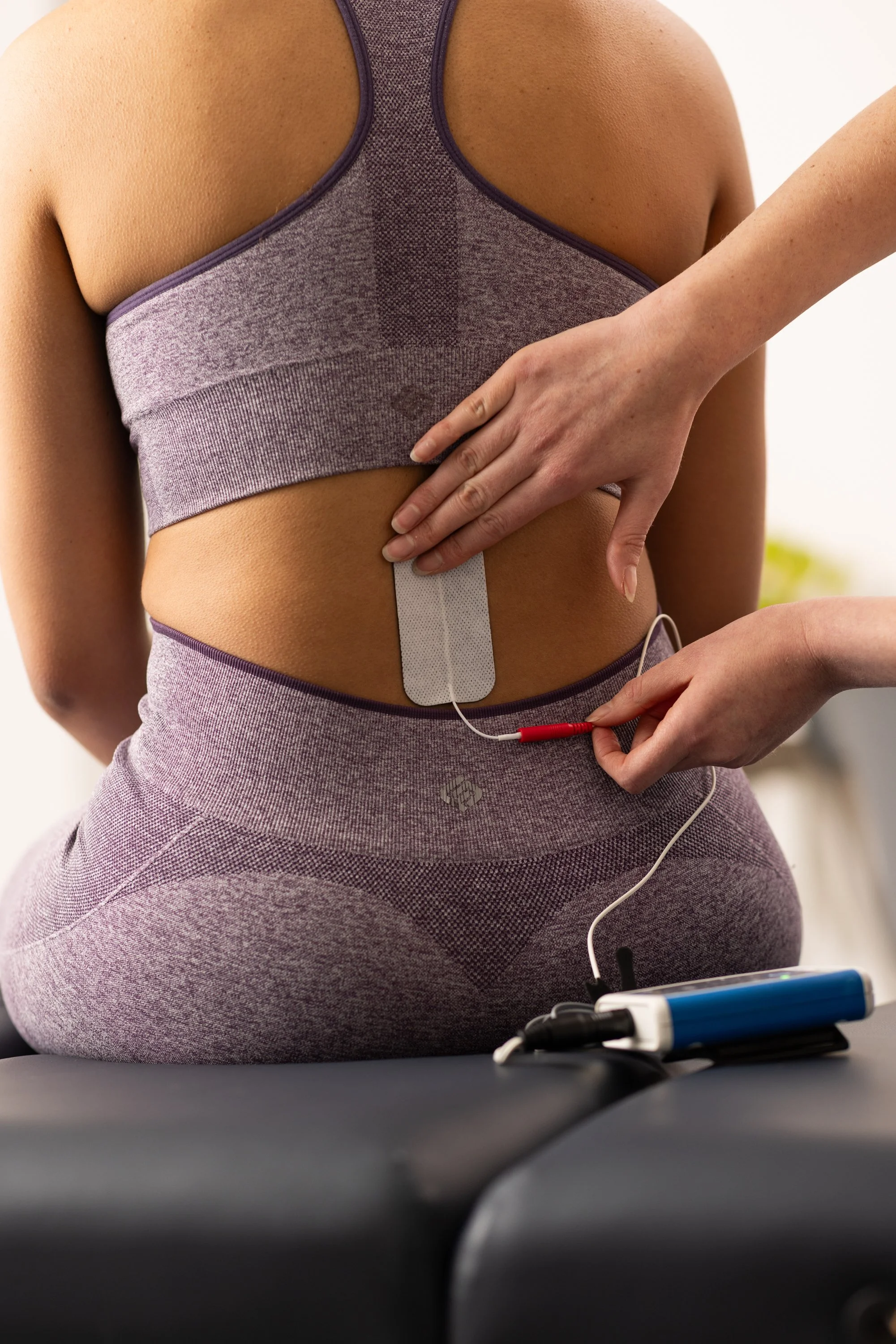
Transcutaneous Vagus Nerve Stimulation and Transcutaneous Spinal Cord Stimulation - Parallels for Rehabilitation Practice
Two non-invasive neuromodulation technologies — transcutaneous vagus nerve stimulation (tVNS) and transcutaneous spinal cord stimulation (tSCS) — are reshaping how we think about neurological rehabilitation.
Although they target different levels of the nervous system, these modalities share a surprising number of fundamental principles. Understanding these parallels gives clinicians, patients, and carers a clearer picture of how modern neuromodulation works, what to expect from treatment, and why these technologies represent a genuine shift from compensatory to restorative rehabilitation.
This article identifies ten fundamental parallels between tVNS and tSCS, drawing on the published scientific evidence to explore what they have in common, where they differ, and what this means for clinical practice.